Lawsuits are mounting against State Farm, the nation’s largest home insurer, with policyholders alleging the company has engaged in a clandestine effort to reduce payouts for hail damage. These legal challenges come at a time when homeowners are already grappling with escalating insurance premiums, partly driven by the increasing frequency and intensity of extreme weather events linked to climate change.
Homeowners Allege Systematic Denial of Claims
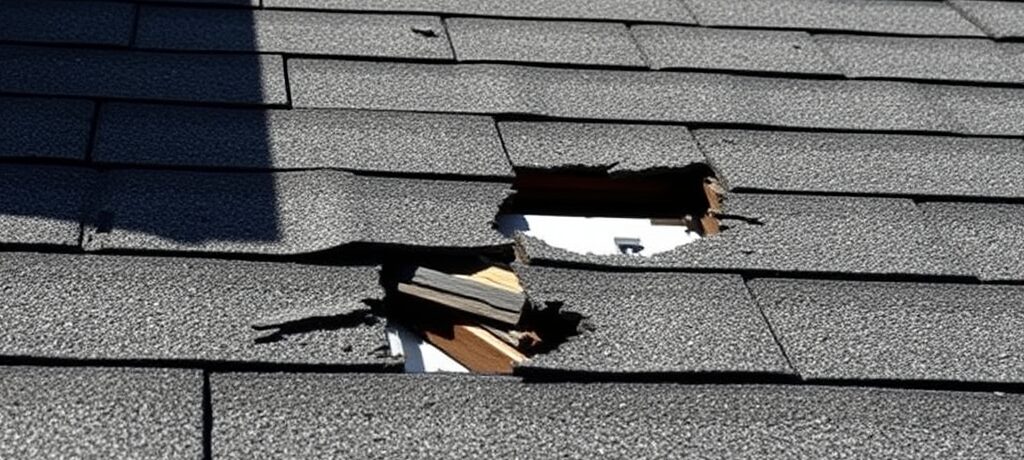
The allegations paint a picture of a company actively seeking to minimize its financial obligations. In one instance detailed in the lawsuits, Tim Willard of Tulsa County, Oklahoma, experienced golf-ball-sized hail that severely damaged his roof on May 21, 2024. Initially, a State Farm adjuster recommended a full roof replacement. However, the company later reversed its decision, denying Willard’s claim. Subsequently, State Farm canceled his coverage, leaving him with an unrepaired roof that other insurers refused to cover.
Willard’s experience is not isolated. Hundreds of similar lawsuits across the country echo his allegations that State Farm is refusing to pay what is owed for hail damage. Some of these cases have resulted in multi-million dollar settlements for homeowners, often bound by confidentiality agreements.
NPR’s review of nearly two dozen lawsuits involving hail damage claims reveals specific strategies allegedly employed by State Farm to deny coverage. The epicenter of this litigation appears to be Oklahoma, where over 600 lawsuits against the insurer were pending as of this spring, according to one law firm involved in the cases. Oklahoma’s Republican Attorney General, Gentner Drummond, has joined one of these lawsuits, accusing State Farm of operating a ‘secret scheme’ to deny and minimize payments for roof damage caused by hail and wind.
State Farm’s Defense and Corporate Responsibility
State Farm has vehemently denied these allegations. In a statement to NPR, the company asserted that it pays what it owes on claims, adhering to the terms of individual policies and the specific facts of each case. ‘We strongly reject any implication or political narrative that State Farm engages in illicit or unlawful conduct,’ the insurer stated. State Farm also claims to work to protect customers from ‘predatory contractors and billboard attorneys.’
In legal filings, State Farm’s lawyers have characterized its actions as part of an initiative launched in 2020 to ‘improve the accuracy of its claims-handling practices, including correcting overpayment and underpayment of claims for wind and hail damage.’ The company’s defense argues this program was ‘neither sinister nor surprising, but part of corporate responsibility.’ State Farm maintains that paying for uncovered losses unfairly burdens other policyholders, making insurance less affordable and accessible.
Alleged Tactics: Redefining Damage and Exclusions
According to plaintiffs’ attorneys and Attorney General Drummond, State Farm’s alleged efforts to cut expenses for wind and hail damage date back to at least 2020. The company reportedly launched a program to reduce payouts for full roof replacements, which was later expanded to Oklahoma and other states.
Two primary tactics are cited in the lawsuits. First, State Farm allegedly assesses claims using definitions and exclusions that are not present in the customer’s policy. For example, in Wisconsin, Nicole Maziasz filed a claim after a 2023 hailstorm damaged her roof. State Farm denied the claim, citing an engineer’s report that found no ‘functional damage’ because the shingles were not fractured or punctured. However, Maziasz’s policy did not define ‘functional damage’ or specify what constituted a covered hail loss. State Farm eventually settled the Maziaszes’ lawsuit, covering their $30,000 roof replacement cost and attorney fees.
Carole Dulisse, a plaintiffs’ attorney in Oklahoma, stated that State Farm is ‘completely rewriting the terms of the policy to write in exclusions that do not exist.’ She added that the company’s policies generally cover a broad range of perils, including hail, without explicit limitations.
Broader Context: Climate Change and Insurance Affordability
These lawsuits are unfolding against a backdrop of increasing climate-related risks and soaring insurance costs. More intense storms, floods, and wildfires fueled by rising global temperatures are leading to greater property damage and higher claims. As a result, insurance premiums are climbing, pushing many homeowners to the brink of affordability or leading them to opt out of the insurance system altogether, leaving millions of homes uninsured.
The financial implications of widespread uninsured homes are significant. Jesse Keenan, an associate professor at Tulane University, warns of potential mortgage defaults, increased foreclosures, and a decline in neighborhood property values, which in turn reduces crucial property tax revenue for local governments.
State Farm has faced scrutiny and government investigations in the past regarding its handling of major disasters, often resulting in substantial settlements. The current wave of litigation over hail damage claims highlights the complex and often contentious relationship between insurers, policyholders, and the escalating impacts of a changing climate on property risk.