When the U.S. Supreme Court struck down most of President Trump’s tariffs on February 20, 2026, it signaled a potential financial windfall for thousands of American businesses that had been paying these duties for nearly a year. However, the path to reclaiming these funds has proven to be a bureaucratic quagmire, raising alarm bells among trade experts who now warn that billions in promised refunds may never reach the companies they are owed to.
Richard Brown, owner of Proof Culture, a sneaker accessory company based out of his Ohio home, experienced the immediate aftermath of the ruling firsthand. “I didn’t realize that the person gave me my bagel, that I could leave, I forgot how doors functioned,” Brown recounted in an audio diary shared with NPR, an hour after the news broke. His initial elation quickly gave way to a jumble of questions: how would U.S. Customs refund the illegally collected duties, and when would his money return?
The Burden of Proof for Small Importers
Proof Culture, a small operation run by Brown and his friend Erron Combs, with occasional help from Brown’s father, exemplifies the challenges faced by businesses without dedicated legal or customs brokerage teams. Unlike larger corporations such as Costco or Revlon, which pre-emptively filed lawsuits, Brown’s company had to navigate the complex refund process largely on its own. “I don’t want to be a customs broker when I grow up,” Brown stated, highlighting the unexpected administrative burden.
The company, which imports laces, cedar shoe trees, and other accessories from China and Mexico, estimates it is owed up to $25,000 in tariff refunds. While not “life-changing money,” Brown noted it represents approximately 10% of Proof Culture’s revenue from the previous year, a sum that could significantly impact a small business’s operations and advertising efforts.
Proof Culture’s supply chain, like many small importers, was a patchwork of sea and air shipments through various carriers and freight-forwarding companies. They typically paid bills and received goods, rarely handling the intricate customs forms. This operational simplicity, however, became a major impediment to claiming refunds.
A Digital Gauntlet for Repayment
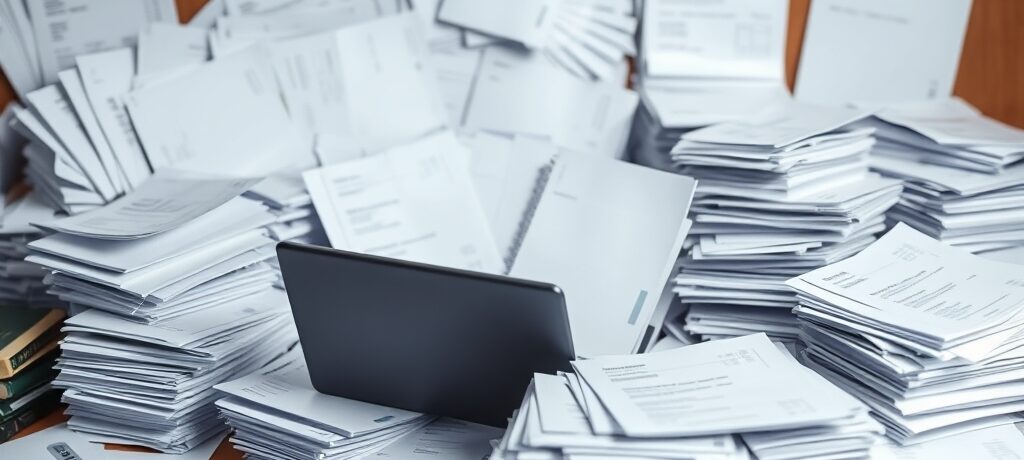
Five days after the Supreme Court ruling, Brown found himself “going through purchase orders, and I’m going through the shipping invoices.” He spent weeks digitizing stacks of old documents and even developed an AI tool to track invoices, while also making “futile voicemails with his Chinese freight-forwarders for missing paperwork.” This intensive effort was further complicated by the Trump administration’s swift rollout of new tariffs with different legal justifications, leading to constantly changing customs fees on new shipments.
In early March, U.S. Customs announced it would establish an online system for refund claims, aiming to avoid the need for lawsuits. While this relieved Brown of one worry, it introduced another: mastering a customs portal he had never used. Brown observed the stark contrast between the ease of paying tariffs and the arduous process of reclaiming them. “The government had all his data, but it was his responsibility to do the math and show the proof,” the source noted.
By April 1, Brown’s frustration was palpable. “We’re not equipped to deal with this,” he recorded in his audio diary. “And it is a shame that the government recognizes that they’re not equipped to deal with it to the extent that they’re now passing it on to us. This wasn’t my problem. And now you’re telling me if I want my money back, figure it out. That sucks.”
Low Success Rates and Billions at Stake
A week before the refund process launched, U.S. Customs provided an update in court, estimating that its new portal was nearly ready to process the “vast majority” of shipments due for refunds. This estimate, however, hinged on the assumption that these shipments were handled by a small group of prolific importers who were prepared to file. More than two-thirds of importers, many of them small businesses like Proof Culture, were not ready, reporting technical errors, login issues, and hours-long waits on hold with U.S. Customs.
As the refund portal opened on April 20, businesses that successfully applied did so in minutes. Brown was not among them. He reflected on the dilemma: “Spending time on tariffs — it feels like a gamble. Like, does getting in this line, this digital line actually position us to get our money back? And how much time and energy are we going to have to put into that? And then how much time and energy does that take us away from doing the things that pay the bills?”
The libertarian Cato Institute, in an analysis published the day after the portal opened, warned that the process, being neither automated nor instant, risked “shortchanging thousands of American companies.” Their analysis suggested that “intentionally or not, the federal government will likely keep tens of billions of dollars it should have returned to importers months ago.” In a court update approximately a week into the process, U.S. Customs reported that it had rejected more than a third of filed claims due to technical or data errors, though importers could refile. As of April 26, the agency had accepted claims covering only about a fifth of the shipments for which refunds were due.
For Richard Brown and Proof Culture, the quest for their $25,000 continues. “It’s money, and every dime matters for a small business,” Brown affirmed, even as he grapples with the effort-versus-reward calculation. His experience underscores a broader concern among trade experts: that the complexity and administrative burden of the refund process could effectively allow the government to retain billions in duties that were legally deemed uncollectible, leaving countless small businesses feeling like firefighters battling an endless series of blazes.