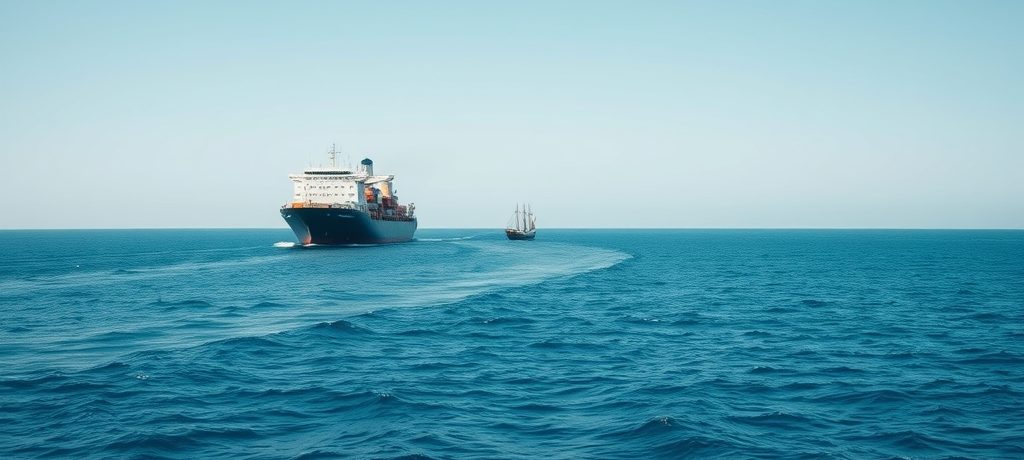
Global shipping faces a compounding crisis as a resurgence of Somali piracy adds a new layer of strain to already disrupted trade routes. With major shipping firms rerouting vessels around Africa to avoid conflict zones in the Middle East, particularly the Red Sea and the Strait of Hormuz, ships are now traversing waters off the Somali coast where piracy once peaked.
Piracy’s Troubling Comeback
The return of Somali piracy is marked by recent hijackings. In the three weeks leading up to May 8, 2026, three vessels—the Honour 25 and Eureka oil tankers, and the cargo ship Sward—were seized off Somalia and nearby Yemen. These ships remain under pirate control, according to reports.
Experts point to organized crime groups in Somalia exploiting the current geopolitical climate. The ongoing conflict involving Iran and its proxies has stretched international naval patrols, which were initially deployed in 2008 to combat piracy. This reduced deterrent presence along Somalia’s extensive coastline, the longest in continental Africa, is emboldening pirate groups.
Tim Walker, senior researcher for transnational threats and organized crime at South Africa’s Institute for Security Studies, noted that pirates are now more likely to seize vessels and their crews for ransom. ‘Some groups, organized by … piracy kingpins, are now looking to seize vessels and hold them for ransom, along with the crew on board — sometimes demanding a high ransom for their safe return,’ Walker told DW.
Well-Resourced Pirates Utilizing Dhows
Maritime data company Lloyd’s List Intelligence identifies at least two active pirate groups, primarily based in Puntland, a semi-autonomous region in northeastern Somalia. These groups appear to be well-resourced, employing large traditional vessels known as dhows. These dhows are repurposed as mother ships, enabling pirates to extend their operational range and remain at sea for extended periods before launching attacks on commercial shipping.
‘Some of the latest hijackings involved large dhows, which need navigation kits, weapons and boarding equipment,’ explained Troels Burchall Henningsen, assistant professor at Denmark’s Institute for Strategy and War Studies. ‘It’s a large operation which requires investment.’
The increased volume of shipping traffic in the region, coupled with some vessels not adhering to optimal security measures, creates vulnerabilities. One tanker, en route to Mogadishu, was reportedly hijacked close to the Somali coast, a particularly exposed area.
Economic Ramifications for Global Trade
The resurgence of piracy exacerbates existing pressures on global supply chains. Already, shipping insurance premiums have risen due to Middle East conflicts, and fuel costs have increased by approximately one million dollars per voyage. Freight rates have also seen substantial increases.
Industry leaders warn that a significant escalation in piracy could further inflate these costs and intensify disruptions to global trade. During the peak of the previous piracy crisis in 2011, the estimated annual economic damage from hijackings was around $7 billion (€5.98 billion), according to the Sasakawa Peace Foundation. This figure encompassed military operations, rerouting, increased fuel consumption from faster travel, and additional security measures, including onboard guards. Ransoms accounted for a relatively small portion of this total, estimated at nearly $160 million.
Shifting Development Aid Policies
Beyond the immediate geopolitical distractions provided by the Iran conflict, shifts in development aid policies toward East Africa may also be contributing to the rise in piracy. Historically, the United States funded development projects in Somalia, particularly in coastal communities, aimed at reducing poverty and discouraging young men from joining pirate groups.
However, under the current administration, nearly all non-security development aid has been suspended, with a focus shifted towards direct counter-terrorism operations against groups like al-Shabab. ‘When you reduce those resources, the intelligence network and maritime patrols don’t have the same capability to work from,’ Burchall Henningsen stated.
Maritime organizations are advising shipping firms to steer clear of Somali territorial waters, including ports. The deployment of armed guards onboard vessels is also highlighted as a highly effective deterrent, with no successful hijackings reported off Somalia when armed guards were present.