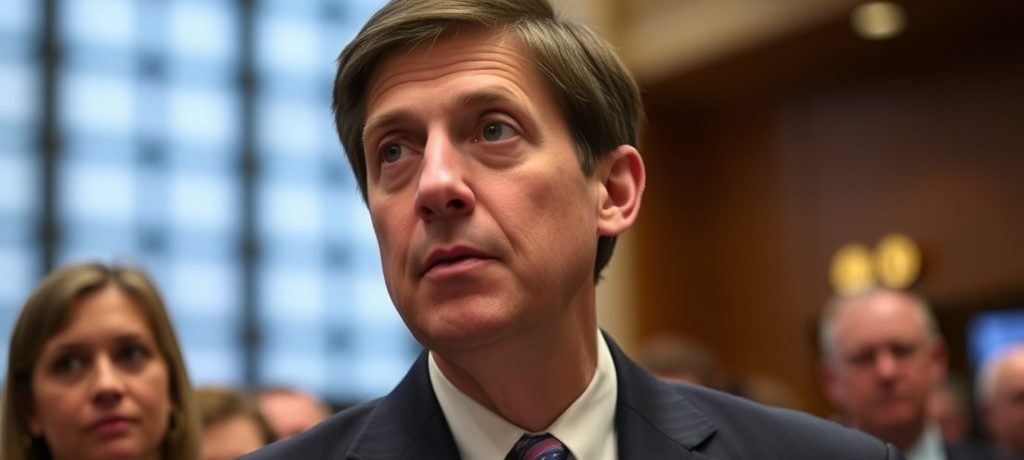
Kevin Warsh secured Senate approval on Wednesday to become the next chairman of the Federal Reserve, taking the helm of the nation’s central bank at a moment of significant economic uncertainty and persistent inflationary pressures. The confirmation, which passed on a 54-45 vote largely along party lines, places Warsh in a pivotal role as soaring gasoline prices continue to exert upward pressure on the cost of living.
President Trump, who nominated Warsh, has openly expressed his desire for the Fed to pursue “much lower interest rates.” However, Warsh’s tenure begins with the central bank facing a complex dilemma: balancing calls for reduced borrowing costs against stubbornly high inflation. Warsh himself has argued there is “room to lower rates,” yet he also explicitly promised to “use his own judgment in setting monetary policy — and not to take orders from the White House.” This pledge directly addressed charges from Sen. Elizabeth Warren, D-Mass., who had accused him of being Trump’s “sock puppet” during his confirmation process.
Navigating Inflationary Pressures
The economic backdrop for Warsh’s arrival is challenging. A Labor Department report released Tuesday indicated that the cost of living had increased by 3.8% over the past twelve months, marking the “biggest annual increase in nearly three years.” This figure significantly exceeds the Fed’s long-standing 2% inflation target, and price pressures appear to be moving “in the wrong direction.”
Contributing to this inflationary environment is a recent surge in crude oil and gasoline costs, exacerbated by geopolitical events. The source article notes that a “war with Iran snarled tanker traffic in the Strait of Hormuz,” triggering a spike in energy prices. This situation presents a direct conflict with Warsh’s stated inclination to lower interest rates, as such a move could potentially fuel further inflation.
Indeed, the Federal Open Market Committee (FOMC), the 12-member body responsible for setting interest rates, is reportedly divided on the appropriate path forward. At its last rate-setting meeting in April, “three members of the committee hinted their next move could as easily be a rate increase as a cut,” underscoring the internal debate and the challenging environment Warsh inherits.
The Powell Precedent and Institutional Independence
Warsh will succeed Jerome Powell, who has led the Fed since 2018. Powell’s term as chairman concludes on Friday, but in a “break with tradition,” he will remain on the Fed’s governing board for a period. Typically, outgoing Fed chairs depart the central bank entirely. Powell’s decision to stay is driven by a stated determination to “safeguard the institution from political pressure.” He has vowed to “keep a low profile and not try to overshadow Warsh,” but his continued presence means he will retain a vote on the influential rate-setting committee.
The transition itself was not without political drama. Warsh’s confirmation as chair was delayed following a “pressure campaign” waged by President Trump against the Fed. This campaign included the Justice Department launching a “criminal investigation of the central bank.” Sen. Thom Tillis, R-N.C., initially blocked a committee vote on Warsh’s nomination in protest of that probe. Tillis dropped his opposition only after a U.S. attorney agreed to discontinue the investigation, clearing the path for Warsh’s eventual confirmation.
Warsh’s Background and Policy Outlook
Warsh brings prior experience within the Federal Reserve system, having served on the governing board from 2006 to 2011. During his previous tenure, the former Morgan Stanley executive acted as a crucial “liaison from the central bank to Wall Street during the financial crisis.”
Beyond interest rate policy, Warsh has advocated for broader changes at the Fed. He has “suggested improvements in the way the government measures inflation” and “proposed changes in the way Fed policymakers communicate with the public.” These proposals indicate a potential shift in how the central bank approaches its dual mandate of maximizing employment and maintaining price stability, as well as its transparency.
As Kevin Warsh steps into the role of Federal Reserve Chair, he faces the immediate challenge of navigating an economy grappling with persistent inflation while managing political expectations for lower interest rates. His ability to assert the Fed’s independence and steer monetary policy effectively will be closely watched by markets and policymakers alike, setting the tone for the central bank’s direction in a volatile economic landscape.