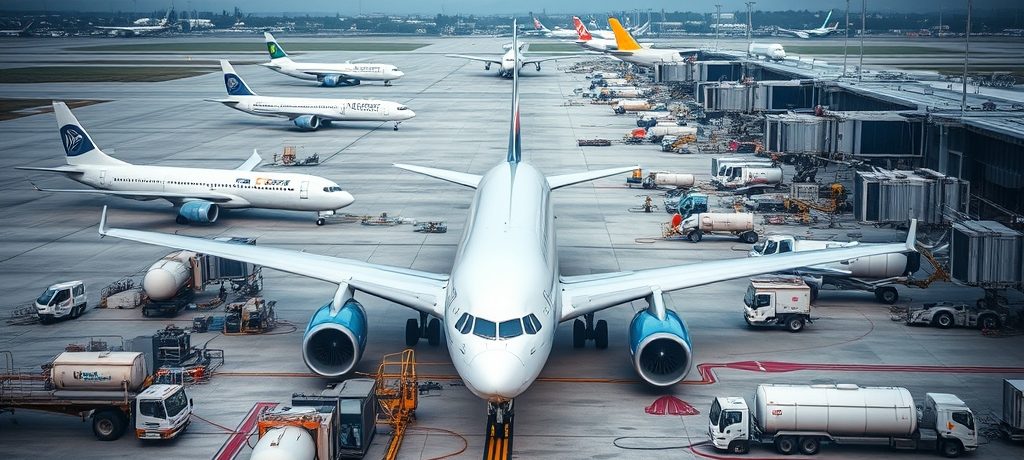
European air travellers face an “inevitable” rise in ticket prices, according to Willie Walsh, head of the International Air Transport Association (IATA). The warning comes as persistent high jet fuel costs, exacerbated by geopolitical tensions in the Middle East and the closure of the Strait of Hormuz, continue to pressure airline operating margins. Despite some recent fare reductions in Europe driven by a lack of demand, Walsh asserted that airlines cannot sustain absorbing these elevated costs over the long term.
The Inevitable Cost Transmission to Consumers
Walsh’s pronouncement underscores a critical shift in the aviation market, where the current practice of discounting European fares to stimulate traffic is deemed unsustainable. While some carriers have introduced temporary price cuts, this strategy is not viable against the backdrop of significantly higher fuel expenses. “There’s just no way airlines can absorb the additional costs they’re experiencing,” Walsh told the BBC, clarifying that while “there may be some instances where airlines will discount to stimulate some traffic flow… but over time it’s inevitable that the high price of oil will be reflected in higher ticket prices.”
The impact of rising fuel prices has already manifested in the long-haul sector, where “significant increases” have been observed. However, the European market, which has seen some fares decrease, is now poised for a similar adjustment. The disruption to crude oil supplies and damage to refining facilities in the Gulf region means that even a hypothetical reopening of the Strait of Hormuz would not lead to a rapid decline in fuel prices. Walsh projected that this issue “will continue for a number of months to come, and may indeed continue into next year,” indicating a prolonged period of elevated operational costs for airlines.
Fuel Supply Concerns and Mitigation Efforts
Beyond the immediate cost implications, concerns about jet fuel supply shortages, particularly for the UK, have also emerged. Europe, and the UK specifically, traditionally relies heavily on imports from the Middle East. The closure of the Strait of Hormuz has prompted a scramble for alternative supplies to avert potential disruptions.
Walsh highlighted a specific vulnerability for UK operators during the peak summer travel months. “I think the major problem facing the UK is timing,” he explained. “You normally expect to see a 25% increase in flights and fuel requirements in the months of July and August versus, let’s say March.” He voiced apprehension that “if sufficient alternative supply isn’t sourced, there may be some shortages when we get into the peak summer period.”
In response to these concerns, the European Union has taken steps to diversify supply. Last week, the EU confirmed there was “no regulatory reason why US-grade jet fuel should not be used by European airlines,” provided its introduction is carefully managed. EU energy commissioner Dan Jorgensen, while not anticipating a “serious shortage in the short term,” acknowledged that “supply issues in the longer term” could not be ruled out.
Industry and Government Perspectives on Resilience
Despite Walsh’s concerns regarding potential summer shortages in the UK, other industry figures and government officials have offered more reassuring outlooks. Sebastien Ebel, chief executive of travel operator Tui, stated he did “not expect shortages over the coming months.” A UK government spokesperson echoed this sentiment, asserting that “UK airlines were ‘clear that they are not currently seeing a shortage of jet fuel’.” The spokesperson further noted that fuel suppliers maintain “stocks of bunkered fuel to support their resilience.”
Walsh himself, while raising the alarm on pricing and potential UK summer supply issues, stressed that there was “no need to panic” and that “widespread cancellation of flights could be avoided.” The UK government is actively collaborating with the aviation industry to ensure flights remain operational and is “consulting on ‘measures to help airlines plan realistic flight schedules which will avoid last-minute disruption and protect holidays’.”
The broader market reaction to the current climate is also evident. Tui has reported a “10% fall” in summer sales, attributed to “cautious UK customers,” indicating that consumer behaviour is already adjusting to the prevailing economic uncertainties and the prospect of higher travel costs.
Long-Term Outlook and Market Adjustments
The consensus from industry leaders points to a sustained period of higher operating costs for airlines, primarily driven by the elevated price of jet fuel. The geopolitical factors underpinning this increase, including the conflict in Iran and its impact on the Strait of Hormuz, are not expected to dissipate quickly. The disruption to crude oil supplies and damage to refining facilities suggest that the market will not see a swift return to lower fuel prices, even if immediate geopolitical tensions ease.
This prolonged period of high input costs will inevitably force airlines to adjust their pricing strategies, transitioning from demand-stimulating discounts to cost-recovery models. The market is thus bracing for a fundamental recalibration of air travel economics, where the cost of flying across Europe will increasingly reflect the new reality of global energy markets.