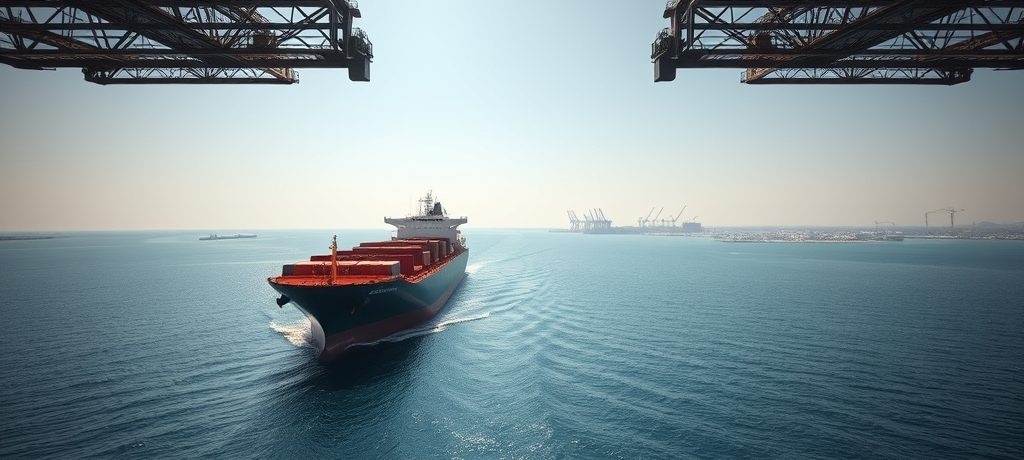
Crude oil and gasoline prices rallied sharply on Friday, with benchmark June WTI crude oil (CLM26) closing up +4.25 (+4.20%) and June RBOB gasoline (RBM26) rising +0.0962 (+2.67%). This surge pushed crude to a 1.5-week high, primarily driven by escalating concerns over a prolonged disruption to global supplies stemming from the ongoing US-Iran conflict and the effective closure of the critical Strait of Hormuz.
Escalating Middle East Tensions and Supply Squeeze
The lack of progress in negotiations to end the US-Iran war remains the central catalyst for the recent price rally. Both the US and Iran have rejected each other’s latest peace proposals, with President Trump reportedly calling Iran’s response a ‘piece of garbage’ and stating the current ceasefire was on ‘life support.’ Mr. Trump further warned, ‘Iran will make a deal or be decimated,’ and indicated on Monday that the US might restart operations to guide commercial ships through the Strait of Hormuz with naval and air support as early as this week.
This ongoing conflict has kept the Strait of Hormuz essentially closed, exacerbating global oil and fuel shortages. Approximately a fifth of the world’s oil and liquefied natural gas transits through this vital waterway. Goldman Sachs estimates that crude output in the Persian Gulf has been curtailed by about 14.5 million barrels per day (bpd), leading to a draw-down of nearly 500 million barrels from global crude stockpiles. This figure could reportedly hit a billion barrels by June. Persian Gulf oil producers have been compelled to cut production by roughly 6% as local storage facilities reach capacity due to the Strait’s closure. The International Energy Agency (IEA) reported last Thursday that over 80 energy facilities have been damaged during the conflict, with recovery potentially taking up to two years.
Global Inventory Depletion and Future Outlook
The International Energy Agency underscored the severity of the supply situation in its monthly report on Wednesday. The IEA noted that global observed oil inventories declined by approximately 4 million bpd in March and April. The agency projected that the market would remain ‘severely undersupplied’ until October, even under the optimistic scenario that the conflict concludes next month. This outlook provides a strong underpinning for energy prices, reflecting the deep impact of the US-Iran war on global supply stability.
OPEC+’s Shifting Stance and Production Realities
Despite the bullish geopolitical backdrop, a potential bearish factor emerged from OPEC delegates, who stated on Thursday that the cartel aims to continue a series of oil quota increases over the next few months, completing the return of halted oil production by the end of September. The group had previously agreed to restore about two-thirds of the 1.65 million bpd supply cutback made in 2023 and planned to revive the final portion in three more monthly stages. On May 3, OPEC+ announced a boost of 188,000 bpd in June, following a 206,000 bpd increase in May. However, the source article notes that any significant production hike now ‘seems unlikely’ given that Middle East producers are being forced to cut production due to the regional conflict. This reality is reflected in OPEC’s April crude production, which fell by -420,000 bpd to a 35-year low of 20.55 million bpd.
The Russia-Ukraine War’s Persistent Influence
Adding another layer of geopolitical risk, the protracted war between Russia and Ukraine continues to exert bullish pressure on oil prices. A recent US-brokered meeting in Geneva to end the conflict concluded prematurely, with Ukrainian President Zelensky accusing Russia of deliberately prolonging the war. Russia maintains that the ‘territorial issue’ remains unresolved and sees ‘no hope of achieving a long-term settlement’ until its demands for Ukrainian territory are met. This ongoing conflict ensures that restrictions on Russian crude remain in place, further tightening global supplies.
Ukrainian drone and missile attacks have targeted at least 30 Russian refineries over the past ten months, significantly limiting Russia’s crude oil export capabilities. April alone saw at least 21 Ukrainian strikes on Russia’s refineries, export terminals, and oil pipeline infrastructure, reducing Russia’s average refinery runs to 4.69 million bpd, the lowest in 16 years, according to Bloomberg data. Furthermore, US and EU sanctions on Russian oil companies, infrastructure, and tankers continue to curb Russian oil exports.
US Market Dynamics
In the United States, recent data presents a mixed picture. Wednesday’s EIA report for May 8 indicated that US crude oil inventories were -0.3% below the seasonal 5-year average, gasoline inventories were -4.3% below, and distillate inventories were -9.4% below the 5-year seasonal average. While US crude oil production in the week ending May 8 rose +1.0% week-over-week to 13.710 million bpd, it remained mildly below the record high of 13.862 million bpd posted in the week of November 7. Baker Hughes reported on Friday that the number of active US oil rigs in the week ended May 15 increased by +5 to 415 rigs, modestly above the 4.25-year low of 406 rigs seen in the week ended December 19. However, over the past 2.5 years, the number of US oil rigs has fallen sharply from its 5.5-year high of 627 rigs reported in December 2022. Separately, Vortexa reported on Monday that crude oil stored on tankers stationary for at least seven days fell -33% week-over-week to 103.90 million barrels in the week ended May 8.
The confluence of escalating geopolitical tensions in the Middle East, the persistent impact of the Russia-Ukraine war on supply, and a global inventory draw-down suggests that crude oil prices will likely remain elevated. Despite some indications of potential OPEC+ output increases, the immediate realities of forced production cuts in the Persian Gulf and sustained demand against constrained supply paint a picture of continued market tightness.