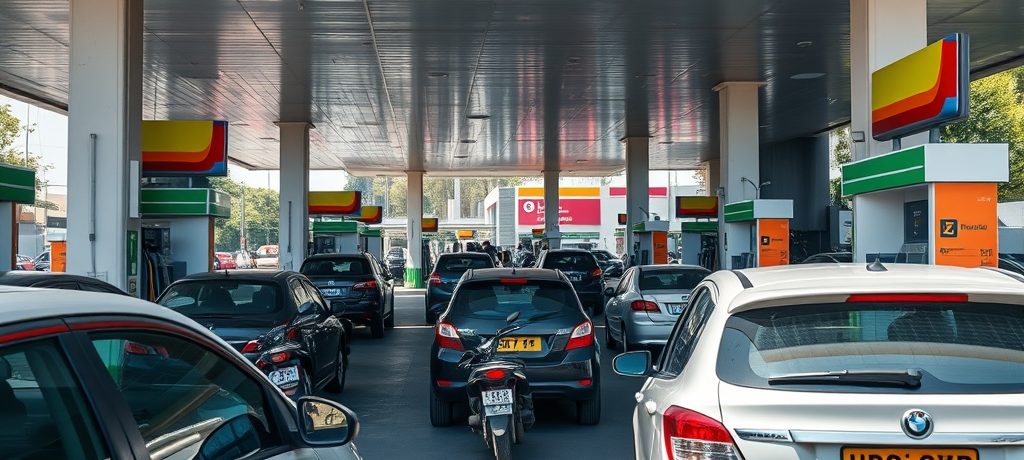
New Delhi, India – India has implemented a 3 rupee per liter increase in fuel prices, a move aimed at mitigating the financial strain on the government caused by escalating global oil costs. The adjustment, effective Friday, marks a significant step in passing on the burden of higher energy prices to consumers, positioning India as one of the last major economies to do so.
Economic Pressures Mount
The price hike comes as India grapples with a severe global energy crisis, exacerbated by supply disruptions linked to geopolitical tensions and the closure of critical shipping lanes. With the nation importing approximately 90% of its oil, the country has been particularly vulnerable to the volatility in international energy markets. Gasoline prices in New Delhi have now climbed to 97.77 rupees ($1.17) per liter, while diesel has reached 90.67 rupees ($1.09) per liter.
This decision follows Prime Minister Narendra Modi’s recent appeal to citizens for voluntary austerity measures. Days prior, Modi urged the public to embrace practices such as working from home where feasible, limiting foreign travel, and curtailing gold purchases. He framed fuel conservation and saving foreign exchange as acts of ‘patriotism,’ while also encouraging greater reliance on public transportation, carpooling, and reduced fertilizer consumption.
Opposition Criticizes Timing
Opposition leaders have voiced criticism regarding the timing of the Prime Minister’s austerity appeal, suggesting it was strategically delayed until after a crucial round of state elections concluded. They pointed out that fuel prices remained unchanged during the election campaign period.
The impact of these price increases is keenly felt by the working class. Manoj Kumar, a 48-year-old taxi driver in New Delhi, expressed his concerns, stating, ‘For common people like us, even one rupee has great value. People work so hard from morning till evening just to make ends meet. The government is not seeing this.’
Broader Economic Measures
In a related effort to conserve foreign exchange reserves, India also recently increased import duties on gold and silver to 15% earlier this week. This measure is intended to curb demand for imports that contribute to draining the nation’s reserves.
The Indian rupee has experienced a significant depreciation, hitting record lows in recent weeks. This decline is attributed to the increased pressure on imports and foreign exchange reserves stemming from higher oil prices.
Austerity Measures in the Capital
In response to the escalating crisis, India’s capital, New Delhi, has become the first state to implement austerity measures. Authorities announced on Thursday a series of fuel-saving initiatives, including mandatory work-from-home days for certain government employees. Delhi Chief Minister Rekha Gupta outlined a 90-day campaign designed to reduce official fuel consumption and encourage residents to opt for public transportation over private vehicles.
Under this plan, government employees whose roles can be performed remotely will work from home two days per week. Private companies are also being encouraged to voluntarily adopt similar measures.
Biofuel Initiatives and Concerns
Simultaneously, India has been accelerating its ethanol blending program in gasoline as part of a broader strategy to reduce its reliance on crude oil imports. Currently, most fuel stations across the country offer gasoline blended with 20% ethanol. The government has also proposed expanding the use of fuels containing 85% or even 100% ethanol in compatible vehicles.
While energy experts acknowledge that blending biofuels can offer a degree of insulation from global energy shocks, they also highlight potential drawbacks. These include further stressing already depleted groundwater resources, encroaching on land designated for food crops, and potentially impacting the engines of older vehicles.
The confluence of rising global energy prices, supply chain vulnerabilities, and domestic economic pressures has necessitated these difficult policy decisions. The government’s strategy now involves a multi-pronged approach, balancing the immediate need to manage energy costs with longer-term goals of energy independence and economic stability.