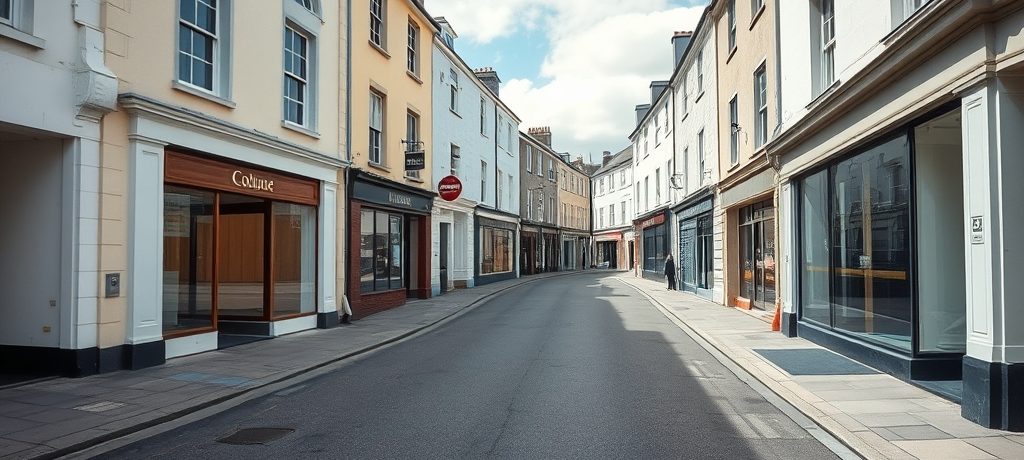
St Brelade, a key district in Jersey, is grappling with a significant economic dichotomy: a visible decline in its designated urban centre, Les Quennevais, evidenced by a proliferation of empty commercial units, juxtaposed with escalating cost of living pressures that are increasingly pushing working families towards charitable food aid. This dual challenge has become a central concern for residents ahead of the June election, highlighting fundamental issues of commercial viability and social equity on the island.
Commercial Decline in Les Quennevais
The commercial heart of Les Quennevais Parade and Precinct, intended as Jersey’s second urban hub, is experiencing a pronounced downturn. Joe Pinzari, a local business owner, has been directly impacted, forced to close one of his two businesses, the Bean Café, for over a year. Pinzari attributes this closure to unsustainable operational costs, specifically citing that rent as a percentage of takings reached an alarming ‘up to 27%’. He stated, ‘You just can’t operate like that as a business. I had to shut it.’
Pinzari’s experience underscores a broader sentiment of neglect within the area. He recalls a vibrant past: ‘I remember as a kid, I was brought up in St Brelade and this area was busy. It was buzzing, it was a vibe, people came up here for a reason.’ Today, he argues, the area ‘is lacking a reason for people to come up.’ The root causes, according to Pinzari and previous business reports, include ‘high rents,’ ‘buildings are falling apart,’ and a distinct ‘no investment being made into the area.’ This lack of investment and high rental demands are reportedly driven by a commercial landlord based in the UK, who has also been criticised for not carrying out necessary repairs.
Beyond the direct financial strain, Pinzari also highlighted a perceived absence of support, noting, ‘we didn’t get enough support locally and there is no support from the government.’ To mitigate such challenges, he proposed the establishment of a local enterprise centre. Such a centre, he believes, could offer tailored assistance to struggling businesses, stating, ‘People can come in and talk to them when they are struggling and find a way to help them.’
Escalating Cost of Living Pressures
Parallel to the commercial struggles, St Brelade residents are confronting a severe cost of living crisis. The sentiment of frustration is palpable, particularly regarding the increasing reliance on food banks in what is widely considered a ‘rich island like Jersey.’ Louis Bowen articulated this concern directly: ‘This is a rich island and you have people going to the food bank. That should not be happening in a place like Jersey.’
Ruth Perchard, who works within a local church, corroborated the widespread hardship. She reported meeting ‘a lot of people who are really struggling, and even people who are working are having to go to food banks.’ Perchard painted a stark picture of the choices facing some families, noting, ‘For some people, it’s a case of either you eat or put the heating on.’ In response to these growing disparities, she suggested that ‘the ones who are very rich should pay more tax’ to help alleviate the burden on those less fortunate.
Housing Market Disparities
The cost of living crisis is intrinsically linked to housing affordability. Tony Bellows, editor of the parish magazine La Baguette, highlighted a significant ‘gap between people who are well on the housing ladder and the people who have rented housing.’ While acknowledging that the States (Jersey’s government) maintains ‘some control on the rents so they [tenants] aren’t getting totally squeezed by landlords,’ the underlying issue of access and affordability remains a critical concern for many residents.
Broader Economic and Environmental Considerations
Amidst these immediate economic challenges, the long-term sustainability and appeal of Jersey are also under consideration. Greg Morel, Head of Jersey National Park, emphasised the importance of environmental protection. With 16% of Jersey’s land mass designated as national park and subject to strict development regulations, Morel argued for ‘environmental wellbeing underpinning social and economic wellbeing.’ He noted that ‘People want to live and work here because it’s such a nice place to live,’ underscoring the natural environment as a foundational asset for the island’s overall prosperity.
As St Brelade approaches the June election, the intertwined issues of commercial decline, soaring living costs, and housing disparities are set to dominate the political discourse. The experiences of local business owners and residents alike point to an urgent need for targeted interventions to revitalise the local economy and ensure equitable living standards across the island.