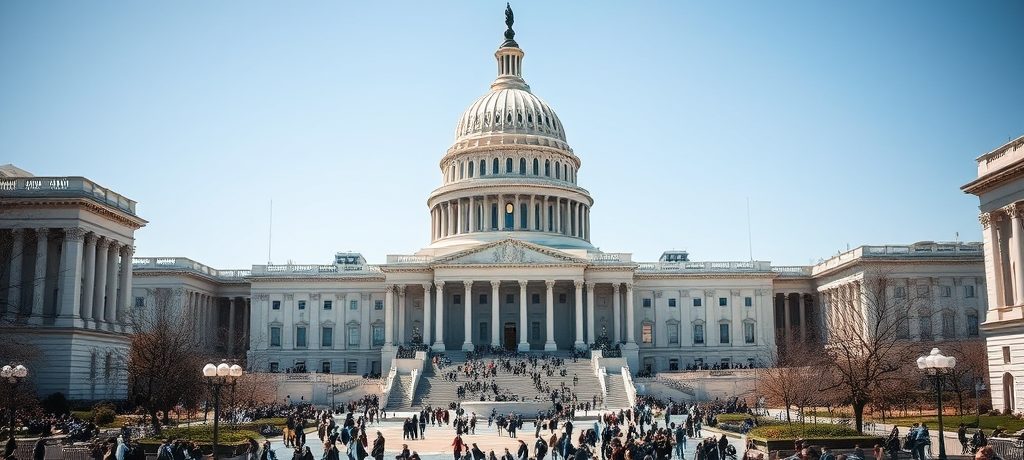
The CLARITY Act (H.R.3633), a pivotal piece of legislation aimed at establishing a comprehensive federal framework for digital assets, has advanced significantly, moving closer to a full U.S. Senate vote. On Tuesday, June 2, the crypto bill was officially placed on the Senate Legislative Calendar after being reported by the Senate Banking Committee, according to Congress.gov. This procedural step, highlighted by Seeking Alpha in a Tuesday report, positions the bill for consideration by the full Senate, with leadership now tasked with determining the timing for debate and a subsequent vote.
Legislative Trajectory and Committee Action
The recent placement on the Senate Legislative Calendar follows a critical advancement on May 14, when the Senate Banking Committee voted 15-9 to move the long-debated CLARITY Act forward. This marked the most substantial congressional movement to date toward creating a defined regulatory structure for digital assets. For the bill to pass the Senate, it will require a supermajority of 60 votes before proceeding to the House for further consideration. The immediate challenge lies in scheduling this vote within a critical timeframe.
Industry and Congressional Support
The progression of H.R.3633 has garnered optimistic reactions from key figures in both the digital asset industry and Congress. Senator Cynthia Lummis (R-Wyo.) expressed her enthusiasm in a Tuesday post on X, stating, “We are closer to a functioning digital asset market structure than we have ever been. Now is not the time to flinch.” Paul Grewal, Chief Legal Officer at Coinbase, echoed this sentiment, posting, “Step. By. Step. We. Are. Getting. Closer. This is what legislating looks like.” Digital asset exchange Gemini also noted the urgency, stating in a Tuesday post, “JUST IN: CLARITY Act enters a 4 week window to advance before Congress’ July recess.”
Senator Tim Scott (R-S.C.), who chairs the Senate Banking Committee, underscored the necessity of the legislation. In a Tuesday post, he asserted that America’s digital asset market has suffered from prolonged regulatory uncertainty, a situation that has driven innovation overseas and complicated law enforcement efforts. “The Clarity Act changes that by protecting consumers, keeping innovation in the U.S., and safeguarding our national security,” Senator Scott affirmed, outlining the bill’s multifaceted objectives.
Banking Sector Opposition and Global Implications
Despite the broad support from some corners of the crypto industry and specific lawmakers, the CLARITY Act faces significant opposition, particularly from traditional financial institutions. JPMorgan Chase Chairman and CEO Jamie Dimon voiced strong concerns on Friday, May 29, indicating that banks would actively oppose the legislation. Dimon’s primary objection centers on the bill’s perceived allowance for digital asset companies to pay interest on deposits without the necessary consumer protections and without adhering to Anti-Money Laundering (AML) and Bank Secrecy Act (BSA) requirements.
The debate surrounding the CLARITY Act is also extending beyond U.S. borders, with reports on Sunday, May 31, suggesting that the legislation could influence cryptocurrency regulation globally. Both proponents and critics acknowledge the potential for this bill to set a precedent far beyond Washington, highlighting the international implications of its passage or failure.
With Congress facing a July recess, the window for the CLARITY Act to advance is narrow, estimated by Gemini as a four-week period. Senate leadership’s decision on when to bring H.R.3633 to the floor for a vote will be critical in determining its immediate fate. The outcome will not only shape the future of digital asset regulation in the United States but could also establish a global benchmark for the burgeoning industry.