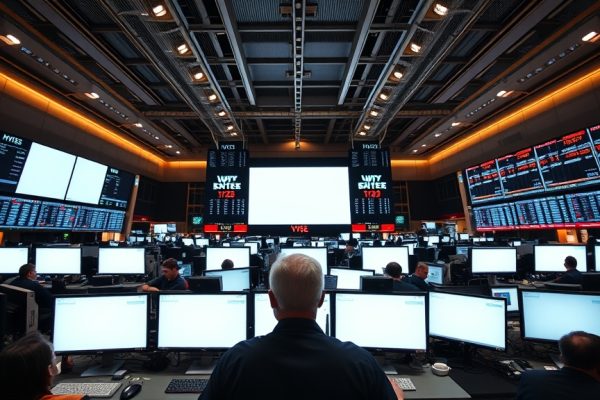
Brookfield Asset Management Inc. is strategically positioning its renewables business to capitalize on the burgeoning demand for data centers in India, viewing the sector as a substantial opportunity. This perspective stands in contrast to some investors who express concern over India’s perceived lack of clear artificial intelligence-focused investment options within its market.
The New York-based investment giant, which manages approximately $1 trillion in assets globally, including $32 billion invested in India, asserts that India’s vast population will become massive consumers of global AI applications. This anticipated consumption, according to Brookfield, necessitates a significant build-out of data centers, which in turn will require a robust and clean power supply to ensure continuous operation.
India’s Population Fuels AI Infrastructure Demand
Nawal Saini, a managing partner in Brookfield’s energy group, emphasized the scale of India’s adoption. “India is a very large-scale adopter,” Saini stated. “As AI use cases become more clear and widespread, we have a 1.5 billion population to serve, creating business models and the infrastructure behind them.” This outlook diverges from the sentiment of some global investors who have reportedly pulled back from Indian stocks this year, citing an absence of foundational AI models or advanced chip manufacturers that have propelled technology stocks in other major markets.
Brookfield, however, maintains a different view, leveraging its position as the largest foreign investor in renewable energy in India and one of the country’s biggest commercial real estate landlords. The firm’s strategy centers on providing the essential energy infrastructure for this digital expansion.
Powering Data Centers: A Gigawatt-Scale Challenge
The energy demands of modern AI data centers are immense and continuous. Saini highlighted that an AI data center requiring one gigawatt (GW) of operational power may necessitate seven to nine gigawatts of installed renewable capacity to ensure a smooth and uninterrupted supply. “There lies the opportunity for players like us,” Saini affirmed, who also leads Brookfield’s energy business across South Asia and the Middle East.
To address this, Brookfield launched a fund in November that aims to invest $100 billion in AI assets across various stages of the value chain, encompassing energy, land, data centers, and computing capability. The firm’s existing renewable energy portfolio in India is substantial, including more than 45 gigawatts of operating and planned assets.
Strategic Investments and Energy Storage Solutions
Brookfield’s investments in India’s renewable sector include stakes in firms such as Clean Max Enviro Energy Solutions Ltd., Evren Technologies Inc., Avaada Energy Pvt, and Leap Green Energy Pvt. Clean Max, for instance, currently derives approximately 42% of its revenue from supplying green power to AI customers and data centers, having recently secured agreements with major players like Meta Platforms Inc. and Iron Mountain Inc.
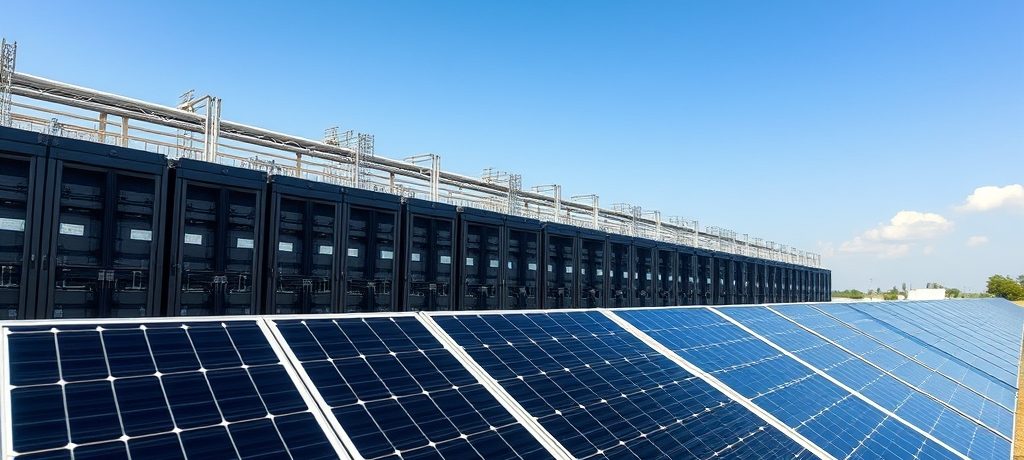
A critical component of powering AI data centers with renewables is energy storage. Given the intermittent nature of solar and wind generation, continuous, around-the-clock electricity requires sophisticated storage devices to smooth out supply fluctuations. Brookfield anticipates deploying significant capital into battery storage solutions. According to Bloomberg New Energy Finance, demand for battery storage in India is projected to reach 336.7 gigawatt hours (GWh) by 2035, representing an approximately 115-fold increase over current installations.
“Energy storage, complementing renewable energy by stabilizing the grid and distributing renewable power across the day is a big ask from customers,” Saini noted from Mumbai.
Beyond the Grid: Green Ammonia Opportunities
Brookfield’s strategic focus extends beyond grid-connected power to include green ammonia, a fertilizer. The recent conflict in the Middle East has exposed India’s vulnerability to imported natural gas and urea, highlighting the need for domestic alternatives. Saini pointed to a recent revival in domestic green ammonia contracts as a significant boost for the sector.
The development of green ammonia production would not only reduce India’s fertilizer import bill by replacing urea but also position the country to potentially export green molecules in the future, further bolstering its energy independence and economic standing.
Brookfield’s comprehensive approach, integrating large-scale renewable energy generation with advanced storage solutions and exploring new avenues like green ammonia, underscores its long-term commitment to India’s energy transition and its pivotal role in enabling the country’s digital infrastructure growth.