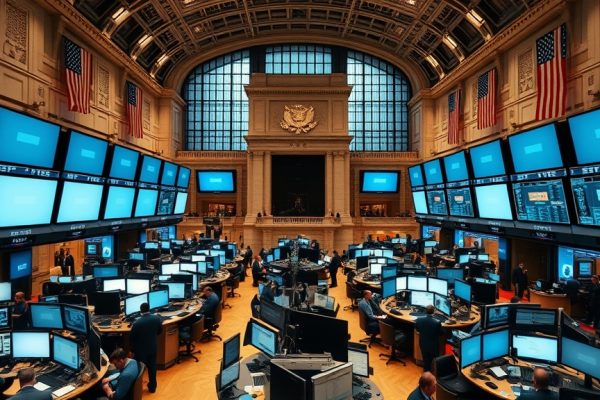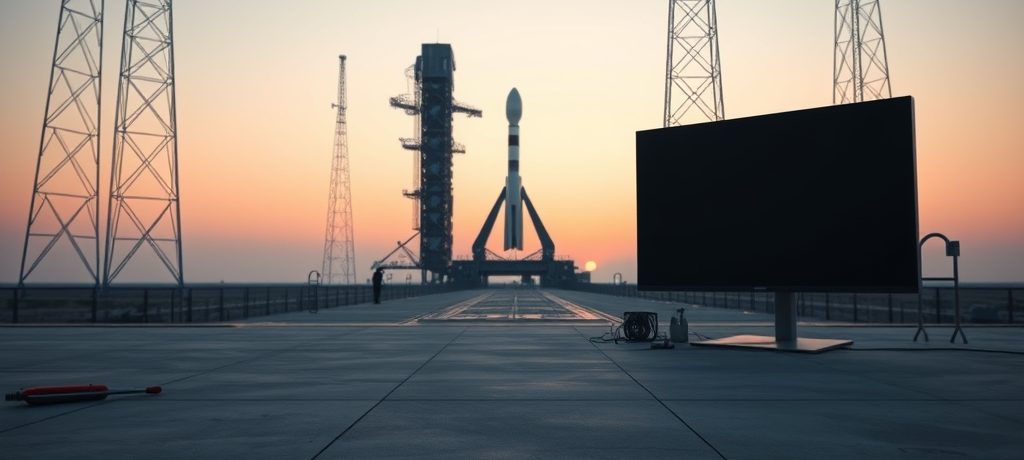
SpaceX is set to dominate financial markets this Friday with its initial public offering (IPO), a move that promises unprecedented potential for investors while simultaneously carrying substantial financial risks. The Elon Musk-led company, involved in rockets, satellites, and artificial intelligence, aims to raise up to $75 billion by selling nearly 555.6 million shares at $135 each. This valuation would establish it as the largest IPO in history, eclipsing Saudi Aramco’s 2019 offering of $26 billion, and instantly positioning SpaceX as the seventh-largest publicly traded U.S. company with a total valuation of $1.8 trillion, despite only 4% of its equity being offered.
Ambitious Ventures Fueling Valuation
The proceeds from this monumental IPO are earmarked for SpaceX’s audacious projects, including the installation of AI data centers in space and missions to Mars. Founded in 2002, SpaceX has already revolutionized space technology with its reusable rockets, becoming the leading provider of launch services globally. Its long-term vision includes colonizing Mars and establishing a human civilization there. Closer to home, the company operates Starlink, a constellation of approximately 8,000 satellites providing broadband internet services. Starlink is currently SpaceX’s sole profitable venture.
Earlier this year, SpaceX expanded its scope by merging with xAI, a company established by Musk in 2023 to compete with AI leaders like OpenAI and Anthropic. Musk’s plan involves deploying massive AI data centers in orbit, leveraging solar power and the vacuum of space for cooling. This strategy aims to overcome the energy and cooling limitations faced by terrestrial data centers.
Financial Realities and Investor Concerns
Despite its sky-high ambitions and a projected market potential of $28.5 trillion for its integrated space-based AI and internet services, SpaceX remains a loss-making entity. In the past year, the company generated $18.7 billion in revenue but incurred a net loss of $4.9 billion. SpaceX anticipates it will not achieve profitability in the near future. Furthermore, the company carries significant debt, amounting to approximately $29 billion as of the end of March.
These financials place SpaceX’s valuation at roughly 94 times its annual revenue, a substantial premium compared to highly profitable Big Tech firms such as Apple, Alphabet, and Nvidia. Financial services firm Morningstar has offered a more conservative valuation of $780 billion, a stark contrast to the IPO’s $1.8 trillion figure. Morningstar characterizes SpaceX’s outlook as ‘very uncertain,’ contingent on the successful development and cost-efficiency of its orbital AI platform compared to terrestrial computing solutions.
Investor Frenzy and Market Dynamics
Investor interest, both retail and institutional, appears to be immense, with reports indicating the IPO is already oversubscribed. Many are drawn to Musk’s track record, citing his success in building Tesla into an automotive and tech powerhouse. Notably, SpaceX has allocated a larger portion of shares—up to 30%, or $22.5 billion—to retail investors, a departure from the typical 5% to 10% offered in most IPOs.
However, experts caution about the inherent volatility of IPOs. Jay Ritter, an IPO expert and finance professor at the University of Florida, notes that approximately 25% of IPOs decline on their first trading day, with a larger percentage falling over longer periods. He attributes institutional willingness to assign high valuations to SpaceX and other AI companies to the demonstrated success of firms like Alphabet and Nvidia in achieving substantial profitability. The Nasdaq exchange has also adjusted its rules, allowing large newcomers like SpaceX to join its index within 15 trading days, potentially compelling passive investment funds to acquire shares sooner.
Musk’s Dominance and Governance Risks
The limited availability of shares—only about 4% of equity—could exacerbate price volatility once trading commences, as a large number of investors chase a constrained supply. Post-IPO, Elon Musk will retain substantial control. Despite owning an estimated 42% of SpaceX, a dual-class share structure will ensure he holds approximately 82% of the voting power, effectively making him unremovable. The company also limits shareholders’ ability to pursue class-action lawsuits, mandating disputes be filed in a specialized Texas business court or, if refused by a judge, resolved through private arbitration—a provision that significantly curtails investor rights.
Morningstar has highlighted Musk’s dominance as a ‘key-person risk,’ warning that minority shareholders will have limited influence over company decisions. This concentration of decision-making authority in one individual presents governance risks that warrant careful consideration by potential investors.