One month after its highly anticipated stock market debut, SpaceX, the firm co-founded and led by Elon Musk, has seen its shares swing from an initial investor frenzy to a period of apparent concern. The company’s initial public offering (IPO) on June 12 made history, solidifying it as the largest IPO of all time, but the subsequent weeks have brought a clearer focus on its revenue streams and a notable correction in share price.
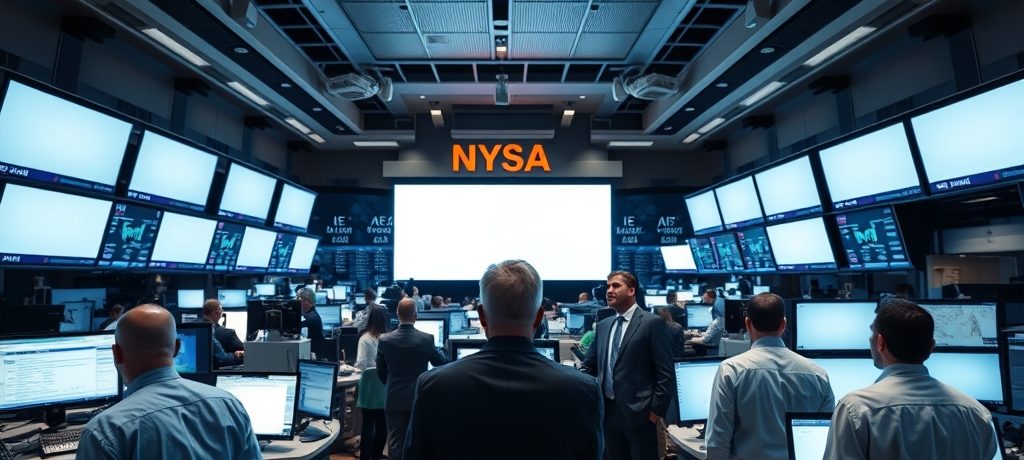
The IPO ignited a buying spree, with shares initially priced at $135 each, immediately soaring to $150 on the first day, climbing to $176, and closing at $160.95. The following week saw an even more dramatic ascent, with shares hitting an intraday high of $225, momentarily pushing SpaceX’s total market value beyond that of tech giants Amazon and Microsoft. This initial excitement, according to Keith Snyder, an analyst at investment research firm CFRA, was largely fueled by the perception of SpaceX as an artificial intelligence (AI) play. Snyder noted, “With Elon Musk, any company he touches gets people excited. But this was also the first time people felt like they were able to invest in something that was being marketed as an AI play.” Willy Lee, an investor at Neosteller, echoed this sentiment, stating, “Everyone saw SpaceX as an AI story.” This narrative was bolstered by SpaceX’s acquisition of Musk’s AI start-up xAI, recently renamed SpaceXAI, known for its chatbot Grok, and its venture into leasing data centre capacity to other tech companies.
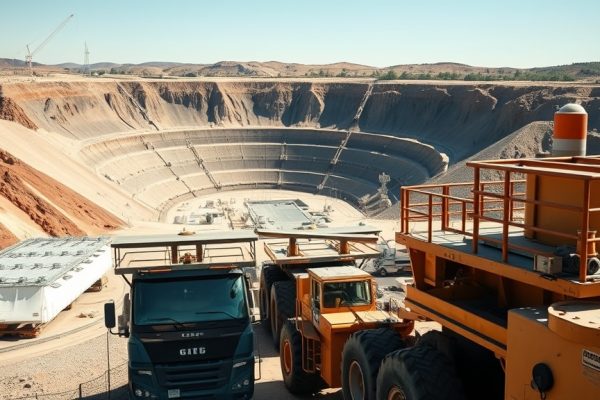
However, the reality of SpaceX’s primary business — the manufacture and launch of rockets and its Starlink telecommunications satellites — has since come into sharper focus. A significant moment of this recalibration occurred when Starlink announced price cuts in the Memphis, Tennessee area, amid local concerns over a massive data centre project. On that day, SpaceX shares fell by 8%. This shift in investor perception, coupled with a tumultuous period for tech stocks generally, has seen SpaceX take a particular hit. For instance, on July 7, when it was added to the Nasdaq100 index, SpaceX fell 4.4%, even as the index closed down 1.7%. An earlier addition to the FTSE Russell index had provided only a slight, temporary boost.
By the end of its first trading month, SpaceX shares were trading at approximately $145 each. This represents an 18% decline from its high on the first day of trading and a substantial 35% drop from its peak price. Such a significant price correction means that many retail investors who purchased SpaceX stock during its initial five days of trading are now facing potential losses. “If you bought around the first tick you’re definitely underwater,” Snyder commented, further adding that the stock “started to look a lot like a meme stock,” drawing parallels to GameStop and Wendy’s, where retail investor enthusiasm disproportionately drives share prices. Snyder projects a further dip to around $115 a share, which would still value the company at an estimated $1.5 trillion, based on its underlying business performance.
Samuel Kerr, who leads analysis of equity capital markets for Mergermarket, highlighted the varied impact on different investor groups. “If you’re an IPO investor, you’re ok,” Kerr explained, referring to those who secured shares at the proposed listing price of $135 or were pre-IPO insiders. Conversely, he noted, “If you bought in the first few days, you’re not very happy right now.” Despite the recent volatility, Elon Musk has maintained an optimistic outlook for SpaceX’s business prospects. Following the public listing, which reportedly made him the world’s first trillionaire, Musk projected that SpaceX would achieve $1 trillion in yearly revenue by 2030.
Musk has also demonstrated a strategic willingness to leverage SpaceX shares, and their inherent volatility, as a form of currency. When the share price spiked on June 16, SpaceX announced the acquisition of Cursor, an AI bot start-up for writing computer code, in an all-stock deal valued at $60 billion. Executing this acquisition during a period of peak stock value effectively allowed Musk to acquire Cursor at no net cost, given the simultaneous gain in SpaceX’s market capitalization. Kerr praised this move, stating, “It showed a level of market sophistication that almost no other issuer has.” Since that strategic maneuver, SpaceX shares have continued their downward drift.
Looking ahead, anticipation is building for SpaceX’s first public earnings report, expected in early August, though a specific date has not yet been announced. This report will offer a more detailed look into the company’s financials, which currently show it operating at a loss, with $18 billion in revenue last year – a figure significantly dwarfed by Musk’s $1 trillion revenue projection for 2030, which is roughly 55 times greater. The earnings report is also likely to coincide with the end of the ‘lock-up’ period, when SpaceX employees, previously restricted from selling their compensation-related shares, will be able to trade them on the open market. Morgan Stanley, a lead banker on the IPO, remains bullish, initiating coverage last week with a target share price of $300, representing a 33% jump from its highest trading price to date.
The influx of additional shares onto the market, coupled with a clearer financial picture, could lead to further dramatic price swings. As Kerr aptly summarized, “If SpaceX can do all the things it says it will do, yes, investors are sitting on the most valuable company ever. But it’s got a lot of work to do to get there.” The coming weeks will be crucial in determining whether the initial excitement can be rekindled by concrete performance, or if the reality of its core business continues to temper investor expectations.