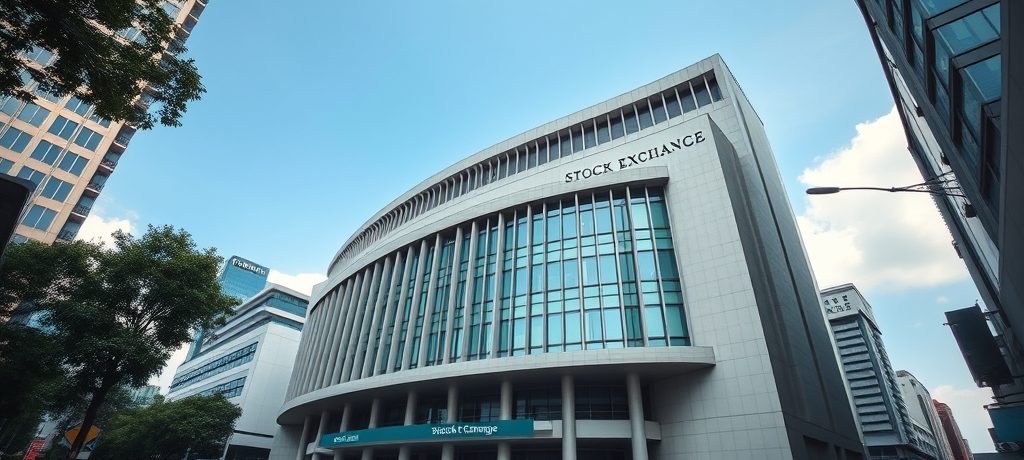
The Thai stock market is bracing for a potential continuation of its losing streak, having concluded three consecutive trading sessions in negative territory. The Stock Exchange of Thailand (SET) index has shed over 15 points, a decline of more than 1 percent, and now hovers just above the 1,430-point mark. Market watchers are anticipating a subdued opening on Thursday, with broader Asian markets expected to follow a cautious trend influenced by renewed concerns over the global interest rate environment.
SET Index Continues Downward Trajectory
On Wednesday, the SET index closed modestly lower, reflecting losses across a broad spectrum of sectors. The index shed 7.85 points, or 0.55 percent, to settle at 1,430.40. Trading activity saw the index fluctuate between a low of 1,425.93 and a high of 1,437.27. The volume of shares traded was substantial, with 10.026 billion shares changing hands for a total value of 36.708 billion baht. The market breadth indicated a bearish sentiment, with 324 declining stocks compared to 161 gainers, while 178 stocks remained unchanged.
Sectoral Weakness and Key Stock Movements
The downturn was broadly distributed across key economic sectors. Declines were observed in the food, consumer, finance, industrial, property, resource, service, and technology sectors. Among the actively traded stocks, Advanced Info saw a dip of 0.71 percent, while Thailand Airport managed a slight gain of 0.41 percent. Asset World experienced a significant tumble of 1.68 percent, and Banpu plunged by 2.59 percent. Bangkok Expressway slipped 0.67 percent, and B. Grimm tanked 2.38 percent. Conversely, BTS Group showed resilience with a rally of 3.77 percent.
Other notable movements included CP All Public dipping 0.80 percent, Energy Absolute surrendering 1.89 percent, and Gulf closing down 0.40 percent. Financial institutions also faced pressure, with Krung Thai Bank retreating 1.48 percent and Krung Thai Card climbing 1.09 percent. PTT Oil & Retail slid 0.70 percent, while PTT weakened by 1.52 percent. PTT Exploration and Production skidded 1.17 percent, and PTT Global Chemical dropped 0.98 percent. SCG Packaging sank 0.89 percent, Siam Commercial Bank shed 0.43 percent, and Siam Concrete stumbled 1.57 percent. Thai Oil plummeted 1.90 percent, and TTB Bank lost 0.56 percent. Several major stocks, including Charoen Pokphand Foods, Bangkok Bank, Kasikornbank, True Corporation, and Bangkok Dusit Medical, finished the session unchanged.
Global Market Influences
The performance of the Thai stock market is occurring within a broader context of global market trends. European markets presented a mixed picture, while U.S. bourses experienced a slight softening. This trend is expected to influence Asian markets, suggesting a potential continuation of mild consolidation. The U.S. market’s downturn on Wednesday saw major averages opening mixed but ultimately trending lower throughout the day. The Dow Jones Industrial Average fell 138.25 points (0.31 percent) to 44,722.06, the NASDAQ Composite slumped 115.10 points (0.60 percent) to 19,060.48, and the S&P 500 declined 22.89 points (0.38 percent) to 5,998.74.
The weakness in the NASDAQ was particularly pronounced in computer hardware stocks, with Dell Technologies and HP Inc. experiencing significant drops following disappointing earnings guidance. Semiconductor and networking stocks also contributed to the downward pressure on the NASDAQ, although biotechnology stocks showed a strong upward movement. The broader market pullback in the U.S. followed the release of inflation data from the Commerce Department, which met expectations. However, the observed acceleration in annual price growth has amplified concerns regarding the future trajectory of interest rates.
Economic Indicators and Commodity Markets
The inflation data, while in line with forecasts, has heightened anxieties about potential interest rate hikes, a factor that often weighs on equity markets. In commodity markets, crude oil prices saw a slight decrease on Wednesday. Traders were assessing news of a ceasefire between Israel and Hezbollah against data indicating a larger-than-expected decline in U.S. crude oil inventories. West Texas Intermediate for January delivery eased by $0.05, or 0.1 percent, to settle at $68.72 a barrel.
The confluence of domestic sectoral weakness, a cautious global economic outlook, and persistent concerns over interest rate policy suggests that the Thai stock market may continue to face headwinds in the near term. Investors will be closely monitoring upcoming economic data and central bank commentary for further direction.