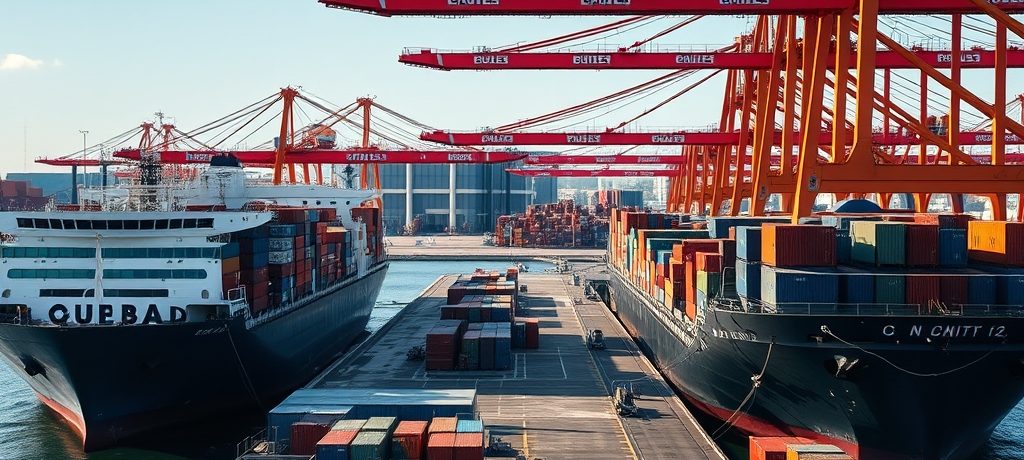
Brazil’s political arena is currently gripped by a sharp dispute between President Luiz Inácio Lula da Silva and Senator Flávio Bolsonaro, son of former President Jair Bolsonaro, over a proposed U.S. tariff hike. The Trump administration’s plan to impose 25% taxes on Brazilian products, despite a long-standing U.S. trade surplus with Brazil, has ignited a fierce debate, with both candidates strategically positioning themselves ahead of October’s presidential election.
The latest U.S. tariff proposal follows a period of renewed tensions. Last June, the U.S. Trade Representative (USTR) charged Brazil with lax anti-corruption enforcement and unfair tariffs, among other grievances, after an investigation directed by U.S. President Donald Trump. This investigation was initiated following an earlier imposition of a 50% tariff on Brazilian imports last July, which the Trump administration cited as a response to a “witch hunt” against Jair Bolsonaro, who was then on trial for attempting a coup after his 2022 electoral defeat to Lula and was later convicted.
Senator Flávio Bolsonaro has actively sought to influence the U.S. decision, arguing that the proposed tariffs would inadvertently bolster Lula’s political standing. In a document submitted to the USTR on Wednesday, Bolsonaro stated, “Brazilian public polling shows that the incumbent government’s electoral position has strengthened during precisely the periods when U.S. tariff pressure has been most salient.” The document, which included graphs of these polls, further suggested that the tariffs would hand the government a “political victory.” Bolsonaro also proposed that the USTR investigation’s findings could be “reaffirmed in full even as implementation is suspended,” advocating for a postponement of the tariffs. He later announced his intention to return to the U.S. next week to reinforce the demand against additional tariffs, asserting on X that Lula is the only “one who wants the tariff hike against Brazilian products.”
President Lula da Silva, in turn, has vehemently condemned Bolsonaro’s actions, labeling the document sent to the USTR as “yet another act of treason against the fatherland.” Lula has consistently framed the tariff debate as a matter of national sovereignty, a discourse that reportedly boosted his popularity last year. He warned the U.S. leader against meddling in Brazil’s elections and asserted on X, “It is unacceptable that the Bolsonaro family, with its sellout policies, seeks to submit Brazil to the interests of the United States.” Lula maintained, “There has never been, nor is there, any justification for a tariff hike now or later.” His government has formally rebuked the USTR’s arguments, rejecting claims that Brazil’s trade policies are unreasonable, discriminatory, or burdensome to U.S. commerce. Specifically, it defended its PIX instant payment system, arguing its practices are lawful, neutral, and promote competition, countering the USTR’s grievance that it unfairly disadvantaged competing electronic payment services.
The political implications of the tariff dispute are significant, with both candidates recognizing its potential impact on public opinion ahead of the October election. Bolsonaro’s direct reference to polling data in his USTR submission underscores the strategic importance placed on how each leader is perceived to handle this international economic pressure. The clash highlights a broader divergence in foreign policy approaches, with Lula emphasizing national autonomy and Bolsonaro appearing to seek a more accommodating stance with the U.S. administration, albeit with a tactical aim to undermine his rival.
Beyond tariffs, the two leaders have also found themselves at odds over other U.S. policy decisions affecting Brazil. Notably, they clashed over the Trump administration’s decision to classify two of Brazil’s main organized crime groups—First Command of the Capital (PCC) and Red Command—as terrorist organizations. Senator Bolsonaro supported this move, which some analysts viewed as a U.S. attempt to interfere in the election. President Lula, however, argued that such a designation is inappropriate, contending that these groups primarily seek profit rather than political change. This week, the U.S. announced sanctions targeting companies and individuals linked to PCC, describing it as “the largest transnational criminal organization in the Western Hemisphere,” further complicating the geopolitical landscape.
The ongoing dispute over U.S. tariffs between President Lula and Senator Bolsonaro illustrates the intricate interplay between international trade policy and domestic electoral politics in Brazil. As the October presidential election draws closer, the handling of these economic pressures and the defense of national interests are poised to remain central themes, shaping public perception and influencing the political trajectory of the nation.