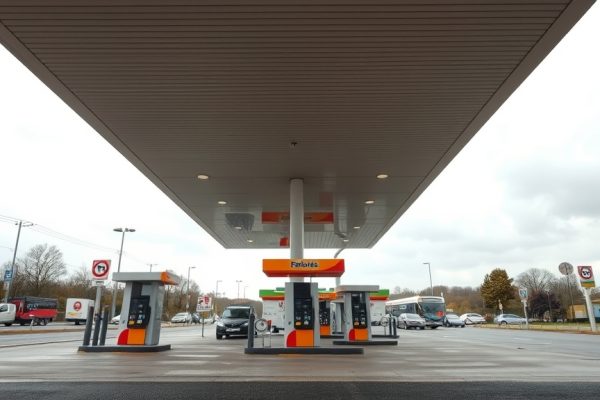
As Americans geared up for the Independence Day holiday, a recent moderation in gas prices provided a significant uplift to consumer sentiment, even as fuel costs remained historically high. This nuanced trend, detailed by AAA and various economic surveys, suggests that while the cost of filling up is still a concern, the downward trajectory from recent peaks offered enough psychological relief to encourage record-breaking travel plans.
Heading into the Fourth of July weekend, the national average for gasoline stood at $3.838 per gallon on Thursday, July 2, according to AAA’s press release. This figure, while marking the highest prices for the holiday in four years and since 2022, represented a notable decline from recent highs. Just a week prior, the average was $3.918, and a month ago, it had reached $4.290. The spring’s peak was even higher, hitting $4.56 on May 12. Despite this recent easing, the current price is still substantially higher than the $3.172 average recorded a year ago.
“Overall, gas prices remain the highest they’ve been in four years, but the downward trend since late May is welcome news during the busy summer driving season,” AAA stated in its release. This sentiment appears to have directly influenced travel intentions, with AAA projecting a record-high number of 72.2 million Americans planning to travel at least 50 miles from home for Independence Day between June 27 and Sunday, July 5. This projection surpasses last year’s record-setting total of 71.8 million travelers.
A significant portion of these travelers, 61.4 million, are expected to opt for road trips, an increase from 61.3 million last year. AAA highlighted that even with elevated gas prices, traveling by car remains a more economical choice for many compared to purchasing a flight. This preference underscores the resilience of road travel as a primary mode for holiday excursions, despite the fluctuating cost of fuel.
Consumer Sentiment Rebounds as Prices Ease
The impact of moderating gas prices on the broader economic mood was clearly reflected in recent consumer surveys. The University of Michigan’s Surveys of Consumers reported a boost in consumer sentiment at the end of June, directly attributing this rise to the easing of fuel costs. Joanne Hsu, Director of the Surveys of Consumers, noted, “Consumer sentiment confirmed its early-month reading, rising about 10% above May as gas prices moderated.” She further added that “Increases were seen across income, wealth and political affiliation,” indicating a broad-based improvement in outlook.
This rebound is particularly significant given the context of earlier readings. The Surveys of Consumers’ Index of Consumer Sentiment had plummeted to a record low in May, marking the lowest point in the Index’s over 73-year history. This sharp decline was primarily driven by worries over gas prices and concerns related to geopolitical events, specifically the war in the Middle East. The subsequent easing of gas prices in early June coincided with the initial tick-up in consumer sentiment, demonstrating a direct correlation.
Broader Confidence Indicators Confirm Trend
Complementing the University of Michigan’s findings, The Conference Board also reported a slight improvement in consumer confidence in June. Their June 30 announcement indicated that while consumers’ write-in responses to their survey still contained elevated references to prices and oil and gas, these mentions were less frequent than in previous periods. Dana M Peterson, Chief Economist at The Conference Board, articulated the connection: “Consumer confidence inches up in June as falling oil prices in recent weeks provided some relief to consumer inflation fears.”
This convergence of data from multiple reputable sources underscores the profound psychological and economic effect that gas prices exert on the American consumer. The cost of fuel is not merely an item in a household budget; it serves as a highly visible and frequently encountered indicator of broader economic health and inflationary pressures.
The Visceral Impact of Fuel Costs
The heightened sensitivity of consumers to gas price fluctuations was highlighted in a Bloomberg report on Friday, July 3. Laurel Harbridge-Yong, a political science professor at Northwestern University, provided an insightful perspective on this phenomenon. She explained the immediate and tangible nature of gas price changes compared to other household expenses. “When you think about your grocery bill, it’s maybe slowly inching up, but you don’t have the same visceral reaction that you do of, ‘Wow, a month ago I could fill my tank for $40 and now it’s $60,’” Harbridge-Yong observed.
This “visceral reaction” suggests that while other inflationary pressures might be more insidious, the direct and frequent interaction with gas pumps makes fuel costs a potent symbol of economic strain or relief. The recent dip, despite overall higher prices, tapped into this psychological trigger, fostering a sense of optimism just in time for the summer holiday season.
Ultimately, the data from AAA, the University of Michigan, and The Conference Board paints a clear picture: a modest reprieve at the gas pump can significantly alter the consumer mood, driving both increased travel and a broader sense of economic well-being. This sensitivity to fuel costs will likely continue to be a critical factor for economic observers as the summer driving season progresses and consumers navigate their spending decisions.