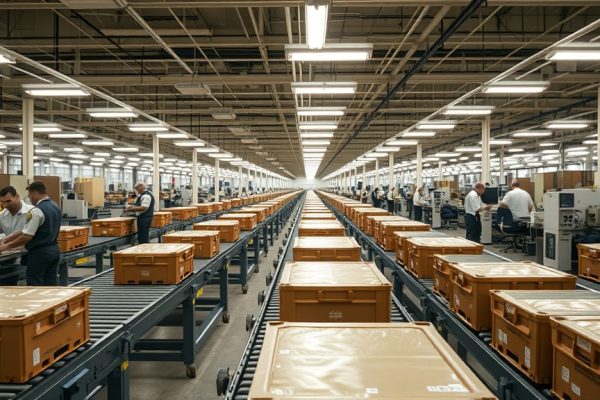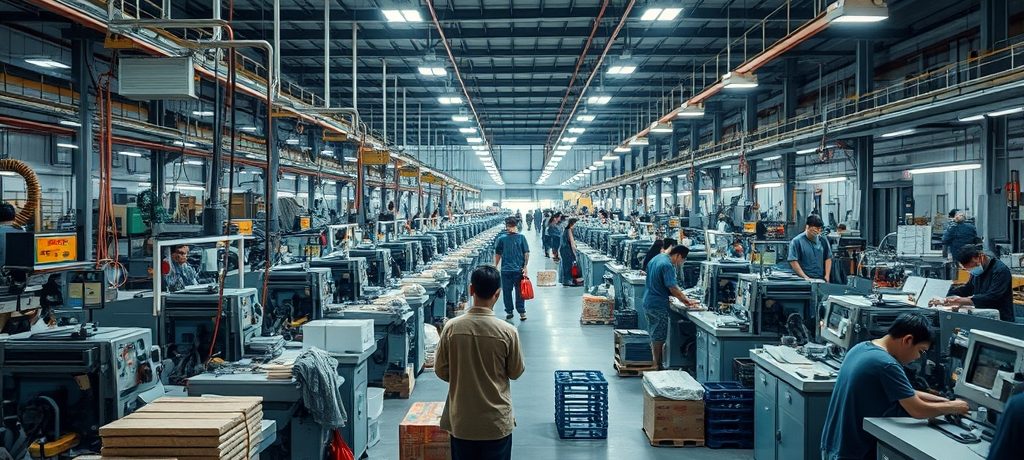
China’s economic momentum faltered significantly in April, with key indicators undershooting expectations and fixed-asset investment unexpectedly contracting. The world’s second-largest economy registered a broad-based slowdown, revealing its susceptibility to global economic pressures despite robust export performance.
Fixed-asset investment, a critical gauge of capital expenditure, shrank by 1.6% in the first four months of 2026 compared to a year earlier, reversing a 1.7% gain seen in the first quarter. This contraction, alongside disappointing retail sales and industrial output figures, painted a stark picture. Retail sales rose by a mere 0.2% in April, falling short of forecasts and marking the weakest performance since December 2022, when the country emerged from strict Covid-19 lockdowns. Industrial production also grew slower than anticipated, expanding by 4.1% last month, its weakest rate in nearly three years. The National Bureau of Statistics (NBS) data, released on Monday, indicated a more pessimistic economic landscape than any economist surveyed by Bloomberg had predicted across these three crucial sectors.
Official Commentary and External Headwinds
Despite the challenging figures, the NBS maintained a cautiously optimistic tone, stating, ‘China’s economy kept stabilizing and improving.’ However, the bureau acknowledged the complexities, adding, ‘But we also need to see that the external situation is complex and changing, and the problem of strong supply and weak demand is still prominent. Some companies are having difficulty in operation.’ This sentiment underscores the dual challenge of external pressures, such as the global energy crisis and the fallout from the Iran war, alongside persistent domestic demand issues.
Export Resilience vs. Domestic Consumption Woes
A notable divergence continues to characterize China’s economy: a booming export sector providing a crucial buffer against domestic weaknesses. Propelled by the global artificial intelligence investment boom, soaring trade helped keep China’s growth on track towards Beijing’s ambitious 4.5% to 5% target. Exports climbed 15% in the first four months of the year compared to a year ago, with stabilizing trade ties with the US, reinforced by President Donald Trump’s visit to Beijing, further bolstering the outlook. However, this external strength has not translated into a domestic recovery. A turnaround in domestic consumption remains elusive, with new loans to households slumping last month and consumer confidence showing little sign of improvement. The jobless rate for early-career workers, a key demographic, climbed to its highest in over two years, raising concerns about employment risks, particularly from the rise of AI. Zhang Zhiwei, chief economist at Pinpoint Asset Management, observed, ‘The economic activities are weaker than the market expected in April.’ He further noted, ‘The strong performance of the exporters helped to mitigate the weaknesses in domestic demand, but not enough to fully offset it.’
Policymaker Stance and Market Reaction
Chinese policymakers appear to be adopting a ‘wait-and-see’ approach to this two-speed growth phenomenon. After years of efforts to stimulate consumer spending yielded only marginal gains, the government pulled back on fiscal spending in March. Concurrently, the central bank has refrained from hinting at any further loosening of monetary policy, citing ample market liquidity and weak demand for credit. Market reactions to the data release were relatively muted. The offshore yuan slipped 0.1% to touch 6.8215 per dollar, reaching its weakest point in nearly two weeks. The yield on the government’s benchmark 10-year debt remained steady at 1.76%, while futures on 30-year bonds narrowed their loss.
The April data highlights the persistent challenge for Beijing in rebalancing its economy towards domestic demand, even as its export engine continues to perform strongly. The dichotomy between robust external trade and a struggling internal market suggests that while global factors offer some support, the underlying vulnerabilities in consumer confidence and investment require more targeted and effective policy interventions to achieve sustainable, broad-based growth.