Payouts for injuries sustained from e-scooters and e-bikes in the UK have surged past £110 million, a significant financial burden that is directly contributing to increased motor insurance premiums for the general public. This escalating cost comes just seven years after the first claim related to a micromobility vehicle injury was recorded, highlighting a rapidly evolving challenge for the insurance sector and policymakers.
Escalating Costs and the MIB’s Role
The Motor Insurers Bureau (MIB), a not-for-profit organisation responsible for compensating victims of accidents involving uninsured vehicles, has seen the cumulative total paid out rise sharply from £51 million to £110 million in the past 12 months alone. This rapid increase underscores the growing prevalence and associated risks of micromobility vehicles, which include e-scooters, e-bikes, mobility scooters, and e-unicycles, all legally classified as motor vehicles.
The MIB’s funding model directly links these payouts to the broader insurance market. Main insurance companies contribute to the MIB through a levy, meaning that the rising cost of claims is effectively passed on to all motor insurance policyholders. Hayley Sutcliffe of the MIB explained the impact: “Whilst we will compensate victims of any injuries from e-scooters or electric motor bikes, everyone else has to pay for that. It has a huge impact on your law-abiding citizens as well.”
The first claim paid by the MIB for an e-scooter injury occurred in 2019, followed by the first e-bike injury claim in 2020. By 2025, the number of claims for accidents involving both types of vehicles reached 168, the highest figure recorded to date. The severity of these incidents is stark, with the biggest individual payout reaching £20 million for a child who suffered catastrophic, life-changing injuries.
Human Impact and Legal Ambiguity
The financial figures represent profound human suffering. Alison, a victim from Coventry, recounted her experience after being hit by a private e-scooter last year. She suffered a broken pelvis, wrist, and finger, along with cuts and bruises. “It was instant pain, you know when the TV does grey static? That’s what my eyes were doing,” she stated, adding, “I was on a crossing. I thought it was safe, you just don’t expect it.” The driver, 47-year-old Trevor Chandler, was subsequently jailed for 15 months.
Another tragic case saw 19-year-old Billy Stokoe jailed for six years and nine months after killing 86-year-old Gloria Stephenson with his e-bike in Sunderland in July 2025. Stokoe, who was using a mobile phone and had taken cannabis, was convicted of causing death by dangerous driving, with his sentence currently under review for being unduly lenient.
A central issue contributing to these incidents is the complex legal status of micromobility vehicles. While e-scooters are permitted in towns and cities participating in official trials, only those vehicles part of operator schemes can be legally ridden. Privately owned e-scooters are restricted to private land with the owner’s permission. Similarly, e-bikes adapted to exceed the legal speed limit of 15.5mph are also illegal. Despite this, Alison expressed her bewilderment: “It is frightening to think they are willingly handing these things over to people with no licence, no insurance, no nothing and just letting them go.”
Calls for Regulation and Enforcement Challenges
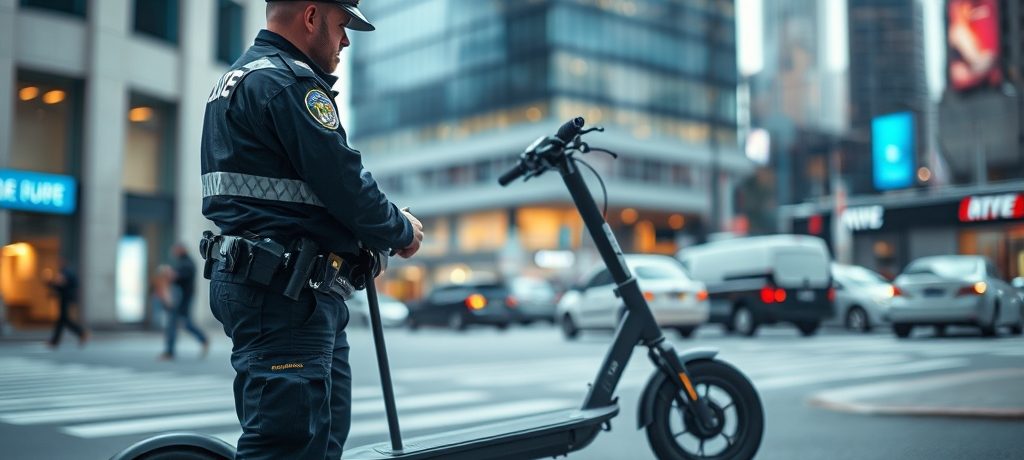
The MIB is advocating for better regulation of these vehicles, with some cases warranting outright bans. The organisation has even provided funding to police forces to support enforcement operations targeting illegal use. PC Tom Cordell of Staffordshire Police, who regularly participates in such operations, noted that while ignorance of the law is not an excuse, “the vast majority of people do know that they’re illegal.” He added, “They’ve been around for a long, long time now. This isn’t something that’s new and just come out yesterday.”
Police enforcement leads to hundreds of private e-scooters and illegally adapted e-bikes being seized and destroyed annually. The government has consistently reiterated the existing laws. However, Transport Secretary Heidi Alexander acknowledged earlier this year that “the genie was out of the bottle,” suggesting that new legislation could be introduced if parliamentary time permits.
The financial implications of micromobility vehicle injuries are becoming an increasingly significant factor in the UK’s motor insurance landscape. With payouts continuing to rise and a clear link to higher premiums for all drivers, the pressure on regulators to address the legal ambiguities and enforcement challenges surrounding these vehicles is intensifying. The current trajectory suggests that without comprehensive policy changes, the financial burden on law-abiding citizens will only continue to grow.