The United States is set to impose a 25% tariff on the majority of imports from Brazil, with the new trade barriers scheduled to take effect on July 22. This action represents the first significant tariff imposition by the Trump administration since the Supreme Court struck down its previous sweeping tariff regime, famously announced on what President Trump dubbed ‘Liberation Day’ in 2025.
The decision by the US Trade Representative’s office (USTR) follows an extensive investigation into Brazil’s trade practices. The USTR argued that Brazil’s policies on a range of issues, including digital trade and illegal deforestation, were unfair. A specific point of contention highlighted was Brazil’s instant payment system, Pix, which the USTR claims disadvantages US credit card companies. Jamieson Greer, from the USTR, stated on Wednesday, “Extensive negotiations with Brazil over the past year have not resolved these issues, but we remain open to continuing negotiations with Brazil to bring about long-needed changes to the problems identified in this investigation.” Greer emphasized that safeguarding American economic interests against unfair practices is the “bedrock of President Trump’s America First policies.”
Scope of the New Tariffs
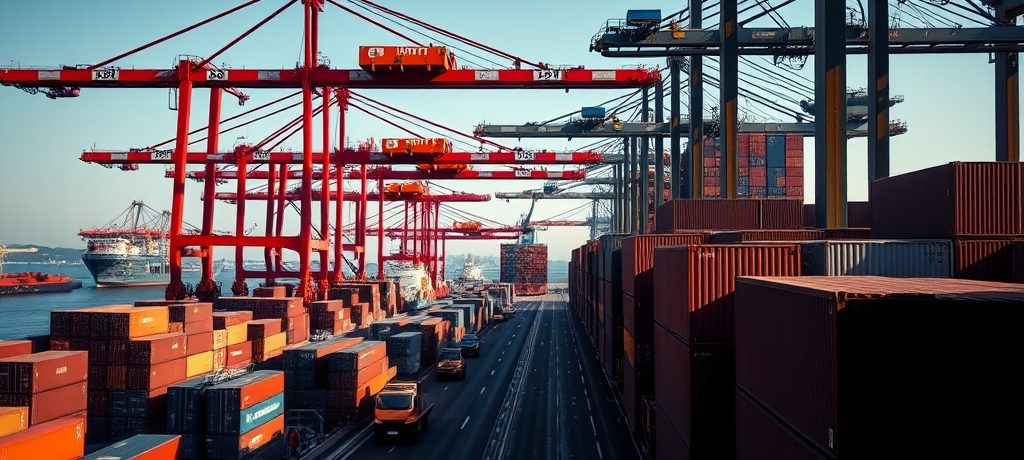
The tariffs will apply broadly across various Brazilian imports, including key commodities and manufactured goods. Affected products encompass:
- Sugar
- Agricultural machinery
- Clothing
- Electrical machinery
- Paper
- Steel
However, certain products deemed to be in considerable demand among US consumers or businesses have been exempted from the new duties. These include beef, coffee, rare earths, energy products, aircraft and aircraft parts, organic honey, and pig iron, indicating a strategic selection designed to mitigate immediate impacts on specific US industries or consumer markets.
Political Reactions and Accusations
The announcement has quickly escalated political tensions between Washington and Brasília. US Secretary of State Marco Rubio placed the blame squarely on Brazil’s President Luiz Inacio “Lula” da Silva and his administration, asserting that they had not engaged in good faith negotiations with the US. Rubio wrote, “[Lula’s] economic policies are bad for Americans and bad for Brazilians. For the past year, Lula has put his own ego ahead of making a deal for the welfare of the Brazilian people, and these tariffs are the price for that.”
President Lula, in turn, described the US move as a “lamentable milestone” in bilateral relations, stating on Thursday that there was “no justification” for the “unilateral imposition” of tariffs. He pointed to the US’s sizeable trade surplus with Brazil, suggesting a lack of reciprocity, and indicated that Brazil would pursue reciprocal measures through a World Trade Organization (WTO) dispute mechanism. Lula further alleged that the tariff imposition was “part of the plot built with the active collaboration of the Bolsonaro family,” referencing former President Jair Bolsonaro.
The Trump-Bolsonaro Connection and Brazilian Elections
The timing of these tariffs is particularly sensitive, as Brazil is scheduled to hold general elections this October. The political backdrop is further complicated by the close ties between former US President Trump and Brazil’s far-right former president, Jair Bolsonaro. Bolsonaro, who faced prosecution in Brazil for plotting a coup following his narrow defeat in the 2022 presidential election, temporarily fled to Florida and is considered a close ally of Trump.
The alleged involvement of the Bolsonaro family in the tariff decision adds another layer of political intrigue. Senator Flavio Bolsonaro, one of Jair’s sons and a presidential hopeful, held talks with Trump in the Oval Office in late May, just weeks after a meeting between Trump and Lula. Interestingly, Senator Bolsonaro had previously appealed at a USTR meeting in May against imposing tariffs on Brazil, arguing that such a move would likely bolster Lula’s chances for a record fourth term in office this October. This suggests a complex interplay of domestic and international political calculations influencing trade policy.
Revisiting Tariff Policies Post-Supreme Court Ruling
The necessity for the Trump administration to implement these new tariffs stems directly from the Supreme Court’s decision to nullify its prior wave of tariffs. The Court ruled that the previous impositions had overstepped the President’s authority. Consequently, the new tariffs are being imposed based on investigations into supposed unfair trade practices under Section 301 of the US Trade Act. The USTR has since initiated nearly 80 such investigations globally, targeting a diverse range of economies including China, the EU, India, Japan, South Korea, and Mexico, as it seeks to establish new legal groundwork for trade barriers.
This latest action against Brazil underscores a broader strategic shift in US trade policy, moving to establish new legal precedents for imposing tariffs after the Supreme Court’s intervention. With Brazil’s elections looming in October, the economic measures are inextricably linked to political dynamics, both domestically within Brazil and in the context of US foreign policy and electoral considerations.