The average 30-year fixed-rate mortgage has climbed to 6.66% this week, marking its highest level in a year and signaling a renewed squeeze on housing affordability for prospective homebuyers. This ominous figure, reported by the Federal Home Loan Mortgage Corp., or Freddie Mac, on Thursday, July 30, 2026, reflects a confluence of global geopolitical tensions and domestic economic signals that are reshaping the U.S. housing market.
Mortgage Rates Reverse Course
This week’s ascent to 6.66% places current mortgage rates just shy of the 6.72% average recorded at the end of last July. The increase reverses a trend seen in late 2025 and early 2026, when rates had been falling, even dipping below 6% in February. That earlier decline had sparked optimism for a revitalization of the housing market, which has been characterized by hesitant buyers and homeowners reluctant to abandon their lower pandemic-era rates. Now, the upward trajectory of rates is intensifying concerns that homeownership is becoming increasingly out of reach for many Americans, with the ‘biblically ominous’ 6.66% figure potentially striking fear into those considering a purchase.
Geopolitical Tensions Drive Energy Costs
A significant catalyst for this latest surge in mortgage rates is the ongoing war with Iran and its direct impact on global energy markets. The closure of the Strait of Hormuz, a critical shipping chokepoint, has led to a sharp rise in oil prices. This escalation in crude costs has, in turn, driven up shipping expenses across various sectors, consequently inflating the prices of a wide array of goods and services. The ripple effect extends to the financial markets, where rising oil prices have pushed up the yield on the 10-year Treasury note. This U.S. government-backed security is widely regarded as a key indicator for broader interest rate trends, with mortgage rates typically following its movements closely.
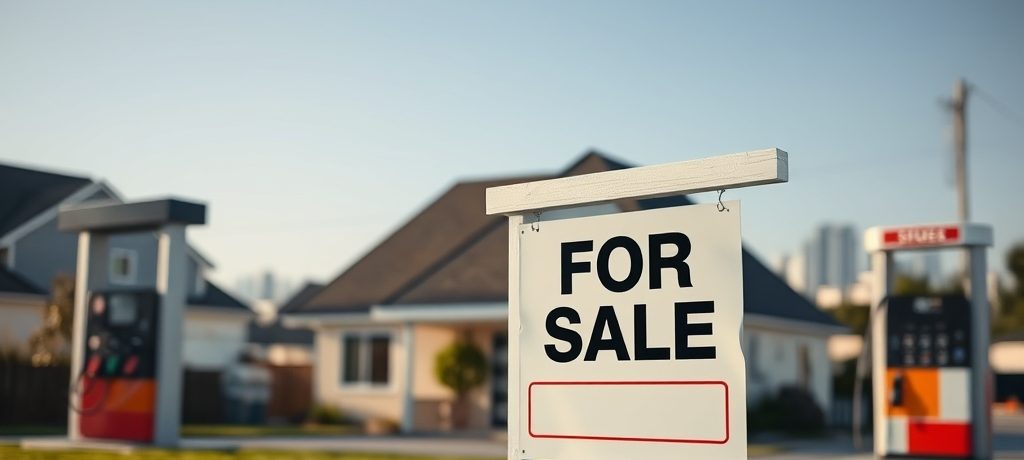
Kara Ng, a senior economist at Zillow, emphasized this connection, stating, ‘Oil prices always swing mortgage rates.’ She added, ‘You get a real-time read every time you go to a gas pump about what it means to buy a home.’ Indeed, the average price for a gallon of regular gasoline stood at $4.10 on Thursday, according to AAA, representing an increase of approximately $1.11 since the conflict in Iran commenced. This tangible increase in everyday costs underscores the pervasive economic influence of the geopolitical situation.
Federal Reserve Signals and Market Skepticism
Beyond the direct impact of energy prices, investor sentiment has also been unsettled by recent signals from the Federal Reserve. On Wednesday, the central bank indicated that an interest rate hike could be on the horizon for September, despite holding its benchmark interest rate steady for the time being. The Fed’s rate-setting committee saw three of its members vote in favor of an immediate hike, a rare split that markets interpreted as a strong indication of higher rates in the near future. This prospect of tighter monetary policy further contributes to the upward pressure on borrowing costs.
Meanwhile, the intermittent nature of the fighting in Iran, marked by numerous pauses and restarts, has left investors wary. Kate Wood, a housing expert for the financial advice website NerdWallet, highlighted this uncertainty, remarking that investors’ fears would not be assuaged ‘without a significant signal that the conflict is coming to an end.’ She cautioned that even with a definitive resolution, ‘Markets might be a little bit once bitten, twice shy,’ suggesting lingering skepticism and volatility could persist.
Stagnant Housing Market Conditions
The current rise in mortgage rates exacerbates an already challenging environment for the U.S. housing market. Sales have shown minimal movement over the past three years, according to data from the National Association of Realtors. In June, the average existing home commanded a price exceeding $440,000, a figure that continues to contribute to affordability issues. Concurrently, sales themselves registered a 2.4% decline from a year earlier in June, underscoring the persistent tepidness.
This stagnation is largely attributed to the dual reluctance of potential buyers, who face high sticker prices and now rising borrowing costs, and existing homeowners, many of whom are unwilling to trade their historically low pandemic-era mortgage rates for significantly higher current rates. The combination creates a bottleneck, limiting inventory and transactions, and contributing to the broader economic narrative where housing prices are even influencing personal decisions, with some individuals reportedly having smaller families than planned due to cost of living pressures.
The convergence of a volatile geopolitical landscape, inflationary pressures driven by energy costs, and the Federal Reserve’s hawkish signals has propelled mortgage rates to a critical juncture. As the 30-year fixed-rate mortgage settles at its highest point in a year, the implications for housing affordability and market activity are profound. Without a clear resolution to the conflict in Iran or a definitive shift in the Fed’s monetary policy outlook, the path forward for prospective homebuyers and the broader housing sector remains fraught with uncertainty, suggesting continued vigilance will be required from market participants.