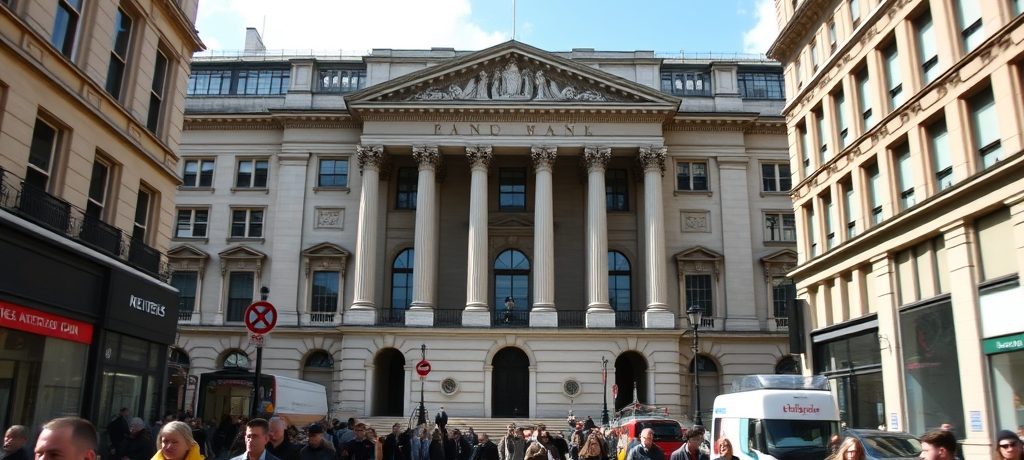
The Bank of England’s Monetary Policy Committee (MPC) is widely expected to hold the benchmark Bank rate at 3.75% today, marking the fifth consecutive meeting without a change. This rate, which stands at its lowest level since February 2023, reflects a cautious approach by policymakers amidst a complex global economic and political landscape.
The nine-member committee, comprising five women and four men, is scheduled to announce its latest interest rate decision at 12:00 BST. The widespread expectation among analysts is for a hold, with few predicting any short-term adjustments to the rate.
Inflationary Pressures and Global Uncertainty
The MPC’s primary mandate is to maintain inflation at a target of 2%. Recent official figures indicate that UK inflation stood at 2.6% in the year to June, a slight decrease from the preceding month but still above the 2% target. However, this figure is projected to rise in July, primarily due to a 13% increase in domestic energy prices affecting millions of households across Scotland, England, and Wales.
This surge in energy costs is attributed to the impact of the Iran war on wholesale energy markets. The ongoing conflict in the Gulf and the uncertainty surrounding the prospects of a lasting truce are significant factors weighing on the MPC’s deliberations, not only for this month but also for the foreseeable future. Analysts largely anticipate interest rates to remain unchanged, with the possibility that the next movement could even be an increase.
Katie Horne, from savings platform Flagstone, commented on the anticipated decision, stating, ‘A new government finding its feet, and the situation in the Middle East becoming increasingly uncertain, mean that a hold on [the] base rate decision would be a welcome dose of stability. People have had more than enough uncertainty over the past year, and even a temporary pause eases the pressure a little.’
Impact on Borrowers: Fixed Rates on the Rise
For homeowners with tracker mortgages, a hold on the Bank rate means monthly repayments will remain unchanged. However, the majority of mortgage customers, more than eight in 10, are on fixed-rate deals. In recent days, major UK lenders have been increasing rates on new fixed-rate offerings.
According to financial information service Moneyfacts, the average rate for a new two-year fixed deal has climbed to 5.62%, representing the highest level in over a month. This upward trend in fixed rates is largely driven by rising funding costs for lenders, which are themselves influenced by renewed volatility in the Middle East. Lenders often move in concert to manage application volumes and market conditions.
David Hollingworth, a mortgage broker from L&C, acknowledged the immediate relief of a hold but cautioned on future prospects: ‘A hold is still welcome, but market expectations will need to ease back before we can hope for a return to lenders cutting rates.’
Looking ahead, recent projections from the Bank of England suggest that more than five million homeowners should anticipate an increase in their monthly mortgage repayments by the end of 2028, highlighting the long-term implications of the current rate environment.
Impact on Savers: A ‘Silver Lining’
While borrowers face increasing costs, the MPC’s decision, or the likelihood of a higher Bank rate, generally has a positive impact on the returns available to savers. Some fixed-period savings deals are currently offering rates at their highest levels in nearly two years.
Moneyfacts data indicates that the guaranteed interest paid on the top one-year bond has reached 4.91% for new customers, a rate not seen since October 2024. Rachel Springall of Moneyfacts described this as ‘a rare dose of good news for savers’ and ‘somewhat of a silver lining after years of poor real returns.’
The Bank of England’s decision to hold rates underscores a strategy focused on stability amidst persistent global economic and geopolitical uncertainties. While offering a temporary respite for some, the underlying market dynamics, particularly in the mortgage sector, suggest that both borrowers and savers will need to remain vigilant in navigating the evolving financial landscape.