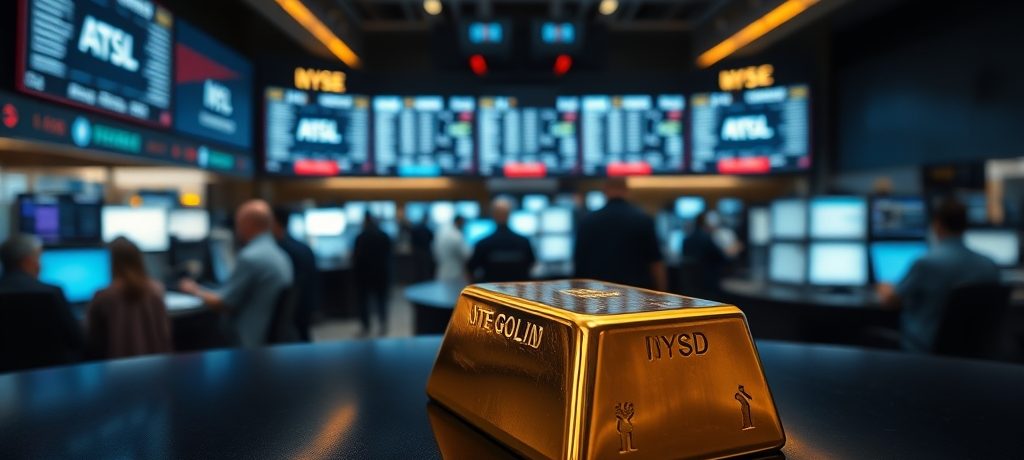
Gold held its ground within a narrow trading band, as market sentiment shifted following promising developments regarding the Strait of Hormuz. The prospect of an interim deal to reopen the critical waterway has significantly eased inflation concerns, consequently reducing the likelihood of the US Federal Reserve implementing further interest rate hikes. This dynamic has created a cautious equilibrium in the bullion market, with investors closely monitoring geopolitical and monetary policy signals.
Hormuz Progress and Market Reaction
The recent stability in gold prices comes directly on the heels of reports indicating progress in negotiations to normalize commercial shipping through the Strait of Hormuz. Qatar announced that a proposal had been drafted to facilitate the reopening of the vital energy conduit, with both US and Iranian officials signaling constructive movement in ongoing talks. This positive outlook immediately impacted energy markets, with oil prices declining for a third consecutive day on optimism that a resolution is within reach. The reopening of Hormuz, a choke point for global energy flows, is anticipated to alleviate supply pressures and temper the inflationary impulses that have characterized the market in recent months.
Shifting Rate Hike Expectations
The perceived de-escalation of tensions in the Middle East and its potential impact on inflation have directly influenced expectations for US monetary policy. Markets are now fully pricing in only one rate hike by the US Federal Reserve by year-end, a notable reduction from the two hikes anticipated as recently as last week. This recalibration of expectations is generally supportive for gold, an asset that does not generate a yield and typically struggles in an environment of rising interest rates. Last week, Fed officials opted to keep rates unchanged for the fifth consecutive time, though the decision was not unanimous, with three dissenters favoring an immediate hike. Philadelphia Fed President Anna Paulson, who voted with the majority, articulated a nuanced position in an essay on Tuesday, stating she was “keeping an open mind” on the future direction of policy given conflicting signals on its restrictiveness.
Gold’s Sensitivity and Recent Performance
The yellow metal’s price action underscores its role as a barometer for broader macroeconomic shifts. Nicky Shiels, head of research and metals strategy at MKS Pamp Inc., highlighted this sensitivity, noting, “Gold is the liquidity sponge of the macro complex, and it’s one of the first things to get hit on any whiff of rate-tightening risk, structural or headline.” This inherent vulnerability has been evident since the US-Iran war commenced in late February, during which gold has fallen by more than a fifth. The conflict significantly disrupted global energy markets, sending prices soaring and fueling inflationary pressures, which in turn amplified the likelihood of interest rates remaining elevated for an extended period.
Chinese Investor Support
Despite the broader geopolitical headwinds and the war-led decline, gold has found a crucial support level, maintaining prices above the key $4,000-an-ounce threshold. This resilience has been largely attributed to a resurgence of interest from Chinese institutional investors. Data compiled by Bloomberg indicates that gold-backed exchange-traded funds (ETFs) in China experienced 14 straight days of inflows up to Monday, marking the longest such streak since March. This trend signals a significant shift in sentiment within the world’s biggest bullion market, following a prolonged period of outflows and price depreciation. The sustained buying from China has provided a vital counterweight to the pressures exerted by global monetary policy uncertainties and geopolitical strife.
Market Snapshot
As of 7:45 a.m. in Singapore, spot gold registered a slight decline of 0.2%, trading at $4,069.41 an ounce. This followed a 0.6% gain in the previous session. Other precious metals also saw minor movements, with silver falling 0.2% to $59.43 an ounce. Platinum and palladium remained largely unchanged. Concurrently, the Bloomberg Dollar Spot Index, a key measure of the US currency’s strength, was flat, having concluded the previous session down 0.1%.
The current stability in gold prices, despite a slight intraday dip, reflects a complex interplay of easing geopolitical tensions and evolving monetary policy expectations. While the prospect of a Hormuz deal has tempered rate-hike bets, the underlying inflationary pressures and the Fed’s cautious stance continue to shape investor sentiment. The sustained demand from key markets like China further underscores gold’s enduring appeal as a store of value amidst ongoing global uncertainties, positioning it at a critical juncture as markets navigate these multifaceted influences.