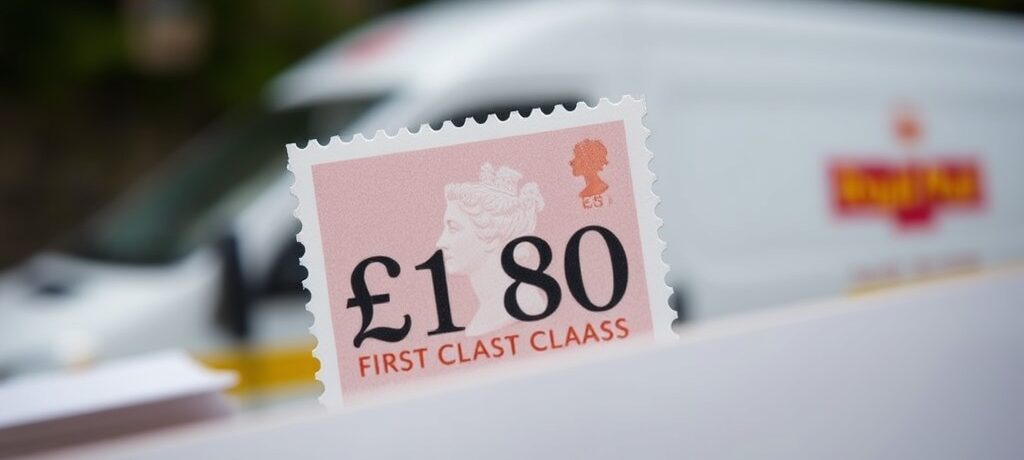
Royal Mail has implemented another price increase for its postal services, with a first class stamp now costing £1.80, an increase of 10p. This adjustment, which also sees a second class letter rise by 4p to 91p, marks the eighth price hike in five years and comes as the postal service faces significant scrutiny over its delivery performance.
The latest increase means a first class stamp is now almost three times more expensive than a decade ago, when it cost 64p. A second class stamp then was 55p. These rises are occurring despite widespread dissatisfaction among businesses and consumers regarding Royal Mail’s ability to meet its service commitments.
Performance Shortfalls Under Scrutiny
The price adjustments coincide with Royal Mail’s acknowledged failure to meet its delivery targets. Data indicates that only 77% of first class letters are delivered within one working day, falling substantially short of the company’s 93% target. This performance gap has fueled criticism from various stakeholders, including Members of Parliament and the public.
Citizens Advice, a charity, has publicly criticised the price increases, stating last month that such rises should be directly tied to performance. This sentiment reflects broader consumer frustration with the perceived decline in service quality.
Royal Mail’s Justification and Industry Pressures
Royal Mail has defended the price increases, citing a fundamental shift in postal habits. The company states that the adjustments are necessary because people are sending significantly fewer letters, while the number of delivery addresses continues to expand. Richard Travers, Royal Mail’s managing director of letters, commented on the decision, stating, “We always consider price changes very carefully, balancing affordability with the rising cost of delivering mail.”
Beyond the declining letter volumes, Royal Mail is also navigating other financial pressures. From May 3, business account holders will face higher charges due to an increased fuel surcharge. This surcharge has risen by 5% for domestic services and 5.5% for international services, a decision attributed to the escalating cost of energy, partly influenced by the Iran war.
Impact on Businesses and Consumer Experience
The inconsistencies in delivery times have tangible consequences for businesses reliant on postal services. Dean Morris, who operates a greeting cards business, shared his experience on BBC Breakfast, noting that delivery times have become “slower and less consistent in the last few years.” He explained that the impact on his business has been more reputational than economic, with customers frequently chasing orders six to seven days after postage.
Morris highlighted a particular concern regarding second class mail, stating, “Sometimes it feels that second class is literally the last thing that Royal Mail look at, in preference to parcels, but a lot of people use second class, a lot of online retailers use second class, because it is an affordable option for both us and the customer.” This suggests a potential prioritisation of parcel delivery over traditional letter services, impacting businesses and consumers who opt for more economical postage.
Parliamentary Oversight and Internal Allegations
Royal Mail’s service performance has drawn significant attention from Parliament. In March, Royal Mail bosses were called to answer questions from MPs regarding ongoing postal delays. Daniel Křetínský, the owner of Royal Mail, acknowledged that the service was “not perfect” but assured the committee he had a plan to rectify the situation.
Liam Byrne, Chair of the Business and Trade Committee, expressed being “very concerned” over reports of “significant failures” in Royal Mail’s letter service. The committee had previously written to Royal Mail in February, seeking commitments to improve what it described as “chaos” in certain postal areas since Christmas.
Adding to the company’s challenges are serious allegations from within its workforce. Postal workers from across the UK reportedly told the BBC that they were instructed to move or hide mail from senior bosses to create the impression that delivery targets were being met. Royal Mail stated it took claims that posties were hiding letters “very seriously,” while also asserting that 92% of letters were delivered on time, a figure that appears to contradict the 77% reported for first class mail delivered within one working day.
The confluence of rising operational costs, declining letter volumes, and persistent service delivery issues places Royal Mail under considerable pressure. As stamp prices continue their upward trajectory, the company faces the ongoing challenge of demonstrating improved performance to justify these increases and restore public confidence, even as it contends with external economic factors and internal operational concerns.