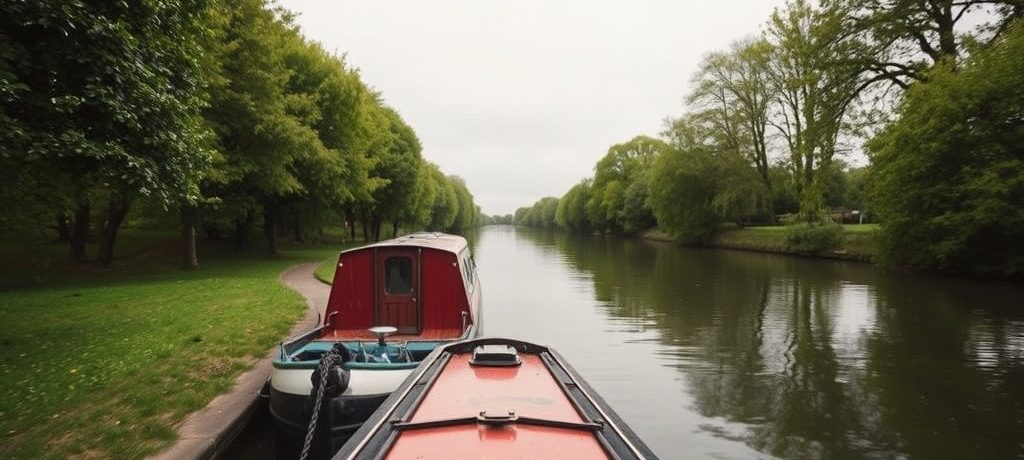
The escalating cost of living is forcing many homeowners to re-evaluate their financial commitments, with a significant number opting to trade traditional bricks and mortar for the unique lifestyle offered by narrowboats. This trend, driven by a desire for reduced expenses and a change of pace, sees individuals shedding mortgages for moorings, seeking a more affordable and adventurous existence on Britain’s waterways.
Trading Mortgages for Moorings
Ken Tracey, 57, exemplifies this shift. In 2022, he sold his house in Suffolk, citing a need for “a change in life.” “The cost of the house, it was really tricky to keep up with everything, keep the payments going,” he stated. “I’ve not got a mortgage any more, but I own this, so it’s safe.” While acknowledging the trade-offs, Tracey invested £75,000 in his narrowboat, with an additional £20,000 spent on unforeseen maintenance. Despite the challenges, he finds his new life “genuinely amazing.”
The Canal and River Trust reports a notable increase in people using waterways as permanent residences. Their annual Boaters’ Survey for 2026 indicates that in Yorkshire and the North East, just over a third (34%) of respondents now use their boat as a permanent home, a rise from 27% in 2025. Almost half (49%) of respondents in the same region use their boats as temporary homes.
The Appeal of Waterborne Living
For Andy Brown, a retired individual who, along with his wife, moved onto a narrowboat after holidaying on them, the decision was “a fairly easy decision” post-retirement. The loss of their son also influenced their choice, with Andy noting, “I’m sure he would have loved to have done all this so he’s always at the back of our thoughts wherever we are and wherever we go.” They traded their Edinburgh home for a custom-built narrowboat, which they have inhabited for approximately two and a half years. “It’s been fantastic,” Brown shared. “It slows you down and you get to see places you just wouldn’t see in a car. We’ve seen places we just never would have dreamed of stopping at before.” He highlighted the Leeds Liverpool canal and the “southern edge of the [Yorkshire] Dales” as particular highlights.
While a significant downsizing, Brown notes that the financial savings are not always substantial. “It’s probably a bit cheaper than living in a house, but not significantly so,” he commented.
Challenges and Realities of Boat Life
Ken Marshall, from Wakefield, has owned his boat, Willow, for eight years and moved aboard full-time two years ago after selling his house. He admits there are “struggles involved living on a boat, but I enjoy it.” Moored in Leeds city centre’s Granary Wharf, Marshall finds a sense of community among fellow boaters, describing them as “very open to talking and helping.” He has “no regrets whatsoever” about his decision and prioritises mooring locations that facilitate his part-time work commute. His favourite aspect of boat life is the ability to choose his surroundings, from city centres to tranquil, nature-filled spots.
However, the transition is not without its difficulties. Ken Tracey described boat life as “not a land of health and safety,” warning that “locks are dangerous places.” He noted that the “technology that’s a couple of hundred years old now” requires constant problem-solving. It took him over 18 months to master steering, a process he described as “weeks and weeks of bumping into things, scraping along the side of things.”
Eric Wilson, who recently cashed in his pension to live on his narrowboat for just over a month, found the transition “easy enough” but travelling difficult. “I was supposed to be living the dream, but it’s not turned out that way really,” he explained. “I was expecting to go off and travel the canal network, but I tried doing a couple of locks and it’s too hard for me now. I think you’ve got to be fit, really,” he admitted, expressing a hope to become more adept at navigating locks and steering.
Expert Advice for Aspiring Boaters
Alex Hennessy, national boating manager at the Canal and River Trust, advises anyone considering a life on the water to “do [their] homework.” He recommends trying a hire boat holiday first as “a great way to get a flavour of what life is like on the water.” This initial experience can help individuals gradually assess their suitability for a more permanent commitment to canal living.
The growing number of individuals opting for a life on the water highlights a significant societal shift, driven by economic pressures and a desire for a more unconventional and potentially fulfilling lifestyle. While the romantic ideal of continuous travel and serene waterscapes is appealing, the reality involves practical challenges and a steep learning curve. Nevertheless, for many, the financial relief and the unique experiences offered by life on the canals outweigh the difficulties, marking a distinct departure from traditional homeownership.