China’s export engine showed a slight deceleration in July, easing from the previous month’s robust pace, yet underlying demand for high-tech electronics and vehicles proved resilient, pushing overall trade figures above analyst expectations. Customs data released Friday revealed a narrowing of the nation’s trade surplus, even as a significant pivot towards advanced manufacturing continues to reshape its global trade profile.
July Trade Performance: A Nuanced Slowdown
The latest figures indicate China’s trade surplus contracted to $112.5 billion in July, down from $125.6 billion recorded in June. Exports experienced a year-on-year increase of nearly 24% for July, a modest dip from the 27% surge observed in June. Similarly, imports climbed 27.5% year-on-year, though this represented a slowdown from June’s substantial 36% jump. Analysts had anticipated a more pronounced slowdown, with Julian Evans-Pritchard of Capital Economics noting that while the ‘boom in Chinese trade slowed a touch in July,’ the ‘big picture is that export and import values remain elevated, helped by soaring global demand for electronics and green tech products.’ Disruptions to port operations, primarily attributed to typhoons, were cited as a contributing factor to the July slowdown.
High-Tech Sector Fuels Export Resilience
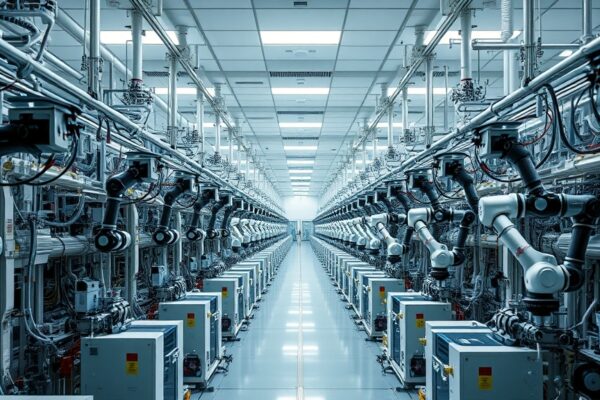
A deeper dive into the trade data underscores China’s evolving role from a low-cost manufacturing hub to a key supplier of vital machinery and components for advanced manufacturing. This strategic shift is evident in the remarkable performance of its high-tech sectors. Exports of high-tech items soared by nearly 41% in the January-July period compared to the same timeframe a year prior. The automotive sector, particularly electric vehicles, demonstrated exceptional strength, with vehicle shipments jumping an impressive 55%. Furthermore, exports of electronics and machinery collectively rose by 26% over the first seven months of the year, highlighting sustained global appetite for China’s more sophisticated industrial output.
Navigating Tariffs and Geopolitical Currents
This sustained demand for advanced goods has persisted despite an environment of rising tariffs and other trade barriers imposed by the U.S. and some other nations. In fact, this robust performance contributed to China’s trade surplus reaching a record high of nearly $1.2 trillion in 2025. However, the relationship with the U.S. remains complex. Following increased tariffs under former President Donald Trump, China’s exports to the U.S. saw a precipitous slowdown, climbing just 2.6% year-on-year in the first seven months of this year, while imports from the U.S. grew 1.4%. These persistent trade issues and restrictions on China’s access to advanced technology are expected to be central topics during Chinese President Xi Jinping’s planned visit to the U.S. next month.
The ‘Overcapacity’ Debate and Regional Trade Shifts
The global economic discourse also features a contentious debate surrounding China’s manufacturing capacity. While the U.S. and some other major trading partners have voiced concerns that Chinese exporters are ‘flooding global markets due to massive excess manufacturing capacity inside China,’ Beijing has vehemently rejected this assertion. A government report last week condemned what it termed the ‘myth of overcapacity.’ Supporting this stance, a commentary from the state-run Xinhua News Agency highlighted a surge in air conditioner exports to Europe, driven by skyrocketing demand during a ferocious heat wave. The commentary asserted, ‘Europeans are buying these products, and for good reasons,’ adding that ‘These products solve problems local brands often fail to address.’ Regionally, exports to the European Union were up nearly 17% in January-July, while shipments to Southeast Asia, which has emerged as China’s largest trading partner bloc, surged by 25% over the same period.
Commodity Trade Insights and Global Supply Dynamics
Beyond manufactured goods, China’s commodity trade also presented a mixed picture. The total volume of crude oil imports declined by 13.2% in the first seven months of this year, although the value of these imports rose slightly due to higher global prices. Similarly, natural gas imports slipped 3% by volume and 1.6% in dollar terms. In a notable development, China’s exports of strategically vital rare earths fell 10% by volume in January-July but experienced a significant jump of 58% in value, indicating a shift towards higher-value rare earth products or price increases. Furthermore, the Iran war reportedly interfered with shipments of aluminum from the Middle East, leading to an increase in Chinese exports of the metal, filling a market gap.
While China’s overall export growth moderated slightly in July, the underlying strength in its high-tech and advanced manufacturing sectors signals a robust structural shift in its economic engine. This dual narrative of a minor monthly slowdown against a backdrop of significant long-term transformation and increasing global demand for sophisticated Chinese products will likely continue to define its trade trajectory, even as geopolitical tensions and debates over industrial capacity persist on the international stage.