Gold prices experienced a significant downturn on Thursday, surrendering gains accumulated over the preceding four sessions. The slump was primarily driven by a lack of breakthrough in diplomatic efforts to de-escalate the U.S.-Iran standoff, which has seen both nations adopt increasingly rigid stances. This persistent geopolitical friction is renewing concerns about a prolonged period of higher interest rates in the United States.
Traders also contributed to the price decline by booking profits following the sharp gains seen in recent trading days. The Front Month Comex Gold contract for September delivery saw a notable decrease of $37.40, or 0.85%, settling at $4,381.00 per troy ounce. Similarly, the Front Month Comex Silver contract for September delivery also tumbled, dropping $0.740, or 1.13%, to $64.960 per troy ounce.
Stalemate in U.S.-Iran Negotiations
The conflict between the United States and Iran has now entered its sixth month. Despite the active involvement of intermediaries attempting to bring both nations to the negotiating table, neither side has shown any inclination to soften their positions. This impasse was underscored by recent public statements from both leaders.
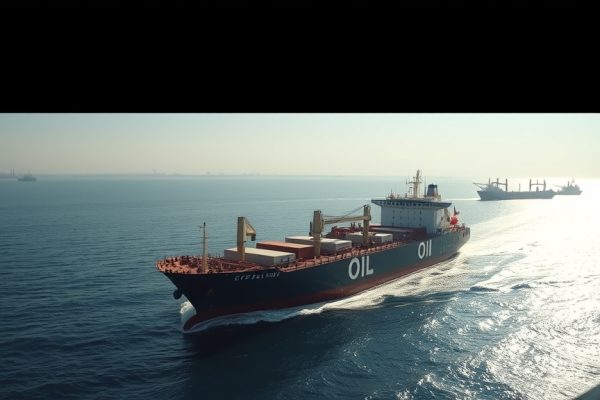
U.S. President Donald Trump asserted that the United States maintains complete control over the Strait of Hormuz, further claiming the success of the U.S. naval blockade on Iranian ports and stating that Iran lacked the financial means to pay its soldiers. In direct response, Iran’s Persian Gulf Strait Authority vehemently denied Trump’s claims regarding U.S. authority over the Strait of Hormuz, announcing that the seaway remains blocked and will continue to be so until Iran’s conditions are met.
Iran’s Foreign Minister Abbas Araghchi warned that the U.S. risks a significant miscalculation concerning the Strait of Hormuz. Following this exchange of rhetoric, experts are expressing concern that the divide between the U.S. and Iran could widen further. In parallel efforts, Pakistan, in collaboration with its Gulf allies, is actively working to facilitate renewed negotiations between the two nations.
Economic Demands and Counter-Demands
Earlier in the week, following the finalization of a deal with Oman regarding the management of the Strait of Hormuz, Iran presented several demands to the U.S. A key condition stipulated by Iran was compensation for damages incurred during the war, without which it refused to reopen the strait. In a counter-demand, President Trump called for Iran to compensate for the damages it has allegedly caused in numerous other countries over the past five decades through various conflicts.
Economic Data and Interest Rate Outlook
On the economic front, data released by the U.S. Bureau of Labor Statistics provided a mixed picture. Producer prices remained unchanged in July, a slight deviation from the revised 0.1% dip recorded in June and below market expectations of a 0.2% gain. On an annual basis, producer prices increased by 4.7% in July, marking the lowest rate since March, down from a 5.5% increase in June. Core producer prices, which exclude volatile food and energy components, saw a 0.2% increase month-on-month in July. Year-on-year, core prices rose by 4.2%, aligning with market expectations.
Further economic indicators from the U.S. Department of Labor revealed an increase in unemployment benefit claims. In the first week of August, claims rose by 9,000 to 209,000, exceeding market expectations of 202,000. Continuing jobless claims, however, saw a slight decrease to 1,777,000 for the week ending August 1, down from 1,799,000 in the prior week.
Adding to the discourse on monetary policy, U.S. Federal Reserve Bank of Boston President Susan Collins, in an interview with the Financial Times, indicated support for an interest rate increase by the Fed, citing the struggles of poorer Americans to make ends meet. This sentiment, coupled with recent data showing consumer prices increased 3.4% year-on-year in July, and the earlier employment data indicating a fall far below expectations, contributes to the complex economic backdrop.
The ongoing Middle East crisis, with no immediate resolution in sight, continues to fuel oil-linked inflationary concerns. These concerns are actively maintaining expectations of a higher interest rate regime in the U.S., thereby exerting downward pressure on gold and silver prices. The U.S. dollar index was trading marginally higher at 99.96, up by 0.02% on the day.
The persistent geopolitical tensions in the Gulf, coupled with the Federal Reserve’s potential monetary tightening, are creating a challenging environment for precious metals. Investors are closely monitoring diplomatic developments and economic data for further direction.