Greg Abel, CEO of Berkshire Hathaway, has signaled a distinct strategic direction for the conglomerate’s next decade, diverging from his predecessor Warren Buffett’s famously hands-off approach. This shift became evident with the recent acquisition of homebuilder Taylor Morrison for approximately $6.8 billion. While a modest sum for a company that ended the first quarter with nearly $400 billion in cash on its balance sheet, the transaction’s true significance lies in Abel’s articulated plans for its integration, offering a clear glimpse into the future operational philosophy of the Wall Street icon.
The Post-Buffett Era: A New Leadership Imprint
The transition at Berkshire Hathaway followed Warren Buffett’s retirement at the close of 2025, marking the end of an era defined by his unparalleled investment success. Buffett’s acumen is widely credited with transforming Berkshire Hathaway into a ‘Wall Street icon.’ As Abel, Buffett’s handpicked successor, steps into this monumental role, investors have expressed concerns about his ability to ‘fill Buffett’s shoes.’ While Buffett remains available to Abel for advice, now serving as the president of the board, the source underscores that ‘Abel still isn’t Buffett and never will be.’ Instead, Abel is poised to leave his own indelible imprint on the company Buffett meticulously built.
A Clear Departure in Management Style
A key distinction between the two leaders, as highlighted by the Taylor Morrison deal, is their management style. Warren Buffett historically adopted a largely hands-off approach. When he acquired a business or invested in a public company, he typically ‘let the management teams run the show.’ His involvement was usually reserved for instances ‘when something material was going wrong.’ This passive oversight allowed acquired entities significant autonomy, a hallmark of Buffett’s trust in strong management teams. In stark contrast, Abel is described as ‘likely to be much more involved,’ a stance that the Taylor Morrison acquisition has unequivocally made clear.
The roughly $6.8 billion transaction for Taylor Morrison, though small relative to Berkshire’s nearly $400 billion cash reserves at the end of the first quarter, provided the first concrete evidence of this active management philosophy. It is not merely the act of acquisition, but Abel’s subsequent comments on the deal that reveal his strategic intent for the conglomerate’s future, indicating a shift towards a more centralized, integrated operational model.
Strategic Unification of Homebuilding Operations
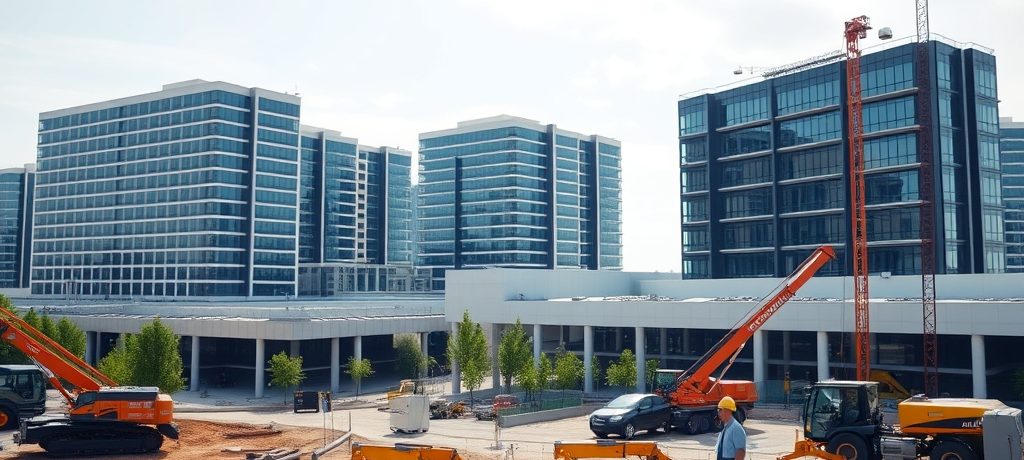
The Taylor Morrison acquisition serves as a tangible example of Abel’s more active management philosophy. In the acquisition news release, Abel explicitly stated, "Over time, we expect to unify our site-built homebuilding operations into a combined platform enabling us to deliver the dream of homeownership to more Americans." This declaration indicates a clear intention to integrate Berkshire Hathaway’s existing housing businesses into a singular operating unit. Such a move is designed to yield ‘increased scale, enhanced efficiency, and reduced business redundancies,’ representing a ‘logical business decision for someone who wants to take a more active role,’ according to the source.
This strategic consolidation within the homebuilding sector suggests a broader operational overhaul could be on the horizon for other segments of Berkshire Hathaway’s diverse portfolio. The focus shifts from merely acquiring strong businesses to actively seeking synergies and efficiencies across related holdings, a departure from the more decentralized model favored by Buffett.
Evolution, Not Revolution: A Long-Term Refinement
Despite this pronounced shift towards operational involvement, investors should not interpret Abel’s strategy as a radical departure for Berkshire Hathaway. The source emphasizes that this is ‘more of an evolution of Buffett’s approach than a replacement,’ rather than a ‘massive business shift.’ This nuanced perspective is crucial, as the core principles of value investing and long-term holding are expected to persist. Furthermore, the implementation of this refined strategy will be a gradual process, not one that ‘will play out in a year or two.’ Given Berkshire Hathaway’s vast portfolio of ‘more than a hundred companies,’ the integration of its homebuilding operations alone ‘could take years,’ with similar efforts across the broader portfolio potentially extending ‘a decade or more.’ This extensive timeline underscores the complexity of transforming a conglomerate of Berkshire’s scale and the deliberate, patient approach Abel is expected to take in refining its internal architecture.
The Decade Ahead: Acquisitions and Internal Optimization
Looking ahead over the next decade, Abel is expected to continue pursuing acquisitions, leveraging Berkshire Hathaway’s substantial financial capacity and ‘scale to make deals.’ However, a crucial complement to this acquisition strategy will be an intensified focus on ‘improving its own internal operations.’ The source suggests that the most promising opportunities for Berkshire Hathaway under Abel’s leadership may be those that allow him to pursue both objectives simultaneously: strategic acquisitions followed by active integration and optimization to unlock greater value. This dual focus on external growth through deals and internal efficiency gains marks the defining characteristic of Abel’s vision for the conglomerate’s future.
As Greg Abel steers Berkshire Hathaway into its post-Buffett era, the Taylor Morrison acquisition stands as a foundational indicator of his leadership. The coming decade is set to be characterized by a more engaged, operationally focused management, aiming to consolidate and optimize the conglomerate’s diverse holdings while continuing its storied tradition of strategic acquisitions. This measured yet distinct evolution promises a new chapter for Berkshire Hathaway, where internal synergies and efficiencies will play an increasingly prominent role in its long-term value creation.