The prospect of an artificial intelligence (AI) bubble bursting and subsequently accelerating job losses presents a concerning economic scenario, dubbed the ‘AI double whammy’ by some analysts. This potential convergence of financial downturn and technological displacement is drawing serious attention from economists, as highlighted in a recent NPR Planet Money newsletter.
While skepticism about AI’s transformative claims persists, the advancing technology, coupled with historical economic patterns, offers reason for concern. Two distinct strands of economic research underpin this apprehension: the cyclical nature of financial bubbles and the surprising relationship between recessions and automation.
Echoes of Bubbles Past: AI’s Financial Footprint
The history of financial bubbles, as meticulously documented by economist Charles Kindleberger in his influential 1978 book, ‘Manias, Panics, and Crashes: A History of Financial Crises,’ reveals a recurring pattern. Drawing on the theoretical framework of Hyman Minsky, Kindleberger observed that revolutionary technologies often spark initial, justified excitement among investors. However, this excitement can escalate into over-exuberance, leading to debt-fueled speculation where participants borrow heavily to make increasingly larger bets, thereby inflating the boom.
When reality inevitably sets in, asset prices plummet, but the accumulated debt remains, creating a ticking time bomb. Borrowers struggle to repay, lenders incur losses, and a market crash can spiral into a financial crisis and a painful recession. The source notes that a technology can be genuinely revolutionary, yet still fuel a bubble that ends in a crash, citing the railroad bubble whose collapse triggered ‘The Panic of 1873’ and subsequent economic turmoil, leading to a populist uprising and the first major immigration crackdown in American history.
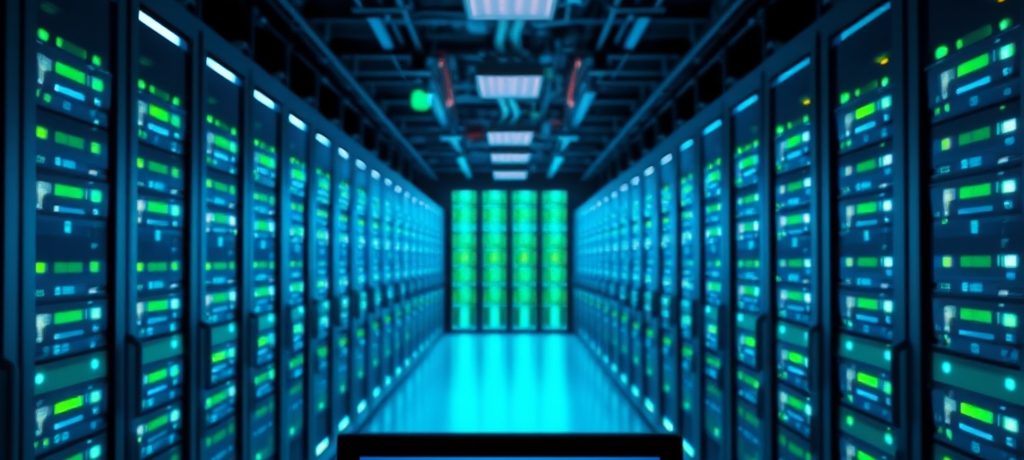
Today, AI appears to be a significant driver of the U.S. stock market. An analysis from J.P. Morgan, conducted earlier this month, found that a mere 42 AI-related companies were responsible for approximately two-thirds of the S&P 500’s stock price gains since early 2024. Concurrently, AI-related companies are borrowing hundreds of billions of dollars to finance the construction of data centers and the extensive energy infrastructure required to power them.
While this activity does not definitively prove the existence of a bubble or that current debt levels are a systemic risk, the potential for a painful reckoning exists. Technology analyst Benedict Evans has cautioned that intense competition among companies offering similarly capable AI models could drive down prices, leaving minimal room for profit, even as these firms expend ‘ungodly amounts of money’ on development and operational costs. This contrasts with the dot-com bubble, which ushered in a relatively mild recession due to a smaller role for debt, and the 2008 housing market bust, which triggered a systemic financial crisis.
Recessions as Catalysts for Automation
The second, equally unsettling, strand of research suggests that if an AI bust were to trigger a recession, the downturn itself could accelerate worker replacement. Contrary to the common perception of automation as a gradual process, studies indicate that it often occurs in bursts, clustering around economic recessions.
Economists Nir Jaimovich and Henry Siu conducted a study revealing that jobs vulnerable to previous waves of automation experienced the majority of their decline during recessions or in the months immediately preceding or following them. Specifically, between 1990 and 2017, an alarming 88% of the decline in the share of Americans employed in these vulnerable jobs occurred within these recessionary periods.
This creates an unsettling irony: the fierce price competition that could prevent AI companies from achieving investor-expected profits might simultaneously make their technology cheaper and more accessible for other businesses. In a recessionary environment, businesses, scrambling to cut costs, could then readily adopt these more affordable AI solutions to replace human workers, exacerbating job losses even as investors in AI companies suffer.
Navigating the ‘Nightmare Scenario’
The convergence of these two trends paints a ‘nightmare scenario’: an AI bust first impacts retirement savings and investment portfolios, followed by widespread, permanent job losses as businesses leverage newly affordable AI to streamline operations during a cost-cutting recession. While the precise future remains uncertain—whether AI will deliver sufficient profits, whether a bust would trigger a severe recession, or if past automation patterns will repeat—the potential implications are significant.
A downturn could also paradoxically reduce businesses’ capacity to invest in new AI technologies. Furthermore, AI’s ultimate utility might lie more in enhancing worker productivity rather than outright replacement. Nevertheless, policies exist to mitigate potential damage. Traditional safety nets like unemployment insurance are crucial. Additionally, figures such as Bill Gates have proposed taxing AI and robots, a measure that could make human employment more economically viable while generating revenue to bolster social safety nets.
While the ‘AI double whammy’ remains a speculative concern, the historical precedents and current economic indicators provide ample reason for vigilance and proactive policy discussions. Understanding these potential risks is the first step toward preparing for an uncertain future where technological advancement and economic stability intersect.