China’s consumer inflation held unexpectedly steady in May, failing to meet economists’ forecasts, even as factory prices surged at their quickest pace in almost four years. This divergence highlights the impact of rising commodity costs on industrial producers, while subdued domestic demand continues to suppress consumer price growth.
Consumer Prices Show No Momentum
The consumer-price index (CPI) rose 1.2% from a year earlier in May, matching the 1.2% increase seen in April. This figure fell short of the median estimate of 1.3% in a Bloomberg survey of economists. According to data released by the National Bureau of Statistics on Wednesday, a significant 16% drop in pork prices exerted a 0.3 percentage-point drag on the overall CPI.
The core CPI, which excludes volatile food and energy prices, also surprised by undershooting expectations. It increased by 1.1% year-on-year, a slowdown from its 1.2% gain in April. This suggests that inflationary pressures are not broadly filtering through to the consumer level.
Factory Gate Inflation Accelerates
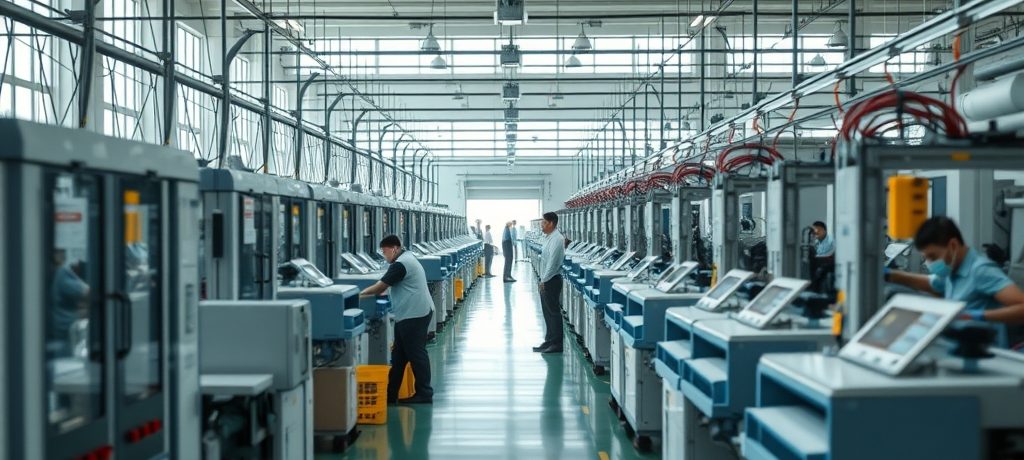
In contrast to the consumer side, producer inflation accelerated significantly. The producer-price index (PPI) climbed 3.9% from a year ago, matching forecasts and marking a substantial increase from the 2.8% rise recorded in April. This marks the fastest pace of factory price gains in nearly four years.
NBS statistician Dong Lijuan attributed the rise in producer prices to several factors. ‘The acceleration of electrification, the deep integration of artificial intelligence across various sectors, and the growing demand for computing power have driven up prices in industries such as nonferrous metals, electrical machinery, and computers,’ she stated in a release accompanying the figures.
AI Boom Fuels Industrial Demand
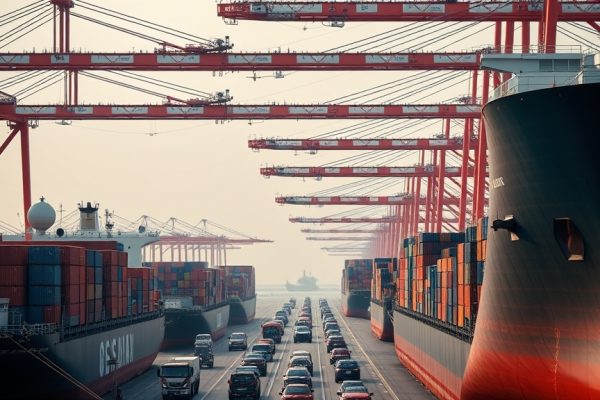
The global artificial intelligence boom is a key driver behind the surge in factory prices. Increased demand for Chinese electronics, from semiconductors to printed circuit boards, is a direct consequence of this trend. China’s exports, for instance, jumped more than 19% year-on-year in May, the most in three months, largely fueled by global investment in data center buildouts in the United States.
Furthermore, a rally in commodities such as aluminum and copper is contributing to higher output prices. These nonferrous metals are benefiting from heightened demand driven by the AI sector’s need for advanced infrastructure and components.
Global Factors and Domestic Weakness
A global energy crisis, reportedly triggered by events in Iran, has also revived inflationary pressures in the world’s second-largest economy. However, consumer-facing factories are finding it difficult to pass these higher raw material costs onto buyers. Years of weak domestic demand and excess supply have fostered intense competition among Chinese industrial firms, effectively capping any broad-based price increases at the consumer level.
David Qu of Bloomberg Economics noted, ‘The Iran war lifted producer prices, but weak domestic demand prevented pass-through to consumer inflation. Looking ahead, we expect PPI inflation to remain relatively elevated, though lower oil prices should slow the pace of increase. CPI inflation should stay soft.’
Following the release of the data, the Chinese yuan erased earlier gains against the U.S. dollar in onshore trading. The yield on 10-year government bonds remained steady at approximately 1.7%.
Bloomberg Economics anticipates that the GDP deflator, a measure of economy-wide price changes, may end its three-year streak of declines this quarter. This suggests a potential shift towards broader inflation, but the current dichotomy between surging factory prices and stagnant consumer inflation underscores the complex economic dynamics at play in China.