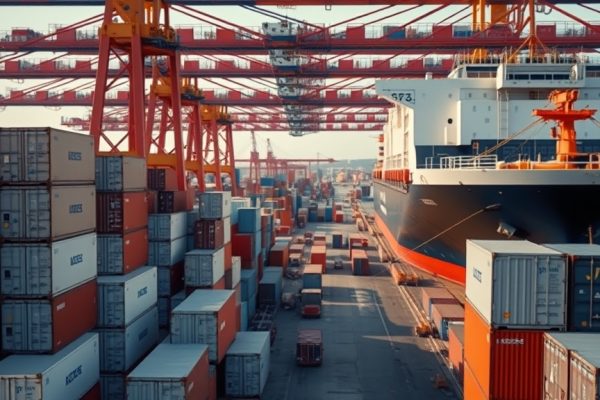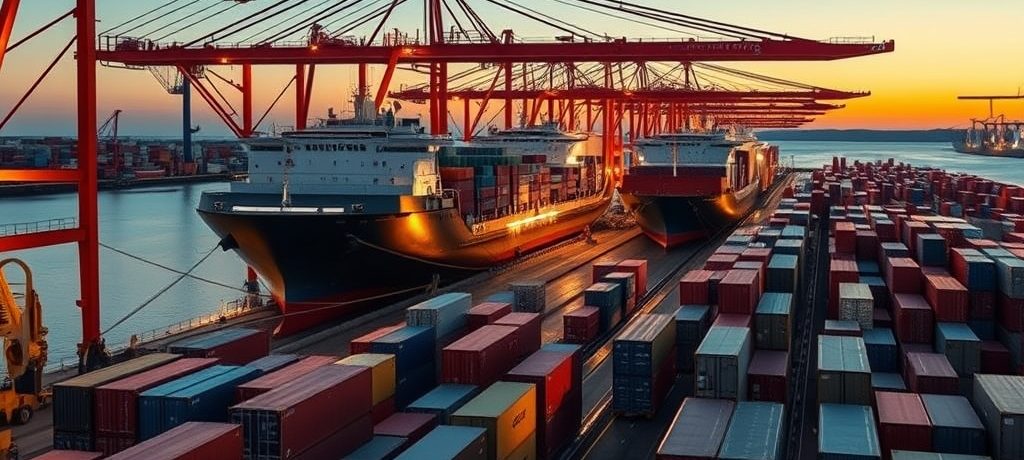
China’s trade surplus soared to $938 billion for the first nine months of the year, propelled by a robust 36.3% surge in exports in September compared to a year earlier, according to the country’s customs agency. This significant expansion places China firmly on a trajectory to exceed last year’s record-setting full-year trade surplus of $1.2 trillion, even as its major trading partners, notably the European Union, intensify calls for a rebalancing of global trade flows.
The Numbers Behind the Surplus
The September export data, which surpassed economists’ expectations, marked a notable acceleration from the 25% growth recorded in August. This pace represented the fastest since February, according to FactSet data, underscoring the sustained momentum in China’s outbound shipments. Imports also demonstrated strength, climbing 31% year-on-year in September, an increase from August’s 28.2% rise. Despite the robust import growth, China registered a substantial $133.5 billion trade surplus last month, widening from $119.1 billion in August. The cumulative surplus for the January-September period now stands at $938 billion, setting the stage for a potential new annual record.
High-Tech Exports Fueling Growth
The impressive export performance has been significantly bolstered by high-tech goods, particularly semiconductors and automobiles. Customs data reveals that between January and September, China’s semiconductor exports experienced a remarkable 108.1% year-on-year increase in value. Exports of automatic data processing equipment and parts also jumped 54.6%, while auto exports surged 54.3%. This automotive growth has been primarily driven by escalating global demand for Chinese electric vehicles and hybrids, showcasing the country’s growing industrial competitiveness in advanced manufacturing sectors. Strong exports have been a critical pillar supporting China’s overall economic growth this year, particularly at a time when domestic consumption and investment have remained sluggish, weighed down by a yearslong downturn in the real estate sector.
Mounting International Scrutiny and Trade Tensions
China’s export resilience, however, is now confronting mounting challenges from its trading partners. Ecaterina Bigos, a senior market strategist at BNP Paribas Asset Management, noted, “While U.S.-China trade tensions have eased somewhat, the EU’s push to rebalance directly targets high-value exports.” The 27-nation European Union has been particularly vocal about its struggle to rebalance a trade deficit with China that exceeds $1.1 billion a day. Following a recent visit to Beijing, EU trade chief Maroš Šefčovič announced a deal with Chinese counterpart Wang Wentao, which includes a commitment to halve Chinese hybrid car imports into the EU over the next few years. Concurrently, the U.S. has initiated an ongoing probe this year against China and other trading partners regarding their excess industrial capacity, although Washington and Beijing recently agreed to extend their trade truce and reduce tariffs on $60 billion worth of goods. Policymakers also point to a weakened yuan against the U.S. dollar and other currencies, which contributes to making Chinese exports cheaper overseas, further exacerbating trade imbalances. China, for its part, maintains it has “no need or intent” to gain competitive advantages through currency devaluation, asserting that its trade growth is a result of its industrial competitiveness in the global market. Eswar Prasad, a professor of economics and trade policy at Cornell University, highlighted that many of China’s trading partners are grappling with weak growth prospects and harbor fears of their manufacturing industries being overwhelmed by Chinese exports.
Future Headwinds and Economic Outlook
Despite the current export strength, future challenges loom for China’s high-tech export model. Bigos cautioned that while diversifying exports into markets such as Southeast Asia and Latin America could offer some relief, it “cannot fully substitute for Western demand.” Furthermore, the country’s reliance on high-tech exports could face headwinds from global technological shifts. Max Zenglein, Asia Pacific senior economist at The Conference Board, suggested that “A slowdown in the global AI investment cycle could pose a greater threat to China’s export growth than trade restrictions imposed by other countries,” particularly given calls from some U.S. technology industry leaders for a global slowdown in AI development for safety reasons. The International Monetary Fund recently lowered its forecast for China’s 2026 economic growth to 4.5%, a 0.1 percentage point reduction from its previous projection, warning that the country’s robust exports are insufficient to fully offset persistent domestic weaknesses. Chinese leaders have set an annual economic expansion target of 4.5%-5% for 2026. While officials have emphasized the importance of bolstering domestic demand, analysts believe this has yet to become a priority for the current year, even after authorities introduced new measures, such as subsidies for homebuyers’ mortgage interest payments, to stimulate the economy.
As China prepares to release its July-September quarterly economic growth figures next week, the impressive trade surplus underscores the nation’s continued role as a global manufacturing powerhouse. However, this export-driven growth model is increasingly under the microscope, facing both intensified international pressure to rebalance trade and the inherent vulnerabilities of relying heavily on external demand and specific high-tech sectors amidst a complex global economic and technological landscape.