Cocoa prices experienced a significant downturn this week, with July ICE NY cocoa (CCN26) closing down -203 (-5.12%) and July ICE London cocoa #7 (CAN26) falling -113 (-3.75%) on Friday. This sharp decline pushed NY cocoa to a 2-week low and London cocoa to a 1.5-week low, primarily driven by concerns over weak global demand and a notable increase in inventories.
Demand-Side Headwinds Pressure Market
The immediate pressure on cocoa prices stems from growing concerns about consumer demand for chocolate. Barry Callebaut, identified as the world’s seventh-largest chocolate maker by revenue, recently updated its guidance, suggesting a slower recovery in sales volumes than previously anticipated. This outlook has contributed to a bearish sentiment across the market.
Further evidence of softening demand emerged from recent sales and grinding data. Circana reported on April 14 that chocolate candy sales in North America for the 13 weeks ending March 22 fell by 1.3% compared to the same period a year ago. Regional grinding figures also painted a concerning picture: the National Confectioners Association reported a -3.8% year-over-year decline in North American Q1 cocoa grindings to 106,087 MT. Even more pronounced, the European Cocoa Association indicated that Q1 European cocoa grindings plummeted -7.8% year-over-year to 325,895 MT. This decline was steeper than the anticipated -6% and marked the lowest Q1 grindings in 17 years.
Inventories Swell to Multi-Year Highs
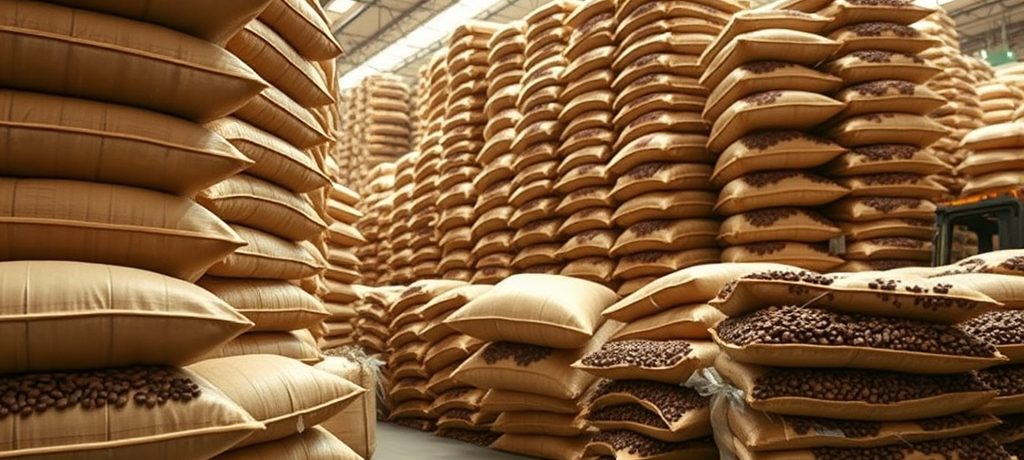
Compounding the demand concerns is a significant build-up in cocoa inventories. ICE cocoa inventories rose to a 1.75-year high, reaching 2,929,074 bags on Friday. This increase in available stock further underscores the imbalance between supply and demand, contributing to the downward pressure on prices.
Conflicting Signals from Supply and Weather
Despite the immediate bearish factors, the medium-term outlook for cocoa prices may see some limitation to losses due to mounting weather concerns and evolving supply dynamics. The US National Oceanic and Atmospheric Administration (NOAA) estimates an 82% probability that El Niño conditions will emerge between now and July, persisting through the end of the year, with a 67% chance of a “Super El Niño.” Such a pattern could lead to warmer, drier conditions in West Africa, potentially damaging cocoa production in the region, which accounts for over half of global supply.
Early surveys of the 2026/27 West African cocoa crop also indicate a weak outlook, showing below-average cherelle formation on cocoa trees, signaling potential issues for the main harvest beginning in October. Geopolitical factors, such as the prolonged closure of the Strait of Hormuz, are also seen as supportive for prices by disrupting global cocoa supplies, reducing fertilizer availability, and boosting shipping, insurance, and fuel costs for importers.
However, some supply indicators have been bearish. Cumulative data from the Ivory Coast on Monday showed farmers shipped 1.66 MMT of cocoa to ports in the current marketing year (October 1, 2025, through May 31, 2026), up +1.8% from the same period a year ago. Furthermore, on May 14, the Ivory Coast boosted its cocoa delivery estimate to 2.2 MMT for the 2025/26 season, up from a previous projection of 1.8-1.9 MMT, citing favorable weather conditions.
Revised Surplus Estimates and Regional Divergence
Analysts have been adjusting their global cocoa surplus estimates, reflecting the complex interplay of factors. StoneX, for instance, cut its 2026/27 global cocoa surplus estimate to 149,000 MT from a January forecast of 267,000 MT, citing risks to the West African cocoa crop from the expected El Niño. StoneX also reduced its 2025/26 global cocoa surplus forecast to 247,000 MT from a January estimate of 287,000 MT. Similarly, Rabobank cut its 2025/26 global cocoa surplus estimate to 250,000 MT from a November forecast of 328,000 MT.
On the bullish side, the International Cocoa Organization (ICCO) last Friday cut its global 2024/25 cocoa surplus estimate to 48,000 MT from 75,000 MT in March, marking what would be the first surplus in four years. ICCO estimated that global cocoa production in 2024/25 climbed by +8.3% year-over-year to 4.723 MMT. Meanwhile, while North American and European grindings fell, the Cocoa Association of Asia reported an unexpected rise of +5.2% year-over-year in Q1 Asian cocoa grindings to 223,503 MT, stronger than expectations of a decline of -6.7% year-over-year.
West African Production Challenges Persist
Despite the Ivory Coast’s increased delivery estimate for the current season, long-term production concerns in West Africa remain. Recent rainfall has been insufficient to ease drought conditions in the Ivory Coast and Ghana, with the African Flood and Drought Monitor indicating that as of March 29, drought conditions blanket more than half of the Ivory Coast and about two-thirds of Ghana. Nigeria, the world’s fifth-largest cocoa producer, also faces challenges, with Bloomberg reporting a -20% year-over-year drop in Nigerian cocoa exports in April to 14,921 MT. Nigeria’s Cocoa Association projects that Nigerian cocoa production in 2025/26 will fall by -11% year-over-year to 305,000 MT from a projected 344,000 MT for the 2024/25 crop year. Furthermore, both Ghana and the Ivory Coast have announced significant cuts to the official prices paid to cocoa farmers for upcoming seasons, with Ghana cutting prices by nearly 30% for 2025/26 and the Ivory Coast by 57% for the mid-crop harvest that began in March. The Ivory Coast itself projects its 2025/26 cocoa production to fall -10.8% year-over-year to 1.65 MMT from 1.85 MMT in 2024/25.
While recent earnings from top chocolate makers Hershey and Mondelez International were better than expected, suggesting some consumer demand resilience, the immediate market reaction reflects the weight of weak global demand indicators and a notable increase in inventories. The cocoa market is currently navigating a complex landscape where short-term bearish pressures from demand and stock levels contend with longer-term bullish concerns over West African weather patterns and future crop yields, creating a volatile environment for prices.