Global energy markets reacted sharply on Monday as June WTI crude oil (CLM26) closed up +2.65, a +2.78% increase, while June RBOB gasoline (RBM26) saw a +0.0731 rise, or +2.07%. These significant gains came after President Trump declared Iran’s response to his most recent peace proposal as “totally unacceptable,” thereby extending the closure of the Strait of Hormuz and further restricting global oil supplies.
Diplomatic Stalemate Fuels Market Volatility
The latest diplomatic breakdown marks a critical point in the ongoing 10-week conflict between the United States and Iran. Iran’s peace offer included a proposal to transfer some of its highly enriched uranium stockpile to a third country but firmly rejected the dismantling of its nuclear facilities. Additionally, Iran demanded the lifting of the US naval blockade and sanctions relief, while seeking to maintain a degree of control over traffic through the strategically vital Strait of Hormuz. President Trump’s outright rejection of these terms has solidified the market’s perception of prolonged geopolitical instability in the region.
Critical Supply Lines Under Threat
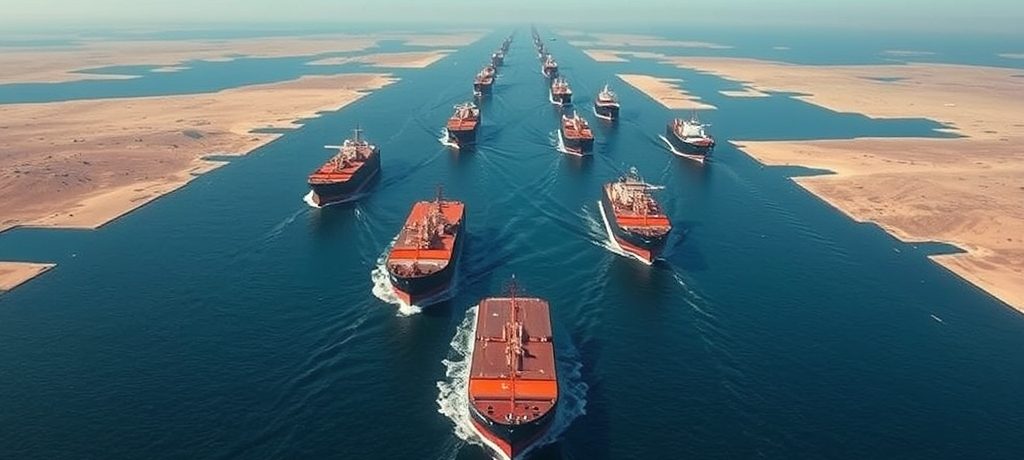
The continued closure of the Strait of Hormuz, a chokepoint through which approximately a fifth of the world’s oil and liquefied natural gas transits, is severely exacerbating global oil and fuel shortages. Goldman Sachs estimates that crude output in the Persian Gulf has been curtailed by about 14.5 million barrels per day (bpd). This disruption has already drawn down nearly 500 million barrels from global crude stockpiles, with projections indicating a potential depletion of one billion barrels by June. Persian Gulf oil producers have been compelled to cut production by roughly 6% as local storage facilities rapidly approach capacity.
Further underscoring the severity of the situation, the International Energy Agency (IEA) reported last Thursday that approximately 14 million bpd of global oil supply has been shuttered due to the Iran war and the Strait’s closure. The IEA also noted that more than 80 energy facilities have sustained damage during the conflict, with a recovery period estimated to be as long as two years.
US Military Posture and Regional Alliances
Amidst the escalating tensions, President Trump indicated on Monday that the US might restart operations as soon as this week to guide commercial ships through the Strait of Hormuz, supported by naval and air assets. This potential move follows a shift in regional alliances, with Saudi Arabia and Kuwait lifting restrictions on the US military’s use of their bases and airspace. This decision came after Iran launched missiles and drones at the UAE in response to earlier US efforts to open the strait. Previously, Saudi Arabia and Kuwait had blocked US military access after senior US officials downplayed Iranian attacks in the Persian Gulf.
Broader Global Supply Dynamics
Beyond the immediate crisis in the Middle East, other factors continue to influence global oil prices. OPEC+ had announced on May 3 its intention to boost crude output by 188,000 bpd in June, following a 206,000 bpd increase in May. However, the ongoing Middle East conflict forcing producers to cut output renders any significant production hike unlikely. OPEC+ is still attempting to restore 827,000 bpd of the 2.2 million bpd production cut initiated in early 2024. Notably, OPEC’s April crude production fell by -420,000 bpd to a 35-year low of 20.55 million bpd.
The protracted war between Russia and Ukraine also continues to underpin oil prices by maintaining restrictions on Russian crude. Recent US-brokered peace talks in Geneva concluded without resolution, with Ukrainian President Zelenskiy accusing Russia of prolonging the conflict. Ukrainian drone and missile attacks have targeted at least 30 Russian refineries over the past ten months, limiting Russia’s crude oil export capabilities. Bloomberg data indicates that 21 Ukrainian strikes on Russia’s refineries, export terminals, and oil pipeline infrastructure in April knocked Russia’s average refinery runs to 4.69 million bpd, a 16-year low. US and EU sanctions further curb Russian oil exports.
US Domestic Energy Landscape
Domestically, the latest EIA report from last Wednesday, covering data as of May 1, showed mixed inventory levels: US crude oil inventories were +0.7% above the seasonal 5-year average, while gasoline inventories were -3.1% below, and distillate inventories were -10.1% below. US crude oil production in the week ending May 1 fell -0.1% week-over-week to 13.573 million bpd, slightly below the record high of 13.862 million bpd posted in the week of November 7. Concurrently, Baker Hughes reported last Friday that the number of active US oil rigs in the week ended May 8 rose by +2 to 410 rigs, remaining just above the 4.25-year low of 406 rigs recorded in the week ended December 19. This figure represents a sharp decline from the 5.5-year high of 627 rigs reported in December 2022.
The confluence of a hardened diplomatic stance, the critical closure of the Strait of Hormuz, and persistent geopolitical conflicts in key oil-producing regions continues to exert significant upward pressure on global crude and fuel prices, signaling sustained volatility for energy markets in the near term.