Gold prices edged lower on Thursday, retreating towards the $4,500 an ounce mark, as market participants weighed a confluence of factors including a strengthening U.S. dollar, elevated Treasury yields, and critical geopolitical developments. The precious metal’s decline was notably influenced by ongoing peace discussions between the United States and Iran, alongside a hawkish signal from the Federal Reserve regarding future monetary policy, collectively dampening investor appetite for safe-haven assets.
Geopolitical Tensions and Diplomatic Overtures
The geopolitical landscape emerged as a significant driver for gold’s movement. Traders closely monitored delicate peace talks between Washington and Tehran, a situation introducing considerable market uncertainty. U.S. President Donald Trump characterized the negotiations as being on the ‘borderline’ between a potential agreement and renewed military actions. President Trump stated, “We’ll either have a deal or we’re going to do some things that are a little bit nasty,” underscoring the high stakes and leaving open the possibility of resuming military strikes against Iran.
Iran, for its part, confirmed it was actively examining a new U.S. proposal aimed at de-escalating the Middle East conflict. President Masoud Pezeshkian affirmed Iran’s commitment to diplomatic solutions, stating publicly that the nation has “explored every avenue to avert war,” and that “all paths remain open from our side.” On his X account late on Wednesday, President Pezeshkian conveyed a firm message: “forcing Iran to surrender through coercion is nothing but an illusion and that mutual respect in diplomacy is far wiser, safer, and more sustainable than war.” This diplomatic back-and-forth often leads to reduced demand for traditional safe havens like gold.
Market Performance and Economic Indicators
Against this backdrop of geopolitical fluidity and shifting economic expectations, the precious metal’s valuation reflected immediate market pressures. Spot gold registered a slip of 0.3 percent, trading at $4,531.74 an ounce. Concurrently, U.S. gold futures also saw a notable decline, down half a percent to $4,533.75. The firming dollar typically makes gold more expensive for holders of other currencies, thereby dampening demand. Simultaneously, higher Treasury yields, representing the return on relatively risk-free government debt, increase the opportunity cost of holding non-yielding assets like gold, drawing investment away from the yellow metal.
Federal Reserve’s Hawkish Stance
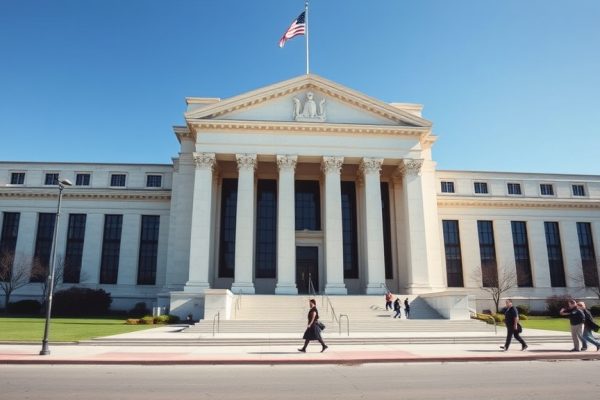
Adding to the downward pressure on gold, minutes from the Federal Reserve’s latest policy meeting, released overnight, revealed a distinctly hawkish tone among central bank officials. The detailed summary indicated that “most officials anticipating that interest rate hikes would be necessary if inflation persists above their 2 percent target.” This forward-looking guidance from the Fed suggests a potential for tighter monetary policy in the near future. Such a stance generally strengthens the dollar and pushes bond yields higher, further diminishing gold’s appeal as a store of value and safe-haven asset.
As global markets continue to navigate a complex interplay of geopolitical tensions and evolving monetary policy expectations, gold’s immediate trajectory remains highly sensitive to these shifting dynamics. The precious metal’s performance will likely continue to reflect the market’s assessment of both the likelihood of a diplomatic resolution in the Middle East and the Federal Reserve’s unwavering commitment to its inflation targets, shaping investor sentiment in the coming weeks.