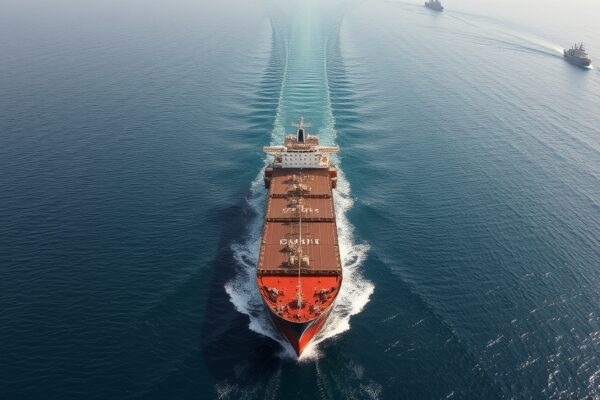
Gold prices experienced a sharp decline on Monday, shedding $54.10, or 1.14%, to settle at $4,686.80 per troy ounce for June delivery on the Comex exchange. This downturn reflects heightened investor caution as the protracted standoff between the United States and Iran continues without a clear resolution, exacerbated by the ongoing closure of the vital Strait of Hormuz. Silver also saw a significant drop, with front-month Comex Silver for June delivery slumping by $1.333, or 1.74%, to $75.345 per troy ounce.
Diplomatic Stalemate Fuels Market Uncertainty
The market’s unease stems from the vacillating stances of both the U.S. and Iran regarding peace talks. Following a war that erupted on February 28, Pakistan has been attempting to mediate a resolution. However, initial peace talks held in Islamabad on April 11-12 were deemed a “failure” by U.S. President Donald Trump. Despite this assessment, Trump later agreed, at Pakistan’s request, to a second round of negotiations over the past weekend. The U.S. had prepared to send a delegation, including envoy Steve Witkoff and his son-in-law Jared Kushner.
Anticipation for a positive outcome from the second round had been building, particularly after Iran’s Foreign Minister Abbas Araghchi confirmed his attendance. However, President Trump abruptly canceled the U.S. envoys’ trip on Saturday, delivering a significant setback to the diplomatic efforts. This cancellation led to confusion, with Araghchi departing Islamabad after discussions solely with Pakistani Prime Minister Shehbaz Sharif and other high-level officials. Araghchi described his visit as “very fruitful,” but the U.S. side’s withdrawal cast a shadow over any potential breakthroughs.
Iran’s Stance and Escalating Rhetoric
Adding to the complexity, Iranian President Masoud Pezeshkian communicated to Prime Minister Sharif via phone that Iran would not engage in “imposed negotiations.” President Trump stated that Iran’s draft proposal was unacceptable and cited the time and expense involved in travel to Pakistan as reasons for the cancellation, asserting that such efforts were “of no avail.” Trump further commented on “tremendous confusion” within the Iranian regime, suggesting that Iran should communicate its plans telephonically if it wished to engage. He asserted that “the U.S. has all cards, Iran has none.”
In response to the escalating tensions, Iran’s Vice President Esmail Saghab Esfahani issued a stern warning, stating that Iran would inflict four times the damage on any country that supports damage to Iran’s oil infrastructure. This rhetoric underscores the volatile geopolitical climate and the potential for further escalation.
Strait of Hormuz Closure Amplifies Supply Concerns
The prolonged impasse has resulted in the Strait of Hormuz remaining effectively shut. Iran initially blocked transit immediately after the war began, and subsequently, President Trump ordered a naval blockade on all Iranian ports. This dual blockade has significantly disrupted oil supply chains, leading to soaring crude oil prices and reigniting inflation-related concerns. Reports indicate that Iran, through mediators, has conveyed demands to the U.S. for an immediate end to the war, guarantees against future attacks on Iran and Lebanon, and negotiations on managing the Strait of Hormuz. Iran has indicated that discussions on its nuclear program would only follow an agreement on these two issues. President Trump has maintained a firm stance, insisting that the U.S. will never permit Iran to possess nuclear weapons.
Broader Market Implications and Investor Sentiment
The “fluidic” situation, as described by market observers, has created significant uncertainty for investors. The deadlock, now in its second month, is compounded by renewed tensions in the Middle East, including Israel’s attacks on Hezbollah targets in Lebanon despite a three-week ceasefire. With oil transit halted and inflationary pressures mounting, investors have scaled back expectations for any interest rate cuts from the U.S. Federal Reserve at its upcoming meeting. Analysts anticipate that the Bank of Japan, the European Central Bank, and the Bank of England may also hold steady on rates. This increasing macroeconomic uncertainty is directly weighing on the value of gold, traditionally seen as a safe-haven asset.