Gold prices turned lower on Monday, June 22, 2026, extending a plunge observed on Thursday, as market participants grappled with persistent concerns regarding a high-interest-rate regime in the near-term. This downward pressure was compounded by a strengthening U.S. dollar, overshadowing signs of progress in U.S.-Iran peace talks.
The precious metal experienced a notable dip, with Front Month Comex Gold for August month delivery inching lower by $36.80, representing a 0.87% decline, to settle at $4,209.10 per troy ounce. Silver also felt the impact, as Front Month Comex Silver for August month delivery tumbled by $0.897, or 1.35%, to $65.680 per troy ounce. U.S. markets had been closed on Friday for the Juneteenth Federal Holiday, contributing to the extended losses.
The primary catalyst for gold’s retreat stems from the U.S. Federal Reserve’s recent monetary policy stance. At the conclusion of the Federal Open Market Committee’s meeting last week, the central bank announced its decision to hold interest rates steady within the current 3.50% to 3.75% range. This decision was attributed to persisting inflationary concerns that continue to influence the Fed’s outlook.
Further reinforcing market expectations for tighter monetary policy, the Fed’s Dot Plot indicated that a majority of the central bank’s policymakers anticipate the need to raise rates later this year. A high-interest regime for the U.S. dollar typically makes bullion-buying costlier for overseas buyers, thereby reducing demand for the non-yielding asset and causing gold prices to feel the heat.
Adding to gold’s woes was the consolidation in the U.S. dollar. The U.S. dollar index was last seen trading at 100.98, marking an increase of 0.14 points, or 0.14%, on Monday. A stronger dollar generally makes dollar-denominated commodities like gold more expensive for holders of other currencies, further dampening investor appetite.
Geopolitical Backdrop: U.S.-Iran Dynamics
While economic factors largely dictated gold’s movement, a complex geopolitical narrative unfolded in the background, specifically concerning U.S.-Iran relations. Last Wednesday, U.S. President Donald Trump and Iran’s President Masoud Pezeshkian signed a 14-point Memorandum of Understanding (MoU). This agreement aimed to extend an earlier-agreed ceasefire for another 60 days, with both nations committing to discuss contentious issues that triggered the conflict and work towards a permanent solution.
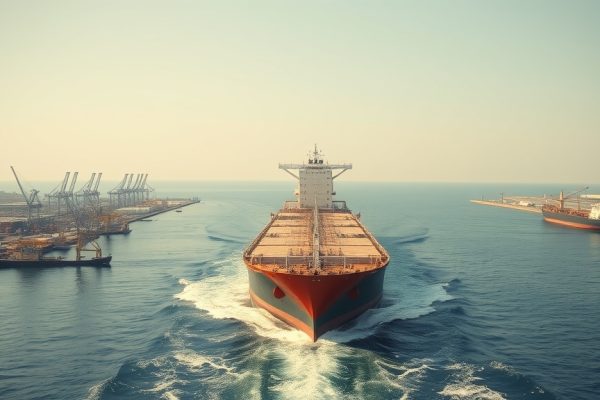
A significant outcome of the MoU was the immediate reopening of the Strait of Hormuz, ensuring free transit of vessels from Arab nations to the rest of the world. This development was globally welcomed by market participants, signaling a potential de-escalation of regional tensions.
On Sunday, the first round of meetings between U.S. and Iranian negotiators commenced in Switzerland, continuing into Monday. Iran’s Foreign Minister Abbas Araghchi stated that major progress had been made to halt the Israel-Lebanon war, terming it the ‘first real test’ of the renewed diplomatic efforts.
However, these positive developments were quickly overshadowed by a dramatic turn of events. Iran announced that it had closed the Strait of Hormuz again, citing Israeli attacks on Lebanon. This move prompted a strong reaction from President Trump, who posted on his Truth Social platform on Sunday, referencing the Iran-backed Hezbollah militia group in Lebanon. Trump asserted that Iran ‘must stop their proxies in Lebanon from causing trouble failing which the U.S. will hit Iran harder again.’
In an interview with Fox News, President Trump escalated his threats, stating that if Iran closes the strait, ‘there would be no Iran.’ He further warned that negotiators ‘shall not make it back to Iran again,’ and asserted that the U.S. ‘may take over the strait and start collecting tolls.’ In protest of these remarks, Iranian representatives walked out from the discussions, although high-level negotiators carried on with the talks.
The U.S. delegation was headed by U.S. Vice President JD Vance, U.S. Special Envoy Steve Witkoff, and Trump’s son-in-law Jared Kushner. The Iranian side was led by Iranian Parliament’s Speaker Mohammad Bagher Ghalibaf and Iran’s Foreign Minister Abbas Araghchi. These high-level teams reportedly held negotiations for approximately 80 minutes, according to Iranian media.
In contrast to President Trump’s outburst, Vice President Vance downplayed the issues, stating that Trump ‘wants the U.S. to turn over a new leaf with Iran.’ Mediators Qatar and Pakistan jointly announced that the U.S. and Iran agreed to install a communication line to avoid further incidents in the Strait of Hormuz. Both nations also consented to the setting up of a ‘de-confliction cell’ with Lebanon’s government to guarantee the termination of military operations. Furthermore, a high-level committee would be established by the U.S. and Iran to provide political oversight in the mediation, with technical-level talks slated to continue through the rest of the week. Araghchi also announced that Iran had secured waivers for oil and petrochemical exports among the few concessions.
Despite the decline in crude oil prices, with WTI crude oil for July month delivery last seen trading at $74.73, down by $1.87 (or 2.44%), the consolidation in the U.S. dollar continued to exert significant downward pressure on gold prices. The complex interplay of economic fundamentals, particularly interest rate expectations and dollar strength, appears to be the dominant force shaping the precious metal’s trajectory, even amidst volatile geopolitical developments.