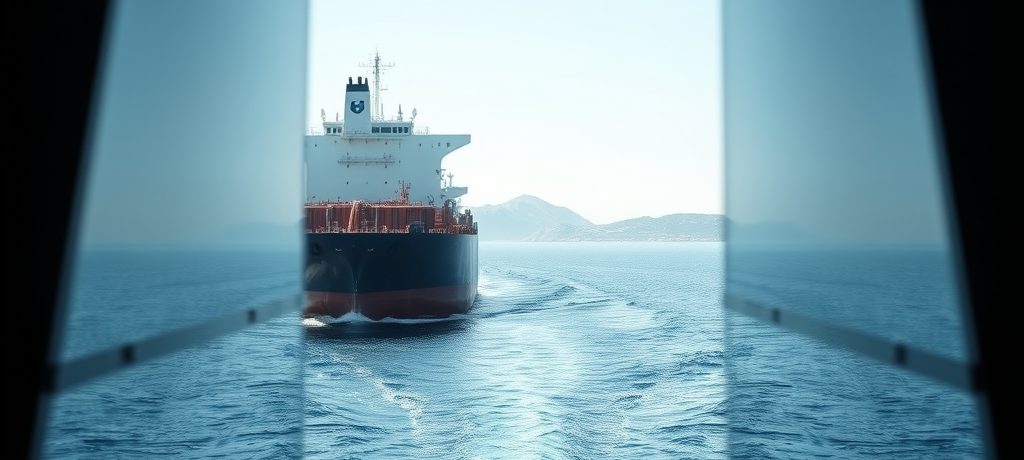
Ship attacks in and around the Strait of Hormuz have escalated to an unprecedented level, with 12 vessels struck in a single week, according to analysis by BBC Verify of data from a UK maritime agency. This sharp increase, marking the highest weekly tally since the onset of the US-Israeli war with Iran, has coincided with a notable slowdown in oil shipments through the vital global chokepoint, raising concerns for energy markets.
Escalation in Maritime Incidents
Between October 5 and 11, a total of 12 vessels reported attacks to the UK’s Maritime Trade Operations (UKMTO) agency, setting a new record for weekly strikes. This figure surpasses the 10 attacks reported in the preceding week. A particularly intense period occurred on Sunday, October 8, when six vessels were struck, marking a one-day high. As of the time of reporting, four additional attacks have been registered this current week, indicating a sustained pattern of aggression.
BBC Verify meticulously collated incident reports published by the UKMTO, creating a timeline based on the initial date cited in each report. This methodology, while approximate due to varying reporting practices—some incidents using the attack date, others the report date—underscores the clear upward trend in maritime security threats.
Oil Exports Stall Amid Rising Risks
The surge in maritime attacks has directly impacted the flow of Middle East oil exports. Industry data suggests that the recovery in oil shipments, which had been observed last month, has now stalled. On October 13, approximately 12.6 million barrels per day (bpd) transited the Strait of Hormuz. This represents a decline from the 15 million bpd reported at the end of September and falls significantly short of the pre-war baseline of around 17 million bpd. It is important to note that Iranian exports have completely ceased due to the US blockade of Iranian ports and ships, and are not included in these figures.
The US Navy has responded to the heightened risk, with data indicating an 85% increase in the number of vessels receiving assistance to navigate the Strait of Hormuz during the first 10 days of October compared to the same period in August. This ‘assisted transit’ system, where a fleet of tankers loads cargo and sails through the strait before transferring it to larger vessels in the Gulf of Oman, had been a key factor in helping oil flows from Gulf Arab states rebound towards pre-war levels in September. These shuttle ships typically utilize a route close to Oman’s coastline, a path Iran has deemed ‘unauthorised,’ insisting vessels take an alternative route nearer its own shore.
Iran’s Evolving Strategy and Geographic Expansion
Experts attribute the escalating attacks to Iran’s efforts to reassert greater control over the vital waterway. Martin Kelly, CEO of Orbital Risk Intelligence, noted that Iran has ‘evolved its strategy’ in response to what it perceives as a loosening of its control over the strait. Kelly stated that Iran is now carrying out ‘near daily or multiple attacks every single day,’ with the explicit aim to ‘stop the ships going through and to deter others.’
The Islamic Revolutionary Guard Corps (IRGC) has publicly affirmed its intent, with its navy stating that strikes would not be ‘limited to the Strait of Hormuz.’ State media later announced a ‘new deployment formation’ across the region, signaling a broader operational scope. This expansion is evident in recent incidents, with Martin Kelly confirming that Iran is widening its attacks to target ships near the coast of Gulf Arab states and in the Gulf of Oman.
Specific Incidents Highlight Broadening Threat
The severity and geographic reach of the attacks are underscored by several recent incidents. Verified footage captured the aftermath of one of Sunday’s six reported attacks, showing the Nicaragua-flagged tanker Petro Dolphin ablaze. The vessel was struck by a drone close to the Sohar Anchorage, Oman, a considerable distance of more than 250km (150 miles) from the strait, according to maritime intelligence firm Vanguard. While eleven Indian seafarers were rescued, the Forward Seamen’s Union of India reported that two crew members remain missing.
Attacks have persisted into the current week. On Tuesday, the container ship GFS Pride sank after being struck by an unknown projectile within the strait, though all 21 crew members were safely evacuated. The IRGC published footage appearing to show the same vessel sinking, claiming it was carrying ‘2,500 containers of contraband’ and had taken an ‘unauthorised route.’
Further demonstrating the expanded operational area, Vanguard reported a tanker being struck by multiple projectiles north of Qatar on Thursday, October 8, over 500km (310 miles) from the strait, resulting in multiple reported casualties. Another tanker was attacked near the UAE town of Al-Jazirah al-Hamra on Friday, October 9, with verified footage showing crew members donning lifejackets as a large cloud of black smoke billowed from the ship.
Despite these escalating threats, the US military’s Central Command, which oversees Middle East operations, asserted on social media that ‘commercial traffic continues to flow through the Strait of Hormuz with co-ordinated protection from US forces and regional partners.’ However, the record number of attacks and the subsequent slowdown in crucial oil exports indicate a significant and persistent challenge to maritime security and global energy supply lines, compelling continuous vigilance and strategic responses from international stakeholders.