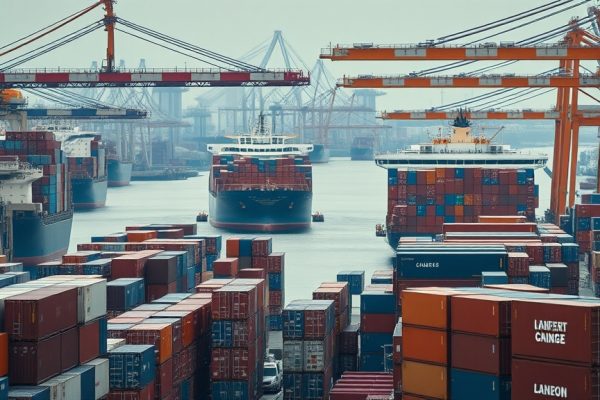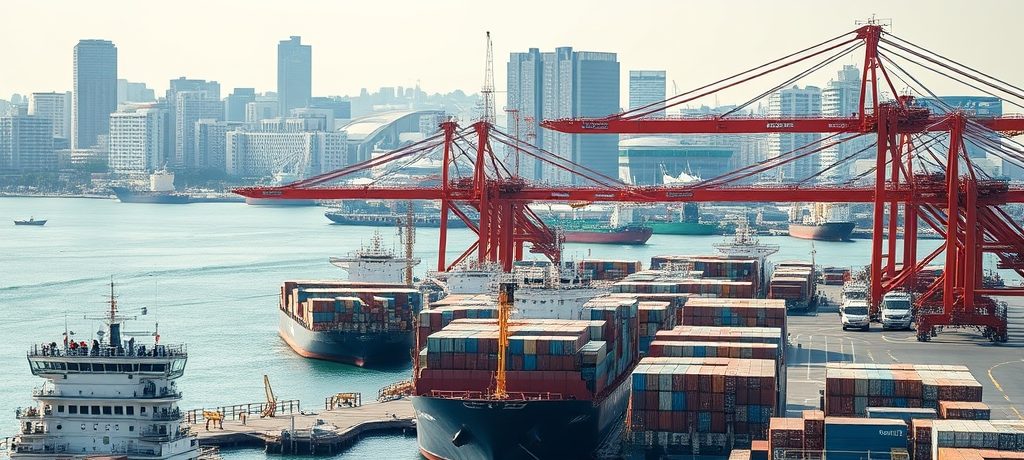
TOKYO — Japan’s exports experienced a significant surge of 14.8% in April compared to the same month a year prior, according to data released by the Finance Ministry on Thursday. This robust trade performance occurred despite ongoing concerns regarding the supply of oil and gas stemming from the conflict in Iran.
The export figures surpassed expectations, marking the eighth consecutive month of growth. A key driver of this expansion was a nearly 42% increase in the value of semiconductor shipments year-on-year. This boom in demand for computer chips and other essential infrastructure for artificial intelligence has proven highly beneficial for many high-tech manufacturers across Asia.
Imports also saw an increase, rising by 9.7% from the previous year. This positive trade dynamic resulted in a shift in the trade balance, moving to a surplus of 301.9 billion yen ($1.9 billion) from a deficit recorded in the same period last year. For comparison, Japan had registered a surplus of nearly 643 billion yen in March.
Beyond semiconductors, higher exports of medical products, paper goods, and electrical machinery also contributed to the stronger overall export performance in April. Trade with major partners showed notable increases: exports to China rose by 15.5%, while those to the U.S. saw a 9.5% increase. On the import side, China’s shipments to Japan climbed 15%, and imports from the U.S. jumped by 23%.
Despite the overall rise in imports, Japan’s oil imports experienced a substantial decline, falling by nearly 50% in value year-on-year. Similarly, imports of liquefied natural gas (LNG) dropped by 20%. These reductions are attributed to the effective closure of the Strait of Hormuz, a critical transit route for oil exports from the Persian Gulf, due to the ongoing war in Iran.
Japan is heavily reliant on imported oil, and Prime Minister Sanae Takaichi has taken steps to mitigate lower supplies, including ordering the release of national oil reserves. However, the supply constraints have led to higher global oil prices. The price of Brent crude, which was trading around $70 a barrel before the conflict, has now surpassed $100. Compounding these challenges, a weakening yen has made dollar-denominated oil imports even more costly for Japan.