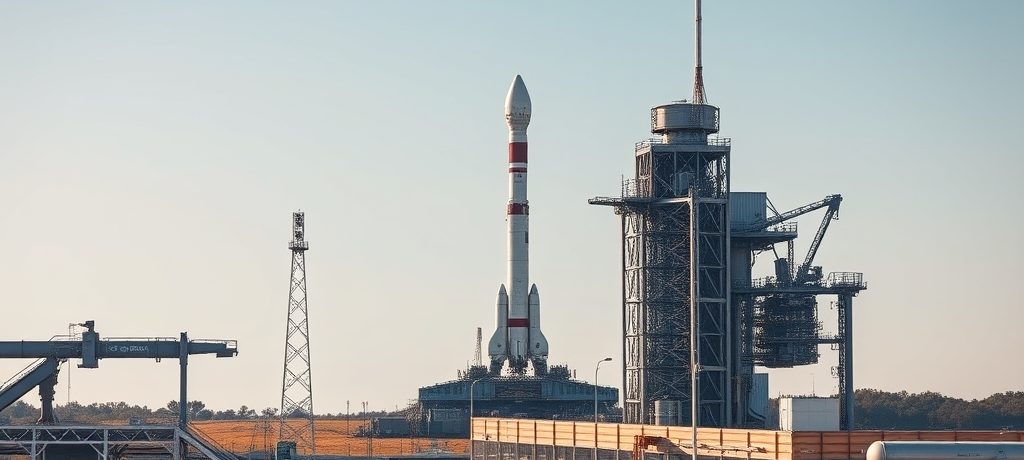
Japan’s H3 rocket has successfully returned to flight with the debut of a new low-cost variant, marking a crucial turning point for the nation’s flagship space vehicle. The launch, which occurred Friday morning from the Tanegashima Space Center on a southwestern Japanese island, saw the rocket’s second stage successfully reach its targeted orbit. This achievement is a much-needed success for the H3 series, which has faced significant setbacks amidst an increasingly competitive global space industry.
The Japan Aerospace Exploration Agency (JAXA) confirmed during its livestreaming that the mission was a success, with six small satellites developed by universities and other organizations also believed to have successfully separated. This flight introduced the H3’s new ’30 configuration,’ featuring triple liquid-fuel LE-9 engines and no rocket boosters. This variant is specifically designed as a low-cost option, intended to bolster the series’ competitiveness in the international market. It is one of three configurations developed to cater to diverse customer requirements.
Addressing Prior Setbacks
This sixth successful launch for the H3 model follows two previous failures that had grounded the rocket since December. The H3, which replaced the highly reliable H-2A series known for its near-perfect success record, experienced a critical malfunction during its debut flight in March 2023, failing to ignite its second-stage engine. A subsequent launch in December also failed to place its navigation satellite payload into the planned orbit due to another malfunctioning second-stage engine. A third consecutive failure would have dealt a severe blow to Japan’s future space projects, including a Mars mission slated for 2028. The nation’s space ambitions have also seen delays with the smaller Epsilon S series, which caught fire during a test in 2024.
Market Competitiveness and Strategic Imperatives
Co-developed by JAXA and Mitsubishi Heavy Industries, the H3 rocket is engineered to be more cost-effective in a global space market largely dominated by Elon Musk’s SpaceX. Japan views a stable and commercially competitive transport capability as fundamental to both its burgeoning space program and its national security interests. The successful launch of the low-cost variant is a significant step towards achieving this strategic objective.
Looking ahead, JAXA and Mitsubishi Heavy Industries harbor ambitions to significantly scale up operations, hoping to launch the H3 six to eight times annually. This increased frequency, coupled with the introduction of cost-efficient variants, underscores Japan’s commitment to establishing a robust and competitive presence in the global space launch sector, positioning itself as a viable alternative to established market leaders.