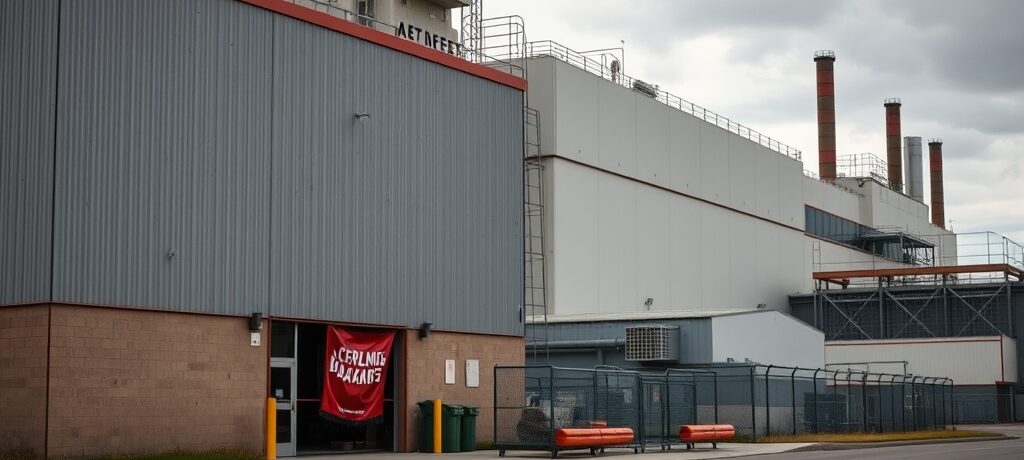
Thousands of workers at one of the nation’s largest meatpacking facilities, Swift Beef Co. in Greeley, Colorado, are set to return to work next week, halting a three-week strike to resume critical negotiations with plant owner JBS USA. This development comes as the U.S. beef industry grapples with a 75-year low in cattle numbers and record-high beef prices, underscoring the significant economic stakes of the labor dispute for both the company and consumers.
Strike Suspension and Negotiation Restart
The decision for workers to return to the Swift Beef Co. plant on Tuesday morning follows an agreement by JBS USA to reopen talks later in the week. The strike, which began on March 16, involved thousands of employees coordinated with the United Food and Commercial Workers Local 7 union. Their demands centered on securing higher wages and better health care benefits, amid accusations of unfair labor practices by management.
Union officials alleged that Swift Beef Co. retaliated against workers and committed other labor law violations, claiming the company offered less than a 2% annual wage increase, a figure reportedly below Colorado’s inflation rate. JBS USA has consistently denied these accusations, stating its contract offer was fair. Kim Cordova, president of the local union, affirmed the workers’ resolve in a statement, asserting, “Workers remain united and will continue to fight.” This industrial action marks the first strike at a U.S. slaughterhouse since a prolonged and often violent confrontation at a Hormel plant in Minnesota in 1985, highlighting the rarity and potential impact of such a dispute in the sector.
JBS USA’s Market Footprint and Plant Significance
JBS USA, a subsidiary of the world’s largest meatpacking company, JBS, commands a substantial market capitalization of $17 billion. The Swift Beef Co. plant in Greeley is not only the top employer in the city of approximately 114,000 residents but also plays a critical role in the national beef supply chain. According to Abby Greiman, a livestock market adviser for industry consultant Ever.Ag, the Greeley plant accounts for approximately 6% of the total U.S. beef slaughterhouse capacity. The potential for an extended strike to significantly disrupt the industry and drive up consumer prices was a major concern, as noted by Jennifer Martin at Colorado State University’s animal sciences department.
Economic Pressures on the Beef Industry
The labor dispute unfolds against a backdrop of considerable economic volatility within the U.S. beef market. U.S. cattle numbers have plummeted to a 75-year low this year, a decline attributed in part to persistent drought conditions and the low prices offered to ranchers. Concurrently, beef prices have soared to unprecedented levels, contributing to broader economic anxieties across the nation. Data from the Bureau of Labor Statistics illustrates this trend, showing that the price for 100% ground chuck beef more than doubled over the past two decades, climbing from $2.55 to $6.07 per pound.
This challenging environment was further evidenced by the January closure of a meatpacking plant in Lexington, Nebraska, where Tyson Foods cited a smaller herd and projected millions of dollars in losses for the year as reasons for its decision, signaling wider industry pressures. These macro-economic factors underscore the delicate balance between producer costs, consumer prices, and labor demands within the meatpacking sector.
Company and Union Positions Ahead of Talks
With workers poised to return to the plant, JBS USA spokesperson Nikki Richardson confirmed the company is “preparing to resume and ramp up operations at the Greeley plant next week.” Richardson reiterated the company’s position via email, stating, “Our Last, Best and Final offer remains on the table,” though specific terms were not disclosed. She expressed hope that “employees will have the opportunity to review and vote on it soon.” The union’s statement confirms that talks are expected to reopen later in the week, setting the stage for what are anticipated to be intense discussions aimed at resolving the three-week impasse.
Corporate History and Labor Relations
Beyond the immediate labor dispute, JBS’s corporate history adds another layer to the narrative. The company’s shares were approved for trading on the New York Stock Exchange last May, a move that proceeded despite environmental opposition and a federal probe. This probe ultimately led to JBS’s guilty plea in October to bribing Brazilian officials to secure financing that facilitated its U.S. expansion. Union officials at the Greeley plant also alleged that the company attempted to intimidate workers into quitting the union through one-on-one meetings, according to union general counsel Matt Shechter, further complicating the trust dynamics in the upcoming negotiations.
As thousands of workers prepare to re-enter the Swift Beef Co. plant, the resumption of negotiations between JBS USA and the United Food and Commercial Workers Local 7 carries substantial implications. The outcome will not only shape the future for the Greeley workforce but also potentially influence labor relations across the critical U.S. meatpacking sector, all while the industry navigates persistent challenges of supply, demand, and escalating consumer prices.