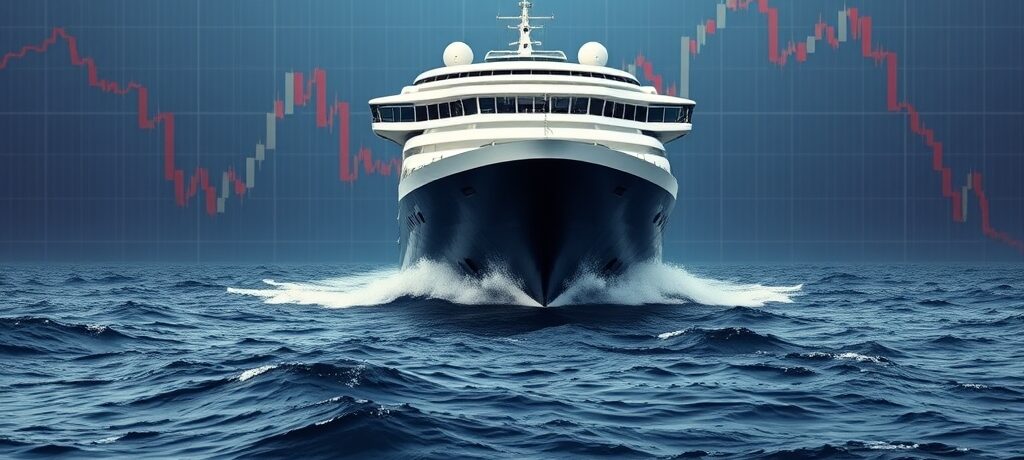
Shares of Norwegian Cruise Line (NYSE: NCLH) have recently experienced a notable decline, plummeting approximately 30% from their 52-week high. This downturn reflects growing investor apprehension, primarily driven by two distinct, yet impactful, concerns poised to influence the company’s performance and stock valuation through 2026. One concern is a highly volatile external factor affecting the entire cruise industry, while the other stems from internal operational hurdles specific to Norwegian Cruise Line.
Geopolitical Tensions Fuel Volatility in Fuel Costs
A primary external pressure on Norwegian Cruise Line, and indeed the broader cruise sector, is the ongoing geopolitical conflict in the Middle East. This conflict has introduced significant volatility into global oil prices, creating a substantial ‘wild card’ for companies like NCLH, which operate fleets requiring immense quantities of fuel. As a basic operational reality for cruise lines, fuel costs represent a critical expense.
The impact on investor sentiment is direct and immediate: ‘When energy prices rise on negative news flow, investors dump the stock. When energy prices fall on positive news, investors buy the stock,’ according to analysts. This reactive pattern underscores the sensitivity of NCLH’s valuation to global energy markets. Given that oil is a global commodity, this trend affects the entire cruise industry. Until a resolution to the conflict emerges, investors should anticipate continued concerns regarding oil prices, with daily fluctuations driven by news from the Middle East, echoing historical patterns of market behavior.
Norwegian Cruise Line’s Internal Execution Challenges
Beyond the external pressures of fuel costs, Norwegian Cruise Line faces a more company-specific and, for some investors, more troubling issue: its 2026 guidance. The company explicitly stated that ‘2026 full year Net Yield on a Constant Currency basis is expected to be approximately flat versus 2025 while the Company works to improve execution of its commercial strategy.’ This indicates a pause in growth for a key financial metric, directly attributable to internal operational missteps.
The core of this execution problem appears to be a strategic misstep involving fleet deployment. The company reportedly moved ‘too many ships into the Caribbean too quickly.’ Compounding this issue are ongoing delays in opening all planned amenities on Great Stirrup Cay, a company-owned island that serves as a crucial destination for its Caribbean itineraries. These operational setbacks are creating headwinds that, while expected to be resolved eventually, will likely require considerable time. Based on the company’s 2026 outlook, it could take ‘several quarters’ for Norwegian Cruise Line to fully regain its footing and optimize its commercial strategy. This distinct, company-specific challenge differentiates NCLH from its industry peers, contributing to Wall Street’s slightly more negative stance on the company compared to others in the sector.
Navigating the Near-Term Outlook
Despite these significant challenges, it is important to note that Norwegian Cruise Line is not projecting a complete business downturn. The company anticipates an improvement in earnings for 2026, with expected earnings per share rising to $2.38 from $2.11 in 2025. This projected increase suggests that while execution issues are impacting yield growth, the overall business is not in disarray.
However, the dual pressures of volatile oil markets and internal operational fixes mean that uncertainty surrounding NCLH’s stock will likely remain elevated. Investors will be closely monitoring both global geopolitical developments and the company’s progress in addressing its ‘self-inflicted wounds’ over the coming quarters. The path to sustained recovery and improved investor confidence hinges on the stabilization of external market conditions and the successful implementation of its commercial strategy adjustments.