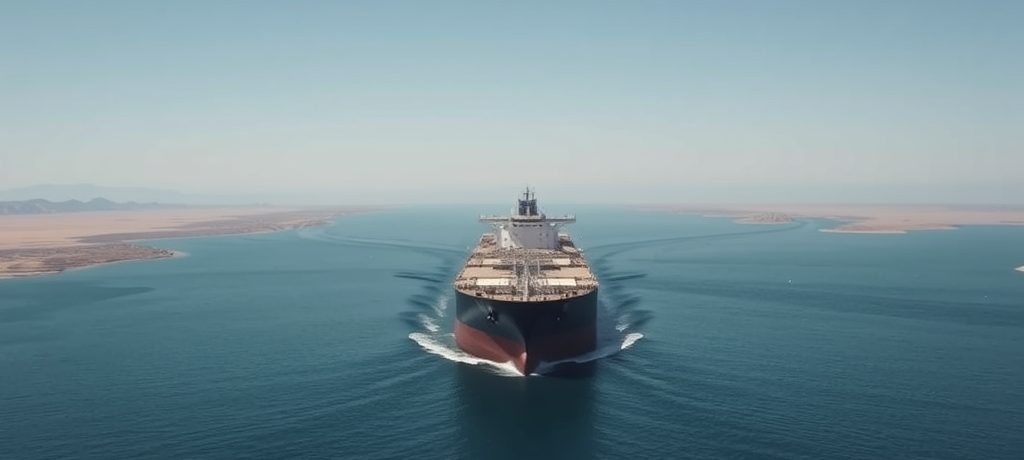
Oil prices maintained a steady course on Thursday as global investors closely monitored the evolving diplomatic landscape surrounding U.S.-Iran negotiations aimed at reopening the Strait of Hormuz. This critical waterway, a narrow choke point connecting the Persian Gulf to the open ocean, is indispensable for the transit of a significant portion of the world’s energy supplies, making any developments in the region a focal point for commodity markets and global economic stability.
Hormuz Negotiations and Market Stability
Despite the underlying geopolitical tensions, Brent crude futures registered a modest gain, rising 0.4 percent to settle at $79.73 a barrel. Concurrently, West Texas Intermediate (WTI) crude futures also edged up, increasing by 0.2 percent to reach $75.39. This relative stability in prices comes as diplomatic efforts intensify to de-escalate tensions between the United States and Iran, a process that could have profound implications for the security and volume of global oil flows.
On the diplomatic front, Iran has indicated it is in the final stages of drafting an agreement with Oman concerning new commercial shipping arrangements specifically for the Strait of Hormuz. This bilateral initiative aims to formalize and potentially streamline maritime operations through the strategic passage. However, Tehran explicitly denied any direct U.S. involvement in these particular negotiations, emphasizing the distinct nature of its discussions with Muscat.
Iranian Foreign Ministry spokesman Esmail Baghaei confirmed that a joint statement from Tehran and Muscat is currently under review and in its final drafting phase. Baghaei added a significant caveat, stating that a deal would be struck “if certain third parties do not obstruct this process,” a remark that hints at potential external influences or spoilers that could complicate the finalization of the agreement.
Conflicting Signals from Washington
Statements emanating from U.S. officials offered a mixed but generally optimistic outlook on the broader discussions concerning the Strait’s future. U.S. President Donald Trump remarked that “a lot of progress had been made” regarding the subject of reopening the Strait of Hormuz, further suggesting that a deal could potentially be announced within the current week. This sentiment, expressed by the highest office, points towards a perceived acceleration in diplomatic breakthroughs from the American perspective, potentially signaling a nearing resolution.
Conversely, U.S. Vice President JD Vance provided a more cautious and grounded assessment during an appearance on Fox News. Vance characterized the Iranians as “extraordinarily difficult people” and described the ongoing effort to end the conflict and secure agreements as “messy.” He further cautioned that “it’s going to take some time,” indicating a longer, more arduous path than perhaps suggested by President Trump. These differing tones from high-ranking U.S. officials underscore the complex, often unpredictable nature of the negotiations, and the internal variations in expectations regarding their pace and outcome.
Regional Security Risks Persist
Adding a critical layer of geopolitical risk to the market’s considerations, the Iranian-backed Houthi rebels in Yemen claimed responsibility for firing ballistic missiles. Their alleged target, according to the rebels, was a Saudi oil tanker operating in the Red Sea, specifically off the Saudi Port of Yanbu. This incident serves as a stark and immediate reminder of the persistent security challenges and ongoing threats to regional shipping. Such actions could disrupt vital energy transit routes, even as diplomatic talks progress, highlighting the fragility of stability in the broader Middle East and its potential impact on global supply chains.
The steady performance of oil prices reflects a market attempting to balance the potential for a diplomatic resolution in the Strait of Hormuz with the deeply entrenched geopolitical fragilities that continue to define the region. Investors remain poised, awaiting definitive clarity from both the U.S.-Iran talks and the separate Iranian-Omani shipping agreement. The outcomes of these parallel diplomatic tracks will significantly shape the future trajectory of global energy markets, influencing supply security and price stability in the coming months.