Oil prices experienced a sharp upward trajectory on Monday, recovering a significant portion of the losses incurred last week that had pushed them to a six-week low. This resurgence in crude values is directly attributable to heightened uncertainty surrounding the prospects of a peace deal aimed at resolving the conflict involving Iran, according to market analysts.
nn
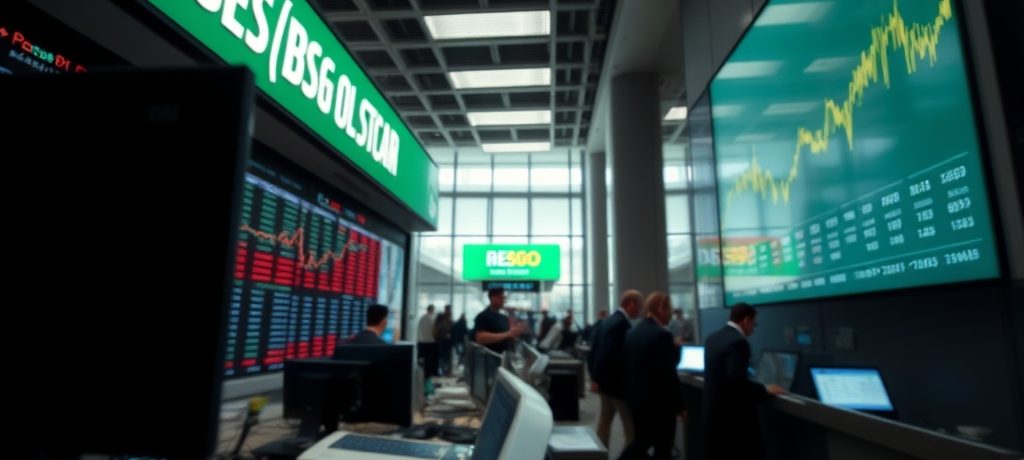
The immediate impact was evident across key benchmarks. Brent crude futures, slated for August delivery, registered a notable jump of 3.3 percent, settling at $94.15 a barrel. Concurrently, West Texas Intermediate (WTI) crude futures for July delivery saw an even more pronounced increase, rising over 4 percent to reach $90.89. This market movement signals a rapid reassessment by investors of the likelihood for a diplomatic breakthrough in the ongoing U.S.-Iran negotiations.
nn
Escalating Military Exchanges Fuel Market Jitters
nn
The renewed volatility in oil markets comes against a backdrop of escalating military actions between the United United States and Iran. Over the weekend, both nations engaged in an exchange of strikes, further complicating the already delicate diplomatic landscape. The U.S. Department of Defense confirmed it conducted “self-defense strikes” targeting radar and command sites within Iran. In response, Iran’s Islamic Revolutionary Guard Corps (IRGC) asserted that it had targeted an airbase. This Iranian action was reportedly in retaliation for a U.S. attack on a telecommunications tower located on Sirik Island, situated in the southern Hormozgan province.
nn
These military confrontations underscore the deep mistrust and fragility characterizing the bilateral relationship, directly impacting investor confidence in a swift resolution to the geopolitical tensions. The exchange of messages between the U.S. and Iran over the weekend, seeking modifications to a draft agreement, highlights the persistent challenges in forging a consensus. This draft agreement aims to prolong an existing ceasefire and facilitate the reopening of the strategically vital Strait of Hormuz.
nn
Conflicting Diplomatic Signals
nn
Adding to the market’s apprehension are the conflicting statements emanating from Washington and Tehran regarding the status and prospects of a nuclear agreement. U.S. President Donald Trump indicated that Washington was “close to securing a nuclear agreement with Iran.” However, this optimistic assessment was directly contradicted by Tehran, which insisted that “such matters are not presently under discussion.”
nn
Further hardening the U.S. stance, Defense Secretary Pete Hegseth conveyed Washington’s preparedness to “resume military attacks on Iran” should a deal fail to materialize. This declaration introduces a significant layer of risk, suggesting that the path to de-escalation remains fraught with potential for renewed conflict. The divergence in public statements from both sides signals a profound chasm in their respective positions, making any immediate breakthrough appear increasingly remote.
nn
Iran Reasserts Control Over Strait of Hormuz
nn
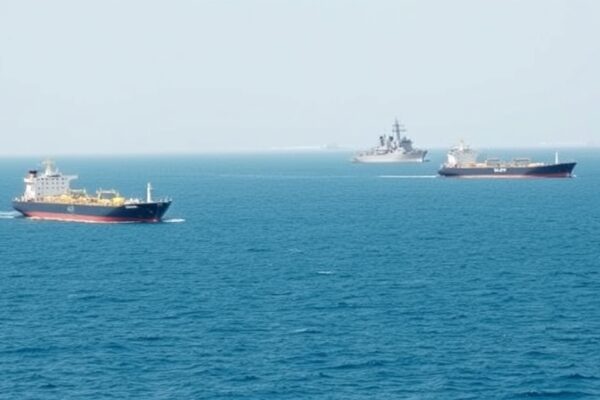
A critical development with direct implications for global oil supply chains is Iran’s reassertion of control over the Strait of Hormuz. The Islamic Republic has declared that all vessels traversing this vital maritime choke point must now travel through “designated routes” and obtain explicit “permission from the Islamic Revolutionary Guard Corps Navy.” This move by Iran has the potential to introduce significant logistical hurdles and increase transit times for oil tankers, thereby impacting global crude flows and contributing to price premiums.
nn
The Strait of Hormuz is a narrow waterway between the Persian Gulf and the Gulf of Oman, through which a substantial portion of the world’s seaborne oil passes daily. Any disruption or perceived threat to navigation in this strait typically sends ripples through international oil markets, given its indispensable role in global energy security.
nn
Tehran’s Firm Stance on National Rights
nn
From Iran’s perspective, the path to any agreement is contingent upon the safeguarding of its national interests. Addressing an online parliamentary session, Iranian Parliament Speaker Mohammad Baqer Ghalibaf articulated Tehran’s deep skepticism, stressing that Iranian negotiators held “no trust in the enemy’s words and promises.” Ghalibaf further underscored that Tehran would not agree to any deal with the U.S. “until the rights of the Iranian people were secured.” This uncompromising stance from a senior Iranian official highlights the domestic political pressures influencing Tehran’s negotiating position and suggests that concessions will be hard-won.
nn
In a separate, though regionally significant, development, Israeli troops successfully captured the strategic site of Beaufort Castle in southern Lebanon. This incursion marks the deepest penetration into the country in over a quarter-century, with Prime Minister Benjamin Netanyahu describing the fortress’s capture as a “decisive shift” in Israel’s ongoing campaign against Hezbollah. While not directly linked to the U.S.-Iran oil dynamic, this event contributes to the broader narrative of heightened geopolitical instability across the Middle East, a factor that invariably influences risk premiums in commodity markets.
nn
The confluence of renewed military exchanges, conflicting diplomatic signals, and Iran’s assertive posture regarding critical shipping lanes has firmly placed geopolitical risk back at the forefront of the oil market’s concerns. With no clear resolution in sight for the U.S.-Iran standoff and regional tensions remaining elevated, crude prices are likely to remain highly sensitive to further developments, reflecting the deep uncertainty that continues to permeate the global energy landscape.