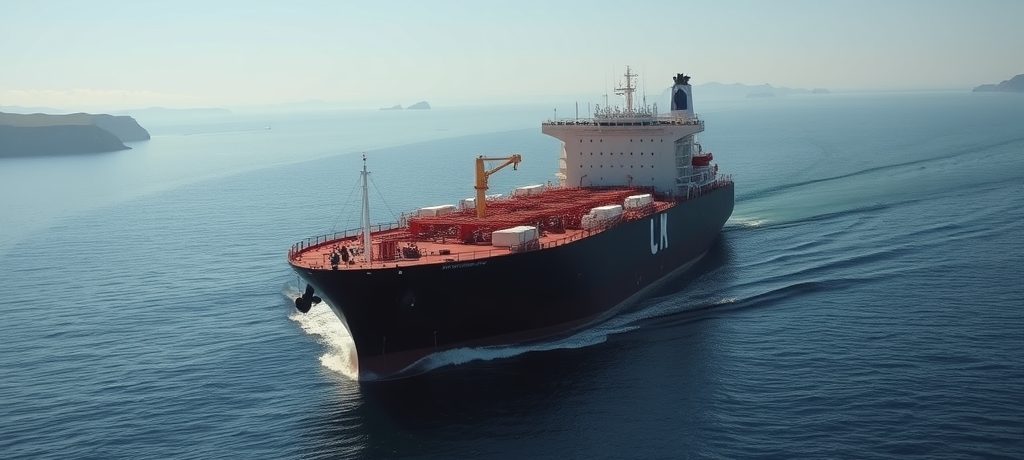
Global oil markets registered a significant downturn this week, with prices experiencing a steep decline primarily driven by the resumption of tanker traffic through the strategically vital Strait of Hormuz. This development, stemming from a preliminary U.S.-Iran peace agreement, offered a measure of relief to supply concerns that had previously underpinned prices. Brent crude futures for August delivery, a key international benchmark, saw a substantial weekly drop of nearly 9 percent, settling at $79.46 a barrel, despite a modest half-percent dip on Friday that partially recouped earlier losses. Concurrently, West Texas Intermediate (WTI) crude futures for July delivery, the U.S. benchmark, edged up 0.6 percent on Friday to $77.07 a barrel, yet the overall sentiment for the week remained decidedly bearish.
Strait of Hormuz Reopening Eases Supply Fears
The precipitous fall in oil prices over the past week is directly attributable to the operationalization of a preliminary peace deal between the United States and Iran. This agreement has paved the way for the return of normal shipping operations through the Strait of Hormuz, a critical maritime chokepoint through which a significant portion of the world’s seaborne oil supply transits. For months, disruptions in this crucial waterway had fueled market anxiety and contributed to elevated crude prices. The U.S. Central Command officially confirmed the lifting of all restrictions on commercial traffic to and from Iranian ports and coastal waters, a clear signal of de-escalation and a return to pre-disruption trade patterns. In a further move to facilitate commerce and rebuild confidence, Iran announced a 60-day suspension of transit charges for commercial vessels utilizing its waters, effectively reducing operational costs for shippers and encouraging renewed activity in the region. This combined effort has significantly alleviated immediate supply-side pressures on the global oil market.
Internal Iranian Approval and Geopolitical Nuances
The implementation of the U.S.-Iran preliminary peace deal, while externally driven, required significant internal political navigation within Iran. Supreme Leader Ayatollah Mojtaba Khamenei, a pivotal figure in Iranian decision-making, initially held a ‘different view’ regarding the memorandum of understanding that underpinned the agreement. However, the deal ultimately secured his crucial approval after President Masoud Pezeshkian and other senior officials provided explicit assurances that the country’s fundamental interests would be robustly protected. This internal consensus was a critical step, demonstrating a unified front necessary for the practical execution of the agreement, including the reopening of the Strait. The market’s reaction reflects the perceived stability brought by this diplomatic breakthrough, at least concerning immediate supply routes.
Middle East Tensions Threaten Broader Peace Efforts
Despite the positive developments in the Strait of Hormuz, the broader geopolitical landscape in the Middle East remains a significant source of market uncertainty. The nascent U.S.-Iran peace talks, which were intended to forge a lasting truce in the region’s protracted conflicts, have been abruptly postponed. The Swiss Foreign Ministry confirmed the delay in discussions between U.S. and Iranian negotiators, casting a shadow over the prospects for comprehensive regional stability. This setback was directly linked to a sharp escalation of hostilities, specifically Israeli airstrikes across southern Lebanon overnight, which tragically resulted in the deaths of at least 16 individuals. Hezbollah, a key regional actor, subsequently reported intense fighting in the area, signaling a dangerous resurgence of conflict that directly threatens the fragile, nascent agreement between Washington and Tehran to de-escalate their long-standing animosity. The market, while reacting to the supply-side relief, must now contend with renewed instability risks.
U.S. Vice President Vance’s Warning to Israel
The postponement of these critical peace talks also led to the delay of U.S. Vice President JD Vance’s planned diplomatic trip to Switzerland, with Tehran similarly withdrawing from the scheduled negotiations. In a notable intervention, Vice President Vance issued a ‘stark warning’ to the Israeli government, urging them to actively ‘get on board’ with President Trump’s interim peace agreement with Iran. Vance’s remarks underscored the urgency of the situation, stating that Israeli leaders needed to ‘wake up and smell the reality’ that they are becoming increasingly isolated internationally. This forceful diplomatic stance highlights the complex and often contentious dynamics among regional allies and adversaries, with the U.S. administration pushing for broader acceptance of its peace initiative. Such high-level diplomatic pressure and the underlying regional conflicts contribute significantly to the volatile risk premium embedded in global oil prices.
The week’s notable decline in oil prices clearly illustrates the immediate market response to the easing of shipping restrictions in the Strait of Hormuz, a direct outcome of the U.S.-Iran preliminary peace deal. This development has provided a crucial, albeit potentially temporary, reprieve from acute supply concerns. However, the simultaneous and abrupt postponement of broader U.S.-Iran peace talks, fueled by renewed conflict in southern Lebanon and underscored by strong U.S. diplomatic warnings to Israel, introduces a fresh and significant layer of geopolitical risk. This intricate interplay of eased supply and heightened regional instability suggests that while one immediate pressure point on oil prices has receded, the overall trajectory of global energy markets will remain highly sensitive to the evolving and often unpredictable political and military landscape of the Middle East.