Global financial markets opened Monday with a nuanced reaction to geopolitical developments, as fresh optimism surrounding U.S.-Iran negotiations led to a notable decline in oil prices, while Wall Street futures presented a mixed picture. The complex interplay of international diplomacy, energy supply dynamics, and domestic economic indicators shaped trading sentiment across continents.
Oil Prices Recede on Negotiation Hopes
The most immediate and pronounced market reaction was observed in the oil sector, where prices edged lower following what mediators described as “encouraging progress” in high-level negotiations between the U.S. and Iran. Brent crude, the international benchmark, traded down $1.55, or 2%, settling at $79.02 per barrel. This marks a significant shift from its pre-war price of roughly $70 a barrel, highlighting the impact of recent conflicts. Similarly, the price for a barrel of U.S. crude fell 74 cents to $75.11.
High-level discussions in Switzerland between the U.S. and Iran concluded early Monday, with lower-level technical talks slated for the remainder of the week. Mediators Qatar and Pakistan affirmed the positive strides made during these negotiations. However, the situation surrounding the Strait of Hormuz, a critical waterway for global oil and gas transport, remains a point of contention. While Iran asserted the strait was shut again over the weekend, the U.S. countered, stating that traffic had continued unimpeded.
Expert Perspectives on Energy Markets
Analysts are closely monitoring the implications of these diplomatic efforts. Warren Patterson and Ewa Manthey, commodities strategists at ING, cautioned on Monday that “Moving towards a more permanent deal will be challenging, with very real risks of a flare-up in hostilities.” This sentiment underscores the fragility of the ongoing peace process and the potential for renewed volatility.
Thomas Mathews, head of markets for Asia Pacific from Capital Economics, echoed a cautious outlook regarding energy flows. He believes that a recovery in the strait is more likely to be gradual. Mathews noted, “With the controversial — and fragile — U.S.-Iran peace process now underway, attention is turning to how quickly tankers return to the Strait of Hormuz to load energy supplies.” The prospect of increased Iranian oil supply re-entering global markets, even gradually, is a key factor influencing current price movements.
U.S. Futures Show Divergent Trends
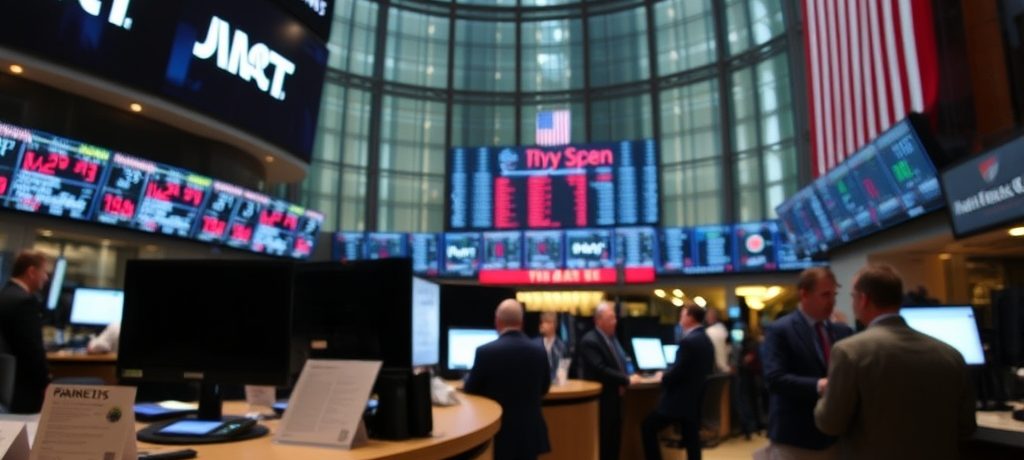
On Wall Street, premarket trading reflected a mixed sentiment. Futures for the S&P 500 inched back 0.1% before the opening bell, indicating a slight downward pressure. In contrast, futures for the Dow Jones Industrial Average remained unchanged, suggesting a holding pattern among blue-chip stocks. Nasdaq futures, however, ticked up 0.1%, signaling continued investor interest in technology and growth-oriented companies, even amidst broader market uncertainties.
Domestic Economic Headwinds and Federal Reserve Watch
Beyond geopolitical influences, domestic economic data continues to shape investor expectations in the U.S. Later this week, the government is set to release its May personal consumption expenditures (PCE) price index, which is the Federal Reserve’s preferred inflation gauge. Recent inflation data has indicated a significant rise in prices across the U.S. This, coupled with an improving labor market, has led many Fed watchers to forecast a potential rate hike before the end of the year. The anticipation of the Fed’s monetary policy decisions adds another layer of complexity to the mixed market signals.
European and Asian Markets React
Across the Atlantic, European markets showed varied performance at midday. Britain’s FTSE 100 rose 0.5% following the announcement that Keir Starmer would be stepping down as leader of the governing Labour Party, with his departure expected within weeks. Germany’s DAX remained flat, while France’s CAC 40 fell 0.4%, illustrating a fragmented regional sentiment.
Asian markets, meanwhile, largely celebrated a strong start to the week, particularly driven by enthusiasm for artificial intelligence. Tokyo’s Nikkei 225 jumped 1.6%, closing at another all-time record of 72,353.96. This surge was primarily led by technology stocks, fueled by excitement over the global artificial intelligence boom. Japan’s SoftBank Group, a multinational investment holding company with a strong AI focus, rose 1.9%, while chip equipment maker Tokyo Electron was up 3.2%.
South Korea’s Kospi also gained 0.7% to reach 9,114.55, marking a record closing high, similarly bolstered by AI-related shares. Memory chip maker SK Hynix surged 5.6%. Both the Nikkei 225 and Kospi have demonstrated exceptional performance, rising more than 40% and 120%, respectively, over the past six months, consistently setting fresh records on AI enthusiasm and positive developments from the Iran war.
Despite the robust performance, some analysts urged caution. Neil Newman, managing director and head of strategy at Astris Advisory Japan, commented, “We’re seeing another strong market today,” but cautioned that the Japanese market is “probably getting a little stretched” from an investor’s point of view, “especially with what’s going (on) in the Middle East.”
Elsewhere in Asia, Hong Kong’s Hang Seng lost 0.7% to 23,768.52, while the Shanghai Composite index was 1.8% higher at 4,163.10. Australia’s S&P/ASX 200 was down 0.1% to 8,816.10. Taiwan’s Taiex rose 2.8%, and India’s Sensex was up 0.5%, showcasing a diverse regional landscape influenced by local factors and global trends.
The day’s trading underscored a market grappling with contradictory forces: the potential for de-escalation in a significant geopolitical conflict offering relief to energy prices, juxtaposed with persistent inflationary pressures and the continued, albeit cautioned, exuberance in technology sectors. Investors remain keenly focused on the unfolding U.S.-Iran negotiations and upcoming economic data releases, which are expected to provide further direction.