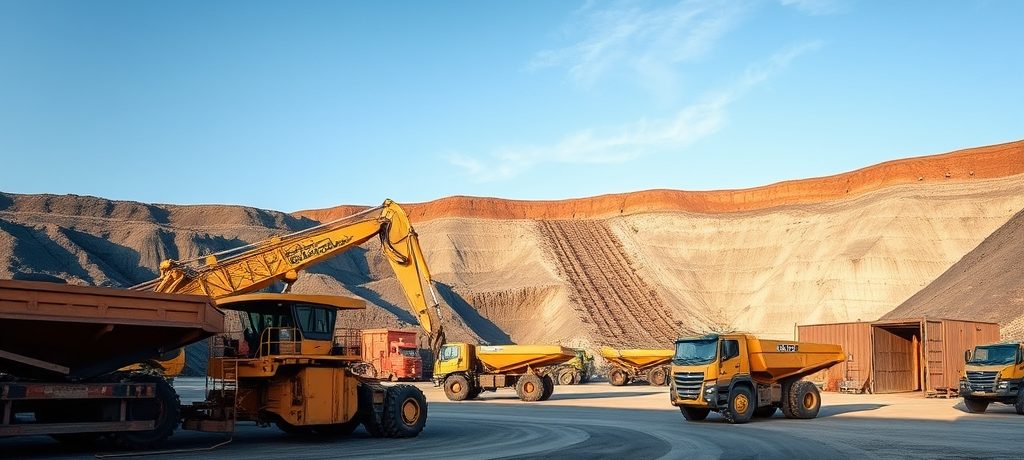
Panama is poised to release the final independent audit of First Quantum Minerals’ (TSX:FM,OTCPL:FQVLF) shuttered Cobre Panama copper mine on Friday, May 29. This pivotal publication precedes a critical decision by President José Raúl Mulino, who is expected to determine the future of the open-pit operation by June, a timeline underscored by a resurgence of local anti-mining protests.
Commerce and Industries Minister Julio Moltó has indicated that the cabinet will meticulously review the finalized findings before President Mulino makes a long-term decision on the project. The stakes are exceptionally high for the Central American nation, given the mine’s significant economic footprint prior to its suspension. Environment Minister Juan Carlos Navarro emphasized the gravity of the upcoming report, stating to local newspaper La Estrella de Panamá, “The report will be extensive and will require thorough analysis.” He further affirmed the government’s commitment to transparency, adding, “This report will be public so that everyone can study it.”
Mine’s Tumultuous History and Economic Significance
The Cobre Panama mine, a cornerstone of the nation’s economy, was forced into an indefinite shutdown in late 2023 after Panama’s Supreme Court ruled First Quantum’s concession contract unconstitutional. This judicial decision brought an abrupt halt to an operation that had been a major contributor to the country’s economic output. In 2022, prior to its suspension, Cobre Panama produced an impressive 350,000 tons of copper, accounting for approximately 5 percent of Panama’s gross domestic product.
The economic repercussions of the mine’s closure have been substantial. First Quantum has estimated that the suspension has cost Panama an estimated US$3.5 billion in lost economic contributions over the past two years. This figure highlights the profound financial void left by the mine’s inactivity, placing considerable pressure on the current administration to find a viable path forward that addresses both economic recovery and public sentiment.
Political Will and Public Opposition
Despite the significant economic impact, the Mulino administration has signaled an openness to reactivating the mine. This stance is largely driven by the potential for economic revitalization that a reopened Cobre Panama could offer. However, any move towards reactivation faces formidable opposition from organized anti-mining groups. Just last Friday, May 22, dozens of demonstrators, organized by groups such as Sal de las Redes and Movimiento Independiente Voluntad, marched through Panama City to vociferously reject any potential reopening of the facility. These protests underscore the deep divisions within Panamanian society regarding the mine’s future, balancing economic benefits against environmental and social concerns.
In anticipation of the official audit release, the government has also taken steps to manage public discourse and suppress unverified information. Officials rejected an anonymous social media post that purportedly cited a preliminary audit report, alleging irreversible environmental damage and disproportionate economic benefits for the Canadian miner. The administration maintained that only the final SGS report would serve as the formal metric for evaluating the mine’s environmental performance and compliance, aiming to ensure that the upcoming decision is based on credible, official data.
Interim Measures and Economic Preservation
While the long-term future of Cobre Panama remains under review, the Panamanian government has implemented several interim measures aimed at preserving the site and mitigating some of the economic fallout. Ahead of the final audit, the ministry approved a “safe management plan” designed to maintain the site and ensure the proper handling of hazardous materials. This plan is crucial for preventing further environmental degradation and ensuring the site remains viable for potential future operations.
In April, the government authorized a resolution allowing First Quantum to process and export approximately 38 million tons of stockpiled ore currently stored on site. This initiative is expected to yield about 70,000 tons of copper, with concentrate sales intended to offset preservation costs. The processing of this stockpile requires the hiring of roughly 1,000 employees to restart the mills, adding to the current care and maintenance workforce of 1,600. Earlier mitigation efforts by the state included the sale of 122,000 tons of copper concentrate, which generated nearly US$30 million in royalties for public infrastructure projects, demonstrating the government’s proactive approach to recouping some value from the suspended operations.
The publication of the Cobre Panama audit marks a pivotal moment for Panama, setting the stage for President Mulino’s crucial decision in June. The administration faces the complex task of balancing the significant economic benefits offered by the mine against the strong environmental and social concerns voiced by a vocal segment of the population. The comprehensive audit report is expected to provide the foundational data for this decision, which will undoubtedly have profound and lasting implications for the nation’s economy, environment, and social fabric.