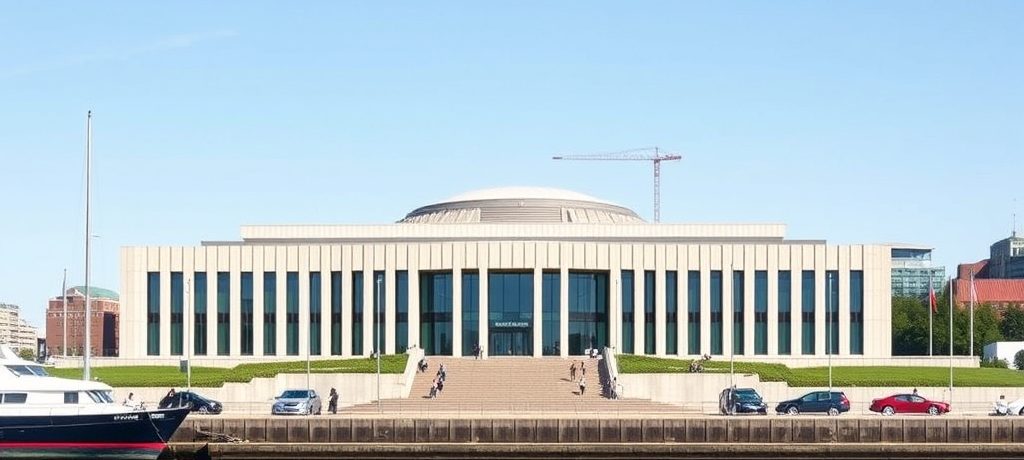
BOSTON — Former Federal Reserve Chair Jerome Powell, accepting the prestigious John F. Kennedy Profile in Courage Award, delivered a pointed defense of independent institutions, cautioning against the erosion of their autonomy by political pressure. Speaking on May 31, 2026, at the John F. Kennedy Presidential Library overlooking Boston Harbor, Powell underscored the critical role of entities like the Federal Reserve, courts, universities, and Congress as ‘the foundation and the embodiment of our democracy.’
Powell, who concluded his eight-year term as Fed chair in May and was succeeded by Kevin Warsh, a Trump administration selection, emphasized that the central bank’s independence is a ‘priceless asset’ requiring vigilant protection. His remarks marked one of his first significant public appearances since leaving the chair and served as a direct address to the challenges faced by the Fed during his tenure, particularly under the Trump administration.
Defending the Fed’s Independence
The former chair’s speech highlighted the deliberate design of the Fed’s structure to insulate monetary policy from political influence. ‘Congress wisely chose to insulate monetary policy decisions from political pressure. All other advanced economy nations have done the same,’ Powell stated. He warned that any administration’s decision to remove central bank officials over policy disagreements would establish a dangerous precedent, ultimately undermining the decades-long credibility of the institution.
Powell’s period as chair was characterized by frequent clashes with the Trump administration, which often criticized the Fed’s interest-rate decisions and advocated for more aggressive borrowing cost reductions. The John F. Kennedy Foundation explicitly recognized Powell for ‘protecting the independence of the Federal Reserve despite years of personal attacks and threats from the highest levels of government’ when announcing the award in March.
In an unusual move post-chairmanship, Powell has retained his seat on the Fed’s governing board until January 2028, effectively preventing the Trump administration from appointing another member to the board. This action comes amidst broader attempts by the administration to influence the central bank, including seeking to fire Fed governor Lisa Cook, a move that has been challenged in court, allowing Cook to retain her seat thus far.
While Powell refrained from directly naming former President Trump, his recurring theme was the imperative of safeguarding institutions from political interference and maintaining public trust in their impartiality. ‘Like many other institutions, the Fed has been undergoing a stress test,’ he observed, alluding to the pressures endured.
Broader Institutional Integrity
Beyond the Federal Reserve, Powell extended his defense to a range of American institutions crucial for national and international standing. He specifically championed U.S. universities and research institutions, the Constitution, Congress, and the judicial system. ‘The United States has long been the leader of the world’s freedom-seeking people — the indispensable nation. Other countries know us as a nation built on integrity, and that integrity must be maintained,’ Powell asserted, linking institutional independence directly to America’s global leadership and reputation.
In his address, Powell also offered an indirect acknowledgment of past missteps during his leadership, particularly concerning the surge in inflation during the pandemic’s supply chain disruptions. Many economists have suggested the central bank should have reacted more swiftly with interest rate hikes. ‘At the Fed, we are, of course, human and thus imperfect,’ Powell conceded. ‘When we make mistakes, we acknowledge them and change course.’
The Profile in Courage Award
The John F. Kennedy Profile in Courage Award, established in 1989, honors public servants who demonstrate courageous decisions of conscience despite potential personal or professional repercussions. Previous distinguished recipients include former Presidents Barack Obama and George H. W. Bush, Ukrainian President Volodymyr Zelenskyy, and former Vice President Mike Pence.
Powell shared the honor with residents of Minnesota’s Twin Cities, recognized for their courageous actions during a federal immigration crackdown that resulted in thousands of arrests and the deaths of Minneapolis mother Renée Good and nurse Alex Pretti, both killed while observing or documenting enforcement activities. Tim Granger, Renée Good’s father, expressed gratitude for the recognition, stating, ‘It’s wonderful just to be invited, honoring Renée.’
Caroline Kennedy, John F. Kennedy’s only surviving child, and her son, Jack Schlossberg, emphasized the vital role of individuals like Powell and the Minnesota residents. In a joint statement, they noted that ‘without people like Powell and those in Minnesota willing to put their lives on the line to hold America to its promises, our democracy can’t survive.’ U.S. Sen. Amy Klobuchar, an attendee and gubernatorial candidate for Minnesota, highlighted the unusual nature of the award recognizing ordinary citizens, stating, ‘This didn’t go to an elected leader for a reason. It’s because the people stood up.’
Powell’s speech serves as a timely reminder of the delicate balance required to maintain the integrity and effectiveness of institutions vital to both the economy and democracy. His call for vigilance against political encroachment on the Fed and other foundational bodies underscores a persistent challenge in governance, particularly as global economic stability often hinges on the perceived independence and credibility of central banks.