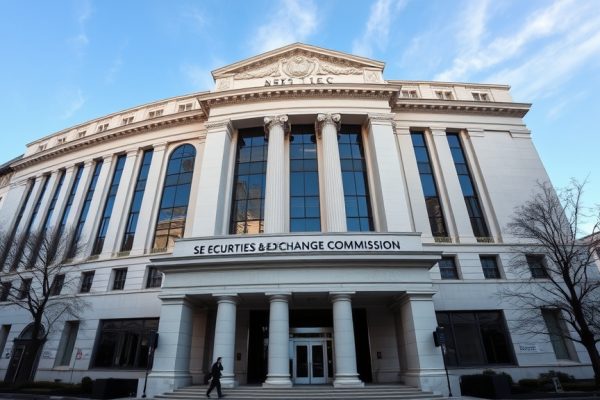
The House Financial Services Committee’s latest oversight hearing on prudential regulators on Thursday, June 4, marked a pivotal moment, signaling that stablecoins, artificial intelligence (AI), and digital payments are transitioning from experimental subjects to critical supervisory priorities within the U.S. banking system. Top financial regulators underscored a dual imperative: establishing robust frameworks for emerging digital assets while simultaneously refocusing traditional examination processes on material financial risks over mere procedural shortcomings. Federal Reserve Vice Chair for Supervision Michelle Bowman articulated this evolving landscape, telling lawmakers, "The financial system continues to adapt to technological advances, including the rapid evolution of artificial intelligence capabilities and the risks and benefits of its use." Her testimony highlighted the accelerated identification of cyber vulnerabilities across critical infrastructure, including banking systems, due to recent AI advancements.
Stablecoin Frameworks Advance as Supervisory Priority
A significant area of consensus among regulators centered on the implementation of the GENIUS Act and the development of comprehensive supervisory frameworks for payment stablecoins. Office of the Comptroller of the Currency (OCC) Comptroller Jonathan Gould confirmed the agency is "working to respond to comments on our GENIUS Act proposal and finalize it." Gould emphasized that this legislation and its accompanying regulations are designed to introduce safeguards comparable to historical banking reforms, stating, "the GENIUS Act and our rule will help ensure appropriate consumer protections for stablecoin users."
National Credit Union Administration (NCUA) Chairman Kyle Hauptman positioned stablecoins primarily as a foundational element of payments infrastructure, rather than solely a crypto asset. He informed lawmakers that "Stablecoins can make payments faster, cheaper, and more inclusive," envisioning a future where widespread adoption eliminates multi-day payment settlement delays, noting, "every day is a business day with stablecoins." Hauptman also drew attention to the significant international implications of dollar-denominated stablecoins, testifying that over 80% of dollar stablecoin activity occurs outside the United States, potentially reinforcing the U.S. dollar’s global commercial role. Federal Deposit Insurance Corporation (FDIC) Chairman Travis Hill echoed this urgency, describing GENIUS Act implementation as "a top priority" for his agency. Hill detailed proposals encompassing application requirements, reserve assets, redemption standards, and compliance obligations for stablecoin issuers under FDIC supervision. Similarly, Vice Chair Bowman confirmed the Federal Reserve’s ongoing work to develop stablecoin issuer regulations as mandated by Congress.
AI Accelerates Cybersecurity Risks and Fraud Concerns
Artificial intelligence emerged as another dominant theme during the hearing, though discussions largely focused on its potential as a source of risk rather than solely a productivity tool. Vice Chair Bowman delivered a stark warning, noting that advances in frontier AI models have "dramatically accelerated the identification of cyber vulnerabilities across critical infrastructure, including the banking system." While acknowledging AI’s potential to strengthen defenses, she cautioned that it concurrently exposes new avenues for sophisticated cyberattacks.
Representative Bill Foster, D-Ill., amplified these concerns, alerting the committee to the looming threat of "a wave of fraud driven by artificial intelligence and deep fakes" confronting banks and credit unions. Foster stressed the necessity for regulators to maintain agility and sufficient resources to effectively counter these evolving threats. He further highlighted the challenge posed by increasingly rapid financial systems, where "Consumers and markets are moving faster than ever with improved access to information, 24-hour banking, and the reduced friction of modern payment systems." This modernization, while beneficial, simultaneously reduces the critical time available for financial institutions to detect and halt fraudulent activities. Comptroller Gould indicated that the OCC recently revised its model risk management guidance in collaboration with other banking agencies "to avoid impeding banks’ use of AI," and is actively seeking additional feedback to identify areas requiring further regulatory guidance. The prevailing sentiment among witnesses favored adapting existing risk-management frameworks to integrate AI deployment, rather than constructing entirely new regulatory structures.
Supervisory Reform Targets Material Financial Risk
Beyond technological advancements, the hearing critically examined how regulators conduct examinations and assess risk. Vice Chair Bowman revealed that a Federal Reserve review identified numerous supervisory findings linked to procedural or documentation issues, rather than genuine threats to safety and soundness. Chairman Hill reinforced this perspective, outlining FDIC efforts to reform supervision to concentrate on "material financial risks rather than process-oriented, check-the-box requirements." He confirmed the agency is actively reviewing existing supervisory findings and redefining key standards, such as what constitutes "unsafe or unsound" practices. Comptroller Gould aligned with this approach, asserting that the OCC is "returning to risk-based supervision rooted in law and emphasizing examiner judgment, not arbitrary checklists."
Witnesses also highlighted ongoing revisions to the CAMELS rating framework, capital requirements, and community bank leverage ratio rules, all intended to better align regulatory oversight with actual risk profiles. During the proceedings, Representative Stephen Lynch, D-Mass., raised concerns regarding crypto access within the traditional banking system. He specifically questioned Vice Chair Bowman about Kraken’s limited access to the Federal Reserve payment system. Bowman clarified that the Federal Reserve employs "a tiered approach" for approving such access. She stated that Kraken’s access was granted by the Kansas City Fed for a "limited purpose" and a "limited period of time," with the 12-month arrangement set to lapse early next year. This arrangement, she explained, serves to help the Fed understand how Kraken and similar entities might utilize limited payment system access.
The hearing unequivocally demonstrated that the forthcoming phase of prudential regulation will be profoundly shaped by digital infrastructure as much as by conventional banking metrics. Discussions heavily weighted stablecoin reserve frameworks, AI governance, cyber resilience, and fraud controls, reflecting a rapidly evolving regulatory agenda where digital innovation increasingly dictates supervisory priorities.