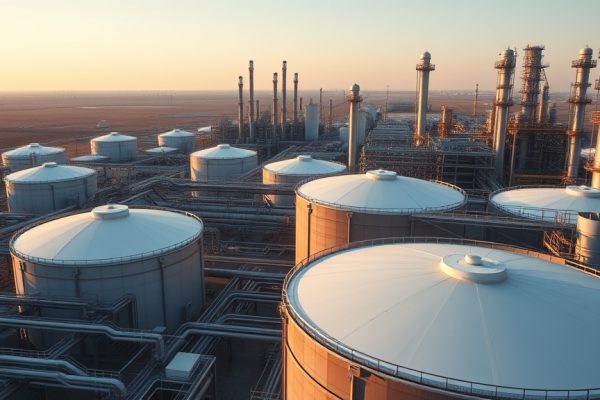
Riyadh and Moscow are forging an increasingly potent alliance in global energy markets, consolidating significant control over oil supply at a time when the traditional power structures of OPEC are undergoing profound shifts. This deepening cooperation, evidenced by coordinated output strategies and high-level diplomatic engagements, positions Saudi Arabia and Russia as a formidable duo, collectively commanding over 20% of the world’s total oil production, even as Western sanctions impact Russian exports and internal divisions challenge the Organization of the Petroleum Exporting Countries.
Combined Influence on Global Oil Supply
Individually, Saudi Arabia and Russia are titans of the oil industry, each producing between 9 and 10 million barrels of oil a day. Their combined output grants them substantial leverage over global supply, a critical factor in price stability. This influence persists despite the imposition of Western sanctions and price caps on Russian oil following the war in Ukraine, and ongoing disruptions, such as the Strait of Hormuz blockade. Mark N. Katz, a nonresident senior fellow at the Atlantic Council, notes that ‘Western and other buyers have been willing to increase their purchases of sanctioned Russian oil in order to prevent a dramatic oil price rise, which would hurt their domestic economies,’ highlighting the pragmatic approach taken by some nations to mitigate market volatility.
OPEC’s Evolving Dynamics
For decades, Saudi Arabia, as OPEC’s largest member, has been instrumental in stabilizing oil prices through supply management. Historically, OPEC countries, including Iran, produced over 35% of the world’s crude oil and held nearly 80% of proven global oil reserves. However, the cartel’s power has gradually diminished due to internal divisions and the dramatic rise of US shale oil production. A significant recent development was the departure of the United Arab Emirates (UAE) from OPEC on May 1, after almost six decades of membership. The UAE, formerly OPEC’s third-largest producer, cited unhappiness with quotas and a desire for greater production flexibility. Its exit reduces OPEC’s membership to 11 countries and is expected to weaken the cartel’s long-term pricing power, particularly given the UAE’s significant spare capacity.
The OPEC+ Alliance and Direct Engagement
In anticipation of, or perhaps in response to, these internal challenges within OPEC, Saudi Arabia has intensified its relationship with Russia, a non-OPEC member. This collaboration manifests both directly through bilateral channels and via the more informal OPEC+ alliance, established in 2016 to include additional oil-producing nations. The coordination between the two countries’ energy ministers on oil output has been a recurring theme over the past two years. High-level political engagement further underscores this bond, with Russian President Vladimir Putin visiting Riyadh in 2019 and again at the end of 2023 to meet Crown Prince Mohammed bin Salman. Russian Foreign Minister Sergey Lavrov has also held numerous meetings with his Saudi counterpart. A symbolic gesture of this renewed partnership is Russia designating Saudi Arabia as the guest country for the St. Petersburg International Economic Forum (SPIEF) from June 3-6, 2026. Lavrov stated, ‘It is highly symbolic that Saudi Arabia will serve as guest country at SPIEF in 2026 as we celebrate the 100th anniversary of the establishment of diplomatic relations.’ The forum, which attracted 24,200 people from 144 countries and territories last year, serves as a significant platform for business and political leaders, despite some Western views of it as a Russian propaganda event.
Beyond Oil: Economic Divergence and Strategic Interests
While the immediate focus of the Saudi-Russian alliance remains oil, both nations face distinct economic trajectories. Saudi Arabia embarked on ‘Vision 2030’ a decade ago, an ambitious program aimed at diversifying its economy away from oil dependency through initiatives like hosting major sporting events, mining gold, copper, and zinc, building AI data centers, and expanding international tourism. Russia, conversely, is grappling with the severe impact of Western sanctions, relying on a ‘shadow fleet’ of oil tankers and often selling its oil at discounted prices. Its economy, according to analysts, no longer presents the investment opportunities it once did. Katz affirms this view, stating, ‘I don’t believe the Saudis see Russia as an attractive country to invest in at present,’ adding that ‘The West, China and other Asian countries offer far better opportunities for cooperation on infrastructure, technology and finance.’ This divergence in economic prospects introduces a layer of complexity to their long-term partnership.
Geopolitical Undercurrents and Washington’s View
The deepening ties between Riyadh and Moscow are not without their geopolitical intricacies. Saudi Arabia expresses discontent over Russia’s support for Iran, while Russia is keen to ensure Riyadh does not align with Western sanctions against Ukraine. From an oil market perspective, Saudi Arabia prioritizes long-term stability, aiming to prevent a supply glut that could depress prices. Russia, facing immediate economic pressures, has a more short-term need to replenish its state coffers. The United States, particularly under a potential Trump administration, has historically sought partnerships with Moscow but has been less enthusiastic about its allies doing the same. Katz suggests that ‘Any declining Saudi enthusiasm for doing business with Russia will be seen by the Trump administration as an opportunity for American business.’ He also posits that Riyadh’s increased cooperation with Russia could be a strategic maneuver to ‘garner more attention from Washington,’ a tactic he notes Riyadh has employed ‘on and off since at least the 1970s.’
Despite these underlying tensions and differing strategic objectives, the immediate future of the Saudi-Russian oil alliance appears robust, bolstered by forecasts of growing global oil demand. OPEC’s latest monthly report projects demand to increase by 1.2 million barrels a day in 2026 and 1.5 million barrels a day the following year. This anticipated demand growth provides a common ground for continued cooperation on supply management. However, the intricate web of geopolitical interests, economic disparities, and the evolving dynamics within the broader energy landscape suggest that while their combined influence on oil markets is undeniable, the path ahead for this powerful duo may not be entirely smooth.