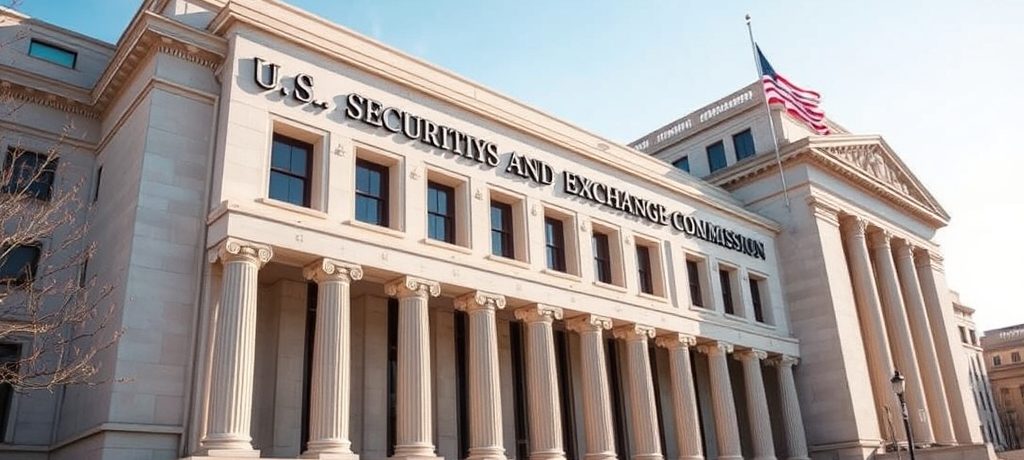
The Securities and Exchange Commission (SEC) has named Paul Knight, a seasoned executive with experience at both the SEC and JPMorgan Chase, as its new Chief Operating Officer (COO). This strategic appointment comes at a critical juncture for the agency as it aims to accelerate its efforts in key areas such as cryptocurrency regulation, market structure reform, and investor protection.
Operational Leadership for a Dynamic Market
In his role as COO, Knight will be responsible for overseeing the SEC’s extensive operational and administrative functions. This includes a broad portfolio of internal offices, encompassing human resources, acquisitions, financial management, the EDGAR Business Office, the chief data officer, the chief risk officer, and various support operations. These support functions include Freedom of Information Act (FOIA) requests, records management, and facilities management. While these responsibilities might appear to be ‘back-office’ functions, they are fundamental to the agency’s ability to execute its regulatory mandate efficiently and swiftly.
For entities operating within the financial sector, including banks, FinTech companies, payments firms, and cryptocurrency businesses, Knight’s appointment signals the SEC’s intent to play a more active role in shaping the regulatory framework for digital markets. His operational expertise is expected to enhance the agency’s capacity to respond to the rapidly evolving financial landscape.
Knight’s Extensive Background
Knight brings a wealth of experience to the SEC. Most recently, he served at JPMorgan Chase as the principal lead for driving growth across the bank’s U.S. business lines. Prior to that, he managed the program office for Chase Bank’s expansion into 25 new states, demonstrating a proven track record in managing large-scale operational initiatives.
His public service record includes a tenure at the Treasury Department from 2012 to 2014. Furthermore, Knight has prior experience at the SEC, having served from 2008 to 2012, where he held positions including interim managing executive for the Division of Economic and Risk Analysis. This prior experience within the agency is expected to provide him with a deep understanding of the SEC’s mission and operational needs.
“It’s an honor to come back and join the professional staff at the SEC as we support the work of the Commission,” Knight stated in a release. His return to the agency underscores a commitment to contributing to its ongoing regulatory objectives.
Context of Recent SEC Activity
Knight’s appointment coincides with a period of heightened activity and scrutiny from the payments and digital asset sectors regarding the SEC’s regulatory stance. Recent developments include SEC Chairman Paul Atkins’ call for clearer rules governing on-chain trading and his encouragement for Congress to pass the CLARITY Act. The agency has also clarified its position on certain crypto interfaces, indicating they may operate without broker-dealer registration, a move that could influence the interaction models of wallets, trading tools, and crypto platforms with users.
In the realm of stablecoins, the SEC has issued new guidance that, in specific broker-dealer contexts, brings stablecoins closer to cash-like treatment. However, the guidance has been noted as narrow, and it does not fully mitigate liquidity, custody, or operational risks. Additionally, the SEC and the Commodity Futures Trading Commission (CFTC) have been working to delineate their respective roles in cryptocurrency oversight, providing greater clarity to the market.