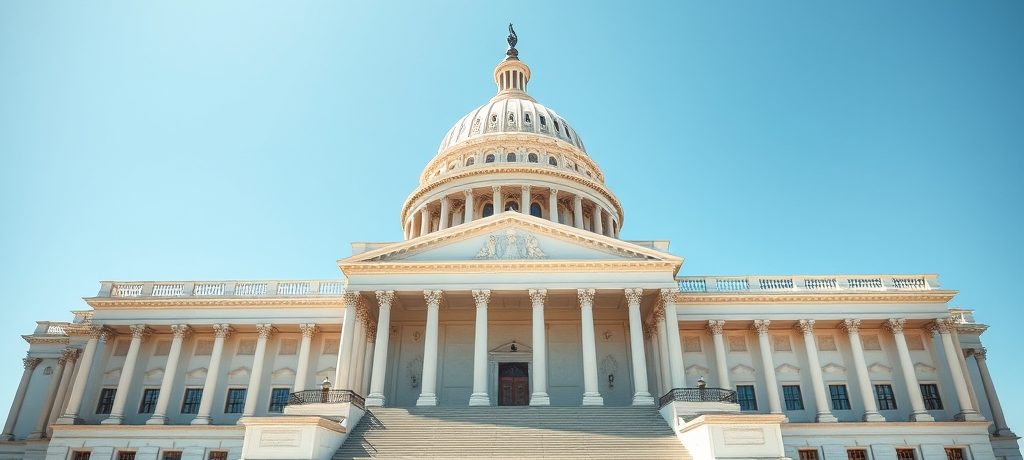
The U.S. Senate passed a bipartisan housing affordability bill Monday night (June 22) that notably includes a four-year moratorium on the development of a U.S. central bank digital currency (CBDC). The legislation, titled the ’21st Century ROAD to Housing Act,’ advanced through the Senate with a decisive vote of 85 to 5, and now proceeds to the House of Representatives for further consideration, as reported by CoinDesk.
CBDC Moratorium Details and Rationale
The provision, which effectively bans the development of a U.S. CBDC until 2030, was introduced by Republican lawmakers. Their primary concern, according to reports, centers on the potential for government surveillance that such a digital currency might enable. This legislative move comes despite a current absence of a formal push by the Federal Reserve or Congress to develop a CBDC. Furthermore, President Donald Trump had previously signed an executive order in January 2025, which explicitly prohibits any efforts to create a CBDC.
Cointelegraph also highlighted the inclusion of the CBDC ban, noting that the housing bill is anticipated to secure swift passage in the House and subsequently be sent to the President for signature. The CBDC clause was reportedly integrated into the bill as a strategic measure to garner support from House Republicans, facilitating its overall passage.
Legislative Language and Industry Reaction
The specific language within the bill, as published on Congress.gov, states that ‘the Board of Governors of the Federal Reserve System or a Federal reserve bank may not issue or create a central bank digital currency or any digital asset that is substantially similar to a central bank digital currency directly or indirectly through a financial institution or other intermediary.’ Crucially, the provision also clarifies that it ‘shall not prohibit any dollar-denominated currency that is open, permissionless and private, and fully preserves the privacy protections of United States coins and physical currency,’ ensuring that certain private sector digital innovations are not stifled.
The inclusion of the anti-CBDC provision has been met with approval from industry stakeholders. When a version of the bill containing this clause passed the Senate in March, Cody Carbone, CEO of The Digital Chamber, publicly applauded the initiative. In a March 11 post on X, Carbone stated, ‘Financial privacy is a cornerstone of American freedom, and any decision to authorize a Central Bank Digital Currency must remain with Congress and the American people.’ He further added, ‘We appreciate the Senate reinforcing that digital innovation in the United States should be led by the private sector while protecting individual liberty.’
With the bill now moving to the House, its bipartisan support in the Senate suggests a strong likelihood of becoming law. The legislative action underscores a significant congressional stance on digital currency development, prioritizing concerns over privacy and government oversight in the evolving financial landscape, while simultaneously addressing housing affordability.