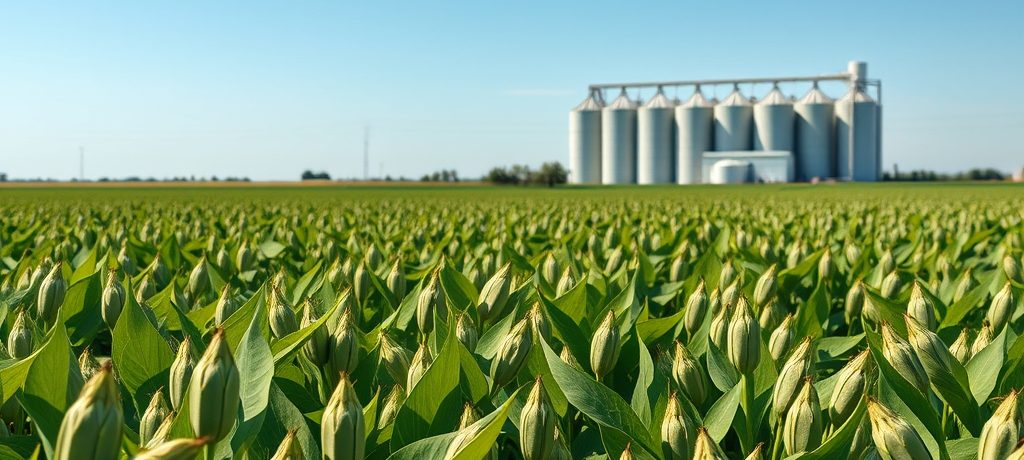
Soybean markets experienced a significant rally on Monday, with front-month futures posting impressive gains of 35 to 50 ½ cents, driven primarily by unsubstantiated rumors of substantial Chinese purchases. The commodity’s robust rebound out of the holiday period saw deferred contracts also climbing, up 23 to 32 cents, signaling broad market strength. The cmdtyView national average Cash Bean price reflected this upward momentum, increasing by 47 ¼ cents to close at $11.36 ¾, marking a notable shift in market sentiment.
Market Performance and Price Action
The bullish sentiment permeated across the entire soybean complex. Soymeal futures saw considerable increases, ranging from $5.10 to $9.10 higher across most contracts, indicating strong demand for protein feed. Similarly, Soy Oil futures advanced significantly, gaining between 99 and 141 points. Specific contract closes further underscored the day’s substantial gains: July 2026 Soybeans settled at $11.82 ¼, up 50 ½ cents, while August 2026 Soybeans closed at $11.84, marking a 47 ¾ cent increase. The new crop November 2026 Soybeans also saw a strong close at $11.92 ¼, rising 44 ½ cents. The nearby cash price was recorded at $11.36 ¾, up 47 ¼ cents, with new crop cash prices at $11.26 ¼, an increase of 38 ¼ cents, demonstrating broad-based price appreciation from immediate to forward delivery.
Chinese Demand and Export Dynamics
The primary catalyst for Monday’s pronounced rally appeared to be market speculation regarding renewed Chinese demand. Reports circulating late in the day suggested China had purchased five cargoes, injecting a powerful bullish sentiment into the market. While these rumors remain unconfirmed, the prospect of increased buying from the world’s largest soybean importer is a potent market driver. This potential activity aligns with recent export data from USDA’s FGIS for the week ending July 2. During this period, soybean export shipments totaled 528,350 metric tons (19.41 million bushels), representing a 19% increase from the previous week and a substantial 31.9% rise compared to the same week last year. China emerged as the top destination for these shipments, receiving 268,115 metric tons, underscoring its pivotal role in global soybean trade. Other significant destinations included Mexico, with 64,664 metric tons, and Japan, which imported 46,176 metric tons. Despite this recent uptick in weekly exports, marketing year exports for 2025/26 currently stand at 37.85 million metric tons (1.39 billion bushels), which is 18.2% below the volume recorded during the same period last year, indicating a need for sustained strong export pace.
Domestic Crop Conditions and Weather Outlook
Domestically, the US soybean crop is progressing through critical development stages. According to Crop Progress data from NASS as of July 5, 34% of the US soybean crop was reported blooming, a 6% increase from the normal pace for this time of year. Additionally, 9% of the crop was setting pods, which is 3 percentage points faster than normal. However, condition ratings saw a slight decline, down 1% to 64% good/excellent, while the Brugler500 index remained steady at 365. This slight dip in overall condition warrants monitoring as the season progresses.
Looking ahead, weather forecasts present a mixed picture for key growing regions. The 7-day forecast anticipates beneficial rainfall totals of 1 to 3 inches across parts of the Dakotas and Minnesota, primarily concentrated in the initial days of the week. The Eastern Corn Belt is expected to receive a half inch to 2 inches of rain over the next week, with up to an inch forecast for parts of Iowa, Missouri, and Nebraska. However, the 8-14 day outlook suggests warmer temperatures across the country, accompanied by a dry pocket developing in the central United States. This potential for heat and dryness in key agricultural areas could introduce new concerns for crop development and yield prospects if prolonged.
Broader Market Context and Global Supply
Beyond immediate demand and domestic crop factors, broader market indicators provide additional context. Commitment of Traders data for the week ending June 30 showed managed money reducing their net long position by 5,479 contracts, bringing the total to 31,200 contracts. This adjustment suggests a slight moderation in bullish bets from institutional investors prior to Monday’s rally. On the global supply front, data from the Brazilian trade ministry indicated robust export activity, with 14.5 million metric tons of soybeans shipped in June. This figure significantly surpasses the 13.42 million metric tons exported during the same month last year, highlighting Brazil’s continued strong presence and competitive edge in the global soybean market.
The confluence of speculative Chinese demand, strong daily price gains across the complex, and a nuanced domestic crop outlook, set against the backdrop of robust Brazilian exports, paints a complex and dynamic picture for soybean traders. While the immediate rally was undeniably fueled by rumors, the underlying fundamentals of supply, demand, and weather will continue to shape market direction in the coming weeks. Market participants will closely monitor confirmed trade deals, evolving crop conditions, and long-range weather patterns, all of which will be critical in determining the sustainability of this recent upward price trajectory and the overall balance of the global soybean market.